can you get a dress made from a picture?
one image is enough to begin. it is not enough to cut from.
The short answer
Yes. A skilled tailor or dressmaker can use a picture as the starting point for a custom dress. But the photograph is not a pattern, and it does not show everything required to make the garment.
A photograph may show the front but not the back, conceal the internal structure, distort the colour, or make a lightweight fabric look more substantial than it really is. The dress also needs to be interpreted for your measurements, proportions, occasion and preferred fit.
The best result does not come from sending one picture with the instruction, “Make this exactly.” It comes from identifying what you love about the reference, resolving what the picture does not show, choosing fabric that can create the same feeling, and turning the idea into a clear brief a real maker can follow.
That is what MadeApt helps you do. Send your picture straight to a maker for a quote, or upload it to the MadeApt Studio to shape the design first. Either way the finished dress is made to your measurements by a skilled tailor or artisan — see custom made dresses for what that looks like and costs.
What a tailor can — and cannot — see in a photograph.
A picture communicates the visual idea quickly. A tailor can often recognise the overall silhouette, neckline, sleeve shape, skirt volume, approximate length and visible details.
What the image usually does not reveal is just as important:
A good custom process fills in those gaps before fabric is cut.
The picture gives us the direction. The garment brief gives the tailor the instructions.
What does “make me this dress” actually mean?
Two people can send the same photograph and want very different things. One may love the neckline but want a looser skirt. Another may want the exact silhouette in a deeper colour. Someone else may only want the feeling: romantic, fluid and dramatic, but with sleeves and enough support to dance all night.
Before the design begins, separate the essential parts from the flexible ones.
Silhouette
Do you want the same overall shape, or only the general mood?
Neckline
Should it stay exactly as shown, sit higher or provide more support?
Sleeves
Same shape and length, added sleeves, or no sleeves?
Waist
Natural, raised, dropped, fitted or softly defined?
Skirt
Fitted, A-line, full, gathered, pleated, draped or flared?
Length
Mini, knee, midi, ankle or floor length — and with which shoes?
Fabric
Do you want the same appearance, movement, texture or composition?
Colour
Match the photograph, choose from available cloth, or create a new palette?
Fit
Sculpted and close, softly fitted, relaxed, or comfortable for movement?
Details
Which bows, ruffles, lace, embroidery, cut-outs or embellishments are essential?
You do not need to know the technical fashion words. Point to what matters in ordinary language. MadeApt can translate “I love how the skirt moves, but I need the neckline higher” into a clearer garment direction. Think of the eight things below as the recipe that turns your photo into a dress.
The eight things to send with your picture.
The clearest image you have
Send the highest-quality version available. A screenshot can work, but avoid images where the garment is heavily cropped, blurred, covered by hair or hidden behind a bag. If you have more than one view, include:
Do not worry if you only have one picture. It can still be enough to begin. The unseen details will simply need to be designed rather than assumed.
What you love about it
Tell us why you saved the picture. For example:
This prevents the maker from carefully reproducing a detail you never particularly wanted while changing the part that made you fall in love with the dress.
What you want changed
A reference does not have to be followed literally. You might want to:
These are not afterthoughts. They form part of the design.
The occasion and date
Tell the maker where you plan to wear the dress and the date by which it must be in your hands. A dress for a keynote, beach wedding, winter gala, graduation or everyday work needs different fabric, structure and movement. The occasion also helps determine whether you need pockets, a microphone-pack solution, warmth, breathability, secure support or room for substantial dancing. (Performing in it? Stage clothes have their own rules — see what to wear on stage.)
The date matters before anything is promised. Most orders take approximately 4 weeks including shipping, and more complex designs take longer. Production time is only one part of the schedule: fabric sourcing, design clarification, measurements, quality checks, international shipping and possible local alterations all need room. If the occasion cannot move, a buffer between delivery and the event is strongly recommended.
Your height and measurements
An initial feasibility assessment may only require your height and general fit notes. Before the dress is made, the tailor will need the measurements relevant to that design. Depending on the dress, these may include:
MadeApt guides you through the required measurements after the design direction is clear — you can preview the dress measurement guide to see how it works. Every commissioned garment is made to your measurements rather than selected from a standard size chart.
How you want it to fit and feel
Measurements alone do not describe fit. Tell us whether you want the dress:
Two dresses made to the same body measurements can feel completely different depending on ease, fabric, support and construction.
Your fabric preferences
If you know the fabric, tell us. If you do not, describe how you want it to behave. Useful descriptions include:
Do not rely on colour alone. A dress made in silk satin, stretch crepe, cotton poplin or polyester chiffon may use a similar shade but look, move and fit entirely differently.
Already own the cloth? You can send it — see supplying your own fabric for how much to send, how to ship it, and who carries the risk if it fails.
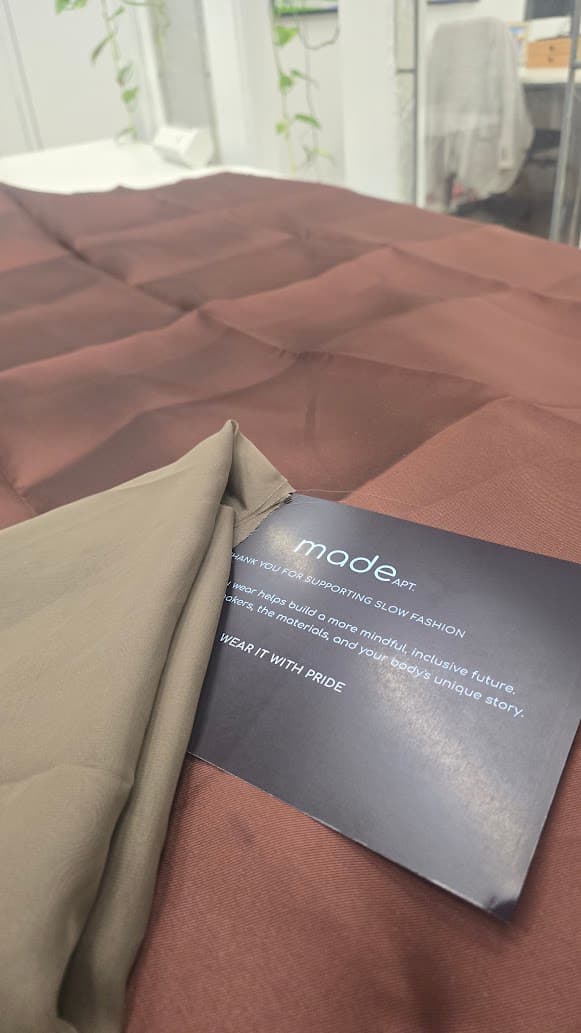
Behaviour, not colour alone
Your approximate budget
A budget is not an invitation to inflate the quote. It helps determine which version of the idea is realistic. If the original image shows hand-applied flowers, extensive draping, corsetry and several layers of silk, a lower-budget version may preserve the silhouette while simplifying the embellishment or using a different fabric.
Give the figure including shipping, and say where the dress is going. The destination changes the shipping cost and whether import duties apply, and a budget that quietly excludes both is not the budget the quote has to fit.
Without a budget, the tailor may design a technically beautiful version that is far beyond what you intended to spend — or simplify something you would have happily paid to preserve. For a detailed breakdown, read custom-made dresses in the USA.
Can the dress be made exactly like the picture?
Sometimes a close interpretation is possible. An exact duplicate is rarely a useful promise. Even if the visible design is followed closely, the result may change because:
The goal should be clarity, not counterfeiting: understand what makes the reference special, preserve the elements that matter, and create a dress that is genuinely yours.
MadeApt uses reference images to communicate direction. We do not add another designer’s label or pretend the garment was made by someone it was not. The finished piece is made by the artisan credited for making it.
What if the picture was generated by AI?
An AI-generated dress can also become the starting point for a real garment. It simply requires a stronger tailorability check. AI images may contain:
None of this automatically makes the idea unusable. It means the image needs to be translated before anyone begins cutting. Read How to Turn an AI Clothing Design Into a Real Garment for the full process — and if you are still choosing where to generate the design, see which AI clothes generator works for real apparel development. If the image came from ChatGPT, start with ChatGPT designed my dress. How do I get it made?
Is the picture from a movie — or a dress that sold out?
Two briefs with their own guides: costumes are built for camera, not a room, so fabric, colour and fit need interpreting — and a discontinued dress can be drafted fresh to your measurements from the listing photos.
How MadeApt turns your picture into a real dress.
Upload the reference
Start in the MadeApt Studio with your photograph, screenshot, sketch, moodboard or AI-generated image. Add a sentence about what you love and what you want changed.
Shape the design
We clarify the silhouette, neckline, sleeves, back, length, fabric, colour, support, fit and construction. Details the picture does not show are resolved instead of guessed.
Check whether it can be made
The design is considered as a physical garment — fabric behaviour, structure, balance, seams, closures, movement and the skills required to construct it. If a detail is not realistic, we explain why and suggest the closest version that can be made beautifully.
Prepare the quote and timeline
The quote reflects the actual garment: fabric, complexity, tailoring, finishing, production requirements and delivery. A simple dress and a corseted, hand-embellished gown should not be priced as though they require the same work.
Add your measurements
MadeApt guides you through the measurements required for the approved design. The dress is made for your body, not merely recreated in a standard size.
Match with the right maker
The commission is matched with a tailor or artisan whose skills suit its fabric and construction. A fluid bias-cut dress, tailored wool piece and structured evening gown do not necessarily belong with the same maker.
Make and check the dress
The garment is cut, constructed and finished by human hands. Every commission passes staged photo checks — the G0–G5 quality gates — before it ships, so the work is compared with the approved direction at each stage. How the quality gates work.
Deliver the finished piece
The finished dress is pressed, packed and sent with tracked delivery. You receive a garment made from your idea, to your measurements, by a named maker.
Learn more about MadeApt’s per-garment quality-control process.
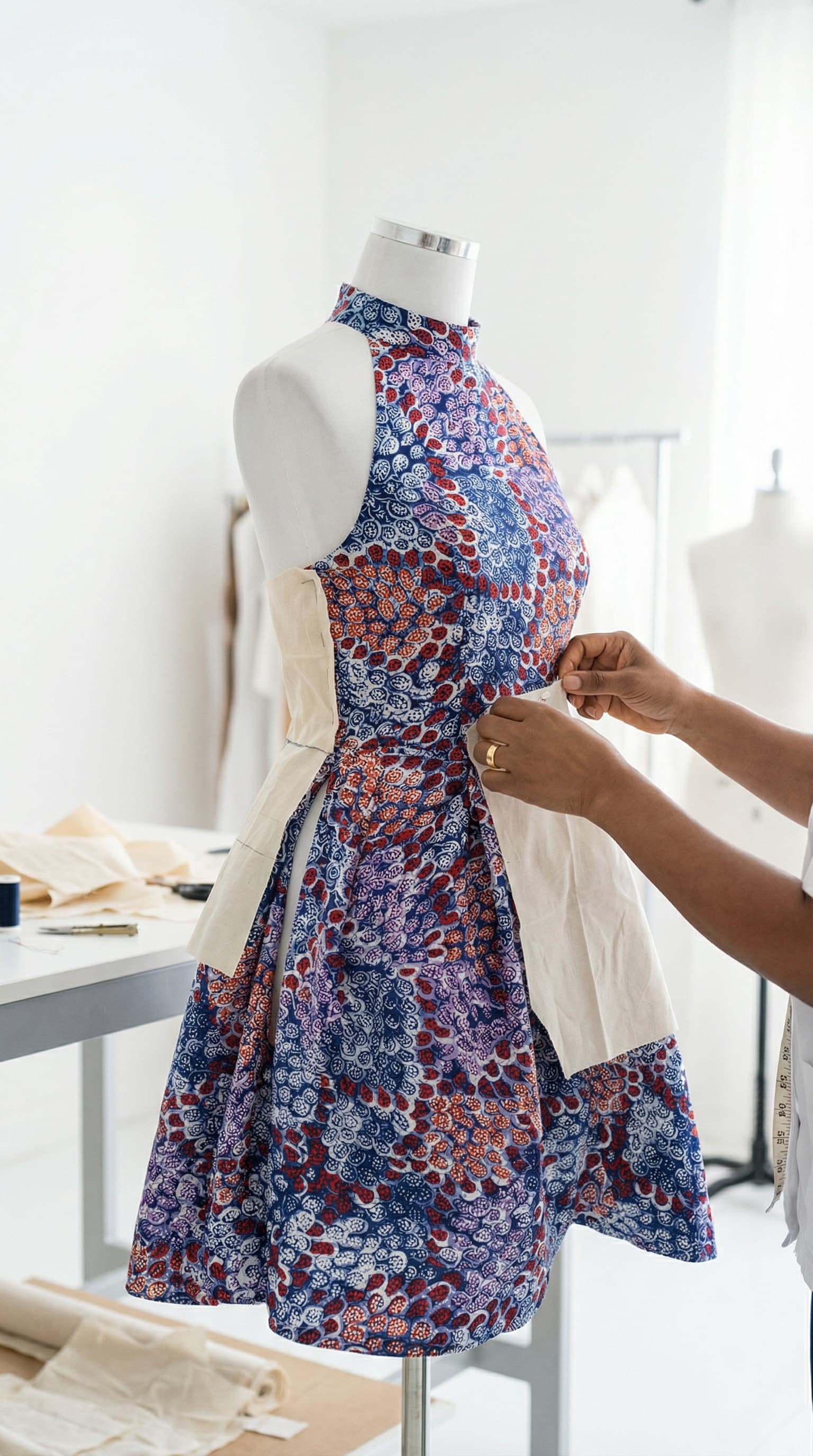
Designed from your picture, made by hand
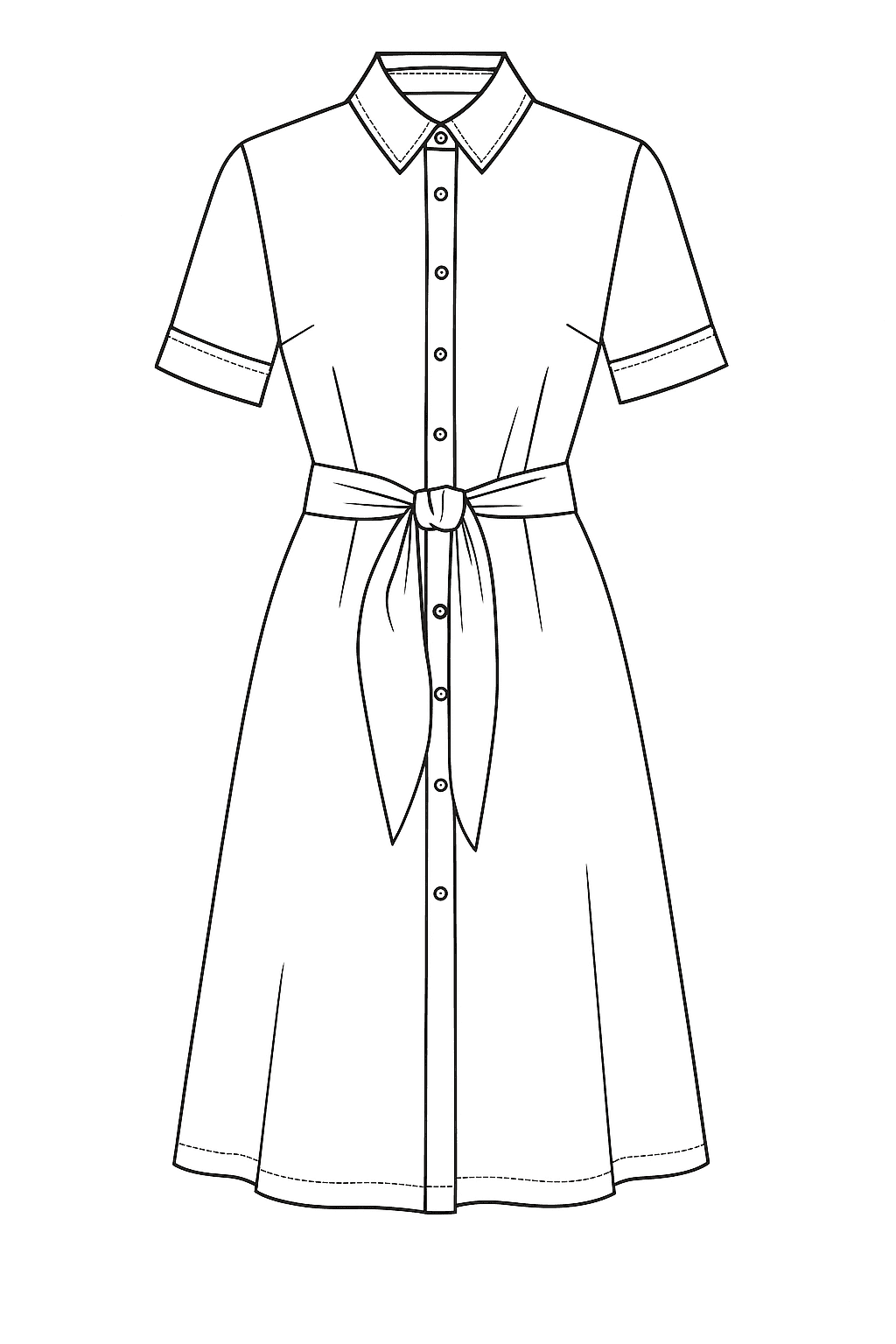
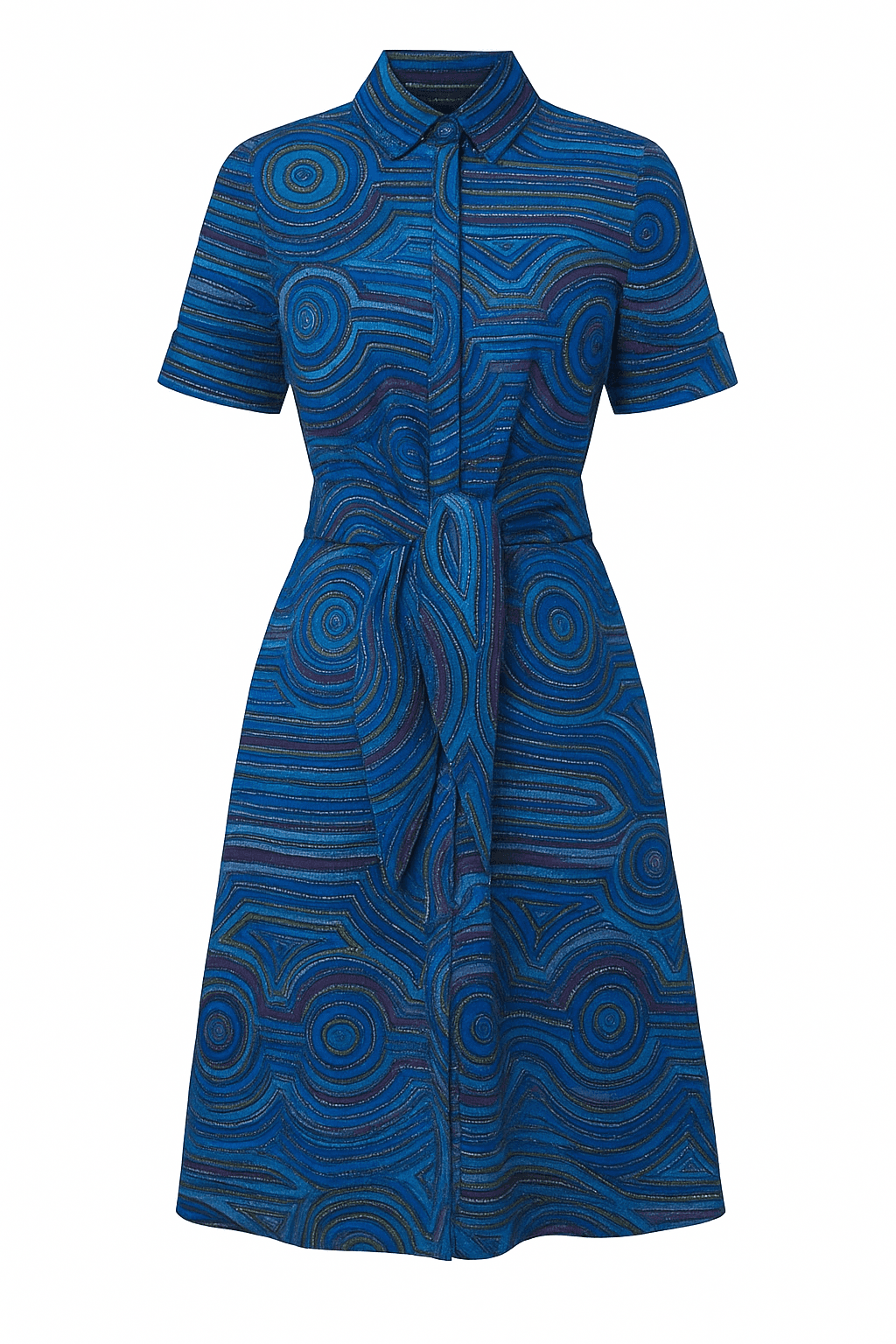
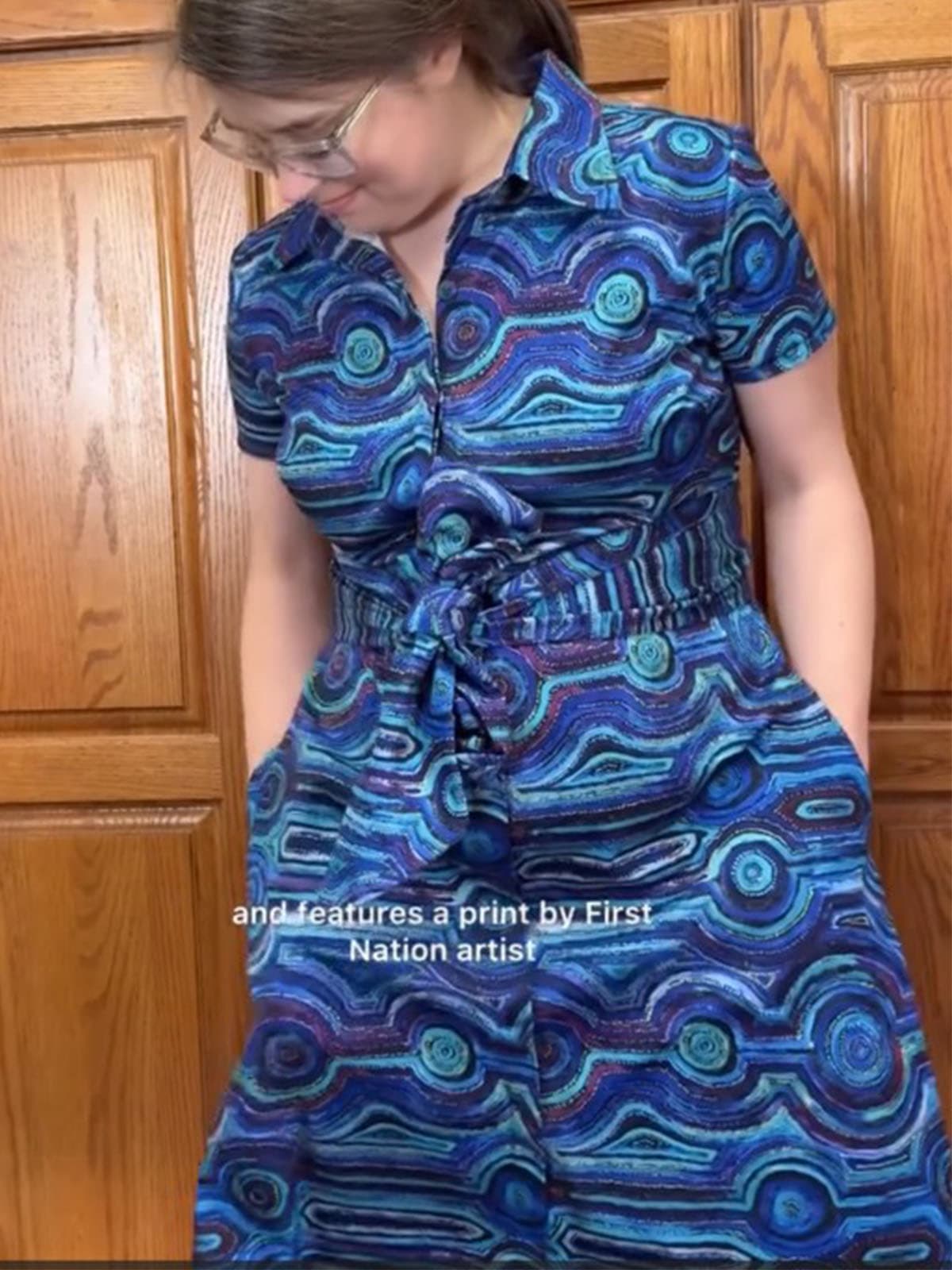
Mary’s shirt dress: from a fabric and a sketch to the lake.
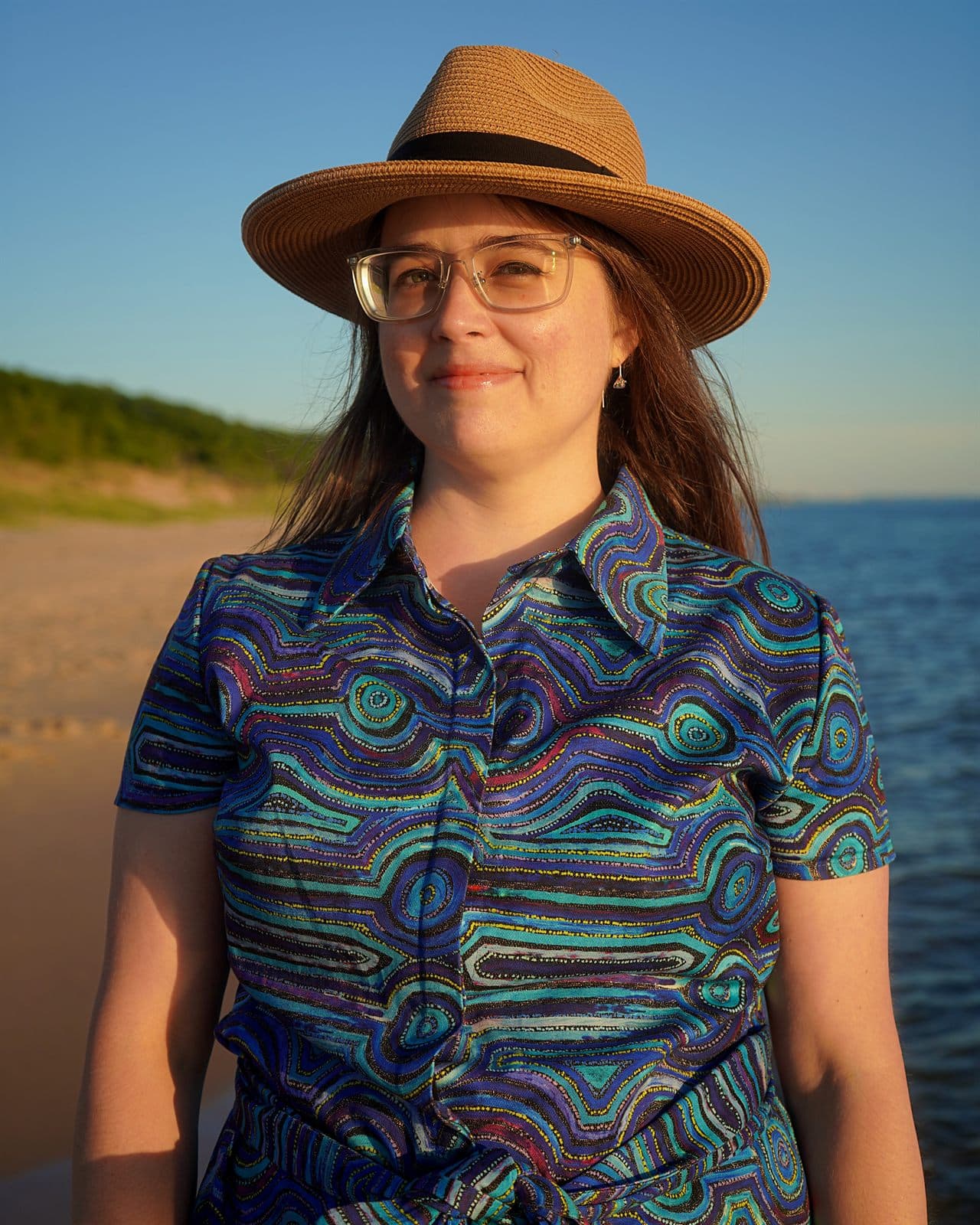 Photograph · the finished dress
What Mary wanted
Mary started with the cloth, not a catalogue: a bold blue cotton drill printed with Yankirri Jukurrpa (Emu Dreaming) by Ricardo Jampijinpa Gallagher, sourced in Perth. The brief that came with it was simple — a short-sleeve button-front shirt dress with a proper collar, a waist tie and a softly flared skirt, comfortable enough to wear every day.
What was decided for fabric, construction and fit
The drill is a heavier cotton twill, so the collar, button placket, tie and skirt hold their shape without extra structure. The waist tie was cut in the same fabric and left adjustable, so the dress can be worn tied close or loose. And rather than grading a standard size, the dress was cut to Mary’s own measurements by Enisa in her Sarajevo studio. First Nations fabric is never AI-rendered at MadeApt — the direction was resolved by hand before cutting.
The finished result
A dress that reads as an easy everyday shirt dress and is entirely hers: her fabric choice, her proportions, a named maker. It is now in the shop as Mary’s Emu Dreaming Shirt Dress, made to your measurements in the same cloth, with a royalty paid to the artist on every piece.
Available to order at $499 USD, made to your measurements. Approximately 4 weeks including shipping.
Mary is a US customer. Ordering from the US works the same way, with delivery included — see custom-made dresses for US customers.
Common mistakes when ordering a dress from a picture.
Saying “exactly this” without explaining what matters
The tailor may focus on the wrong features. Identify the two or three elements that make the dress special to you.
Assuming the photograph shows the true fabric or colour
Lighting, filters and editing can dramatically change both. Approve real fabric photographs or samples where possible.
Hiding the budget until the design is finished
Budget affects fabric, volume, embellishment and construction. Sharing it early produces a more useful proposal.
Mentioning the event date too late
The maker needs to assess production and delivery before accepting the commission. A technically possible dress may not be responsibly possible within the available time.
Providing measurements without checking the method
A list of numbers is only useful if each one was taken consistently and for the correct garment. Follow the supplied guide and confirm unusual measurements before cutting.
Choosing appearance over movement
A dramatic standing image may conceal a dress that is difficult to sit, walk, breathe or dance in. Tell the maker how you will actually wear it.
Approving the design but not the fabric
Fabric is part of the design. A substitute can change the entire result even when the pattern stays the same.
Frequently asked questions
A last check before you send your picture.
Your reference image — the clearest one you have, plus any extra angles or close-ups
What must stay, what can change — the two or three details you love most, and anything you want altered
The occasion and the date you need it by — most orders take approximately 4 weeks including shipping; complex designs longer
Height and fit notes — plus any support, coverage, access or mobility requirements
Fabric, colour and movement preferences — or the fabric you already own
Your budget, including shipping, and your destination — city and country — it decides which version of the idea is realistic
You do not need every answer before you send it. No payment now — a quote first, then you decide.
The picture, made yours
You already found the dress idea. Now make it yours.
Send the picture with what you love, your budget including shipping, where it’s going and when you need it. A real person quotes it, and a skilled tailor makes it to your measurements.