design your own coat.made to measure, from fabric to fit
the shoulders are the whole coat
A custom coat from MadeApt: you choose the silhouette, length, lapel, closure, fabric and lining, and a vetted tailor cuts it to your shoulder width, sleeve length and body length rather than a size. Coats and tailored jackets start from $399 USD; a fully lined long wool coat is quoted individually. Approximately 4 weeks including shipping, confirmed as an estimate when we quote, and you see the price before you pay anything.
The same path we use for every custom made dress: design online, measure at home, made by a named maker.
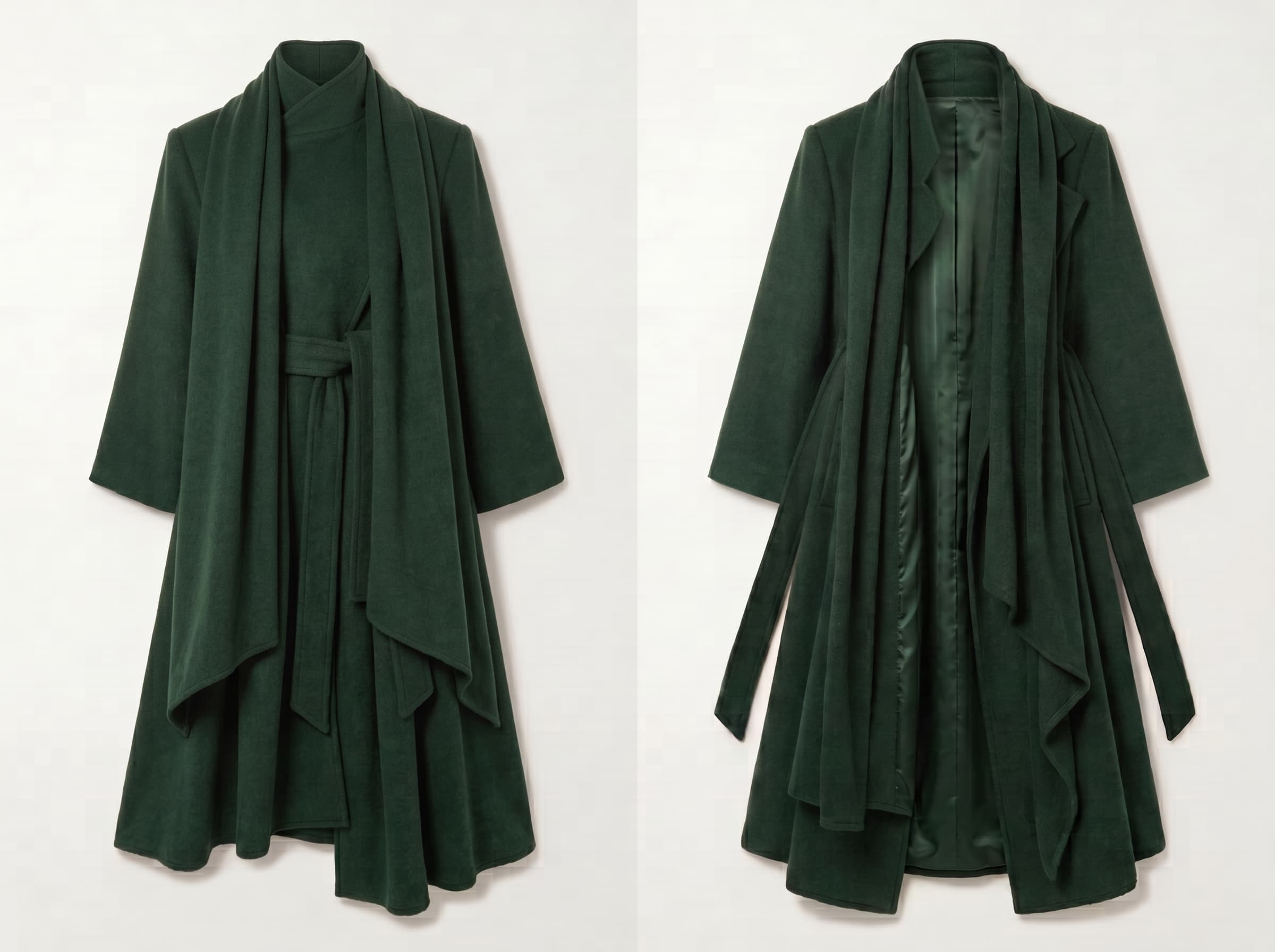
The coat we just made.
The brief. Furio, in Australia, asked for a belted long coat with its own draped scarf, bracelet-length sleeves and a full lining, in deep forest green, in a choice of two lengths: classic to mid-calf, or longer to the ankle.
The fabric. Brushed coating cloth, deep forest green, a brushed wool coating with enough body to hold the fall of the scarf. The lining: satin, in the same green, so the inside is as finished as the outside.
The fit decisions
A collarless neckline, with the scarf in the same cloth wrapping the collar line and falling over the front in two long points.
Bracelet-length sleeves, so the cuff of a shirt or a watch shows.
A self-fabric tie belt through loops, so the coat can be worn cinched or fall straight from the shoulder when open.
A centre back vent on the longer length, so the skirt keeps moving at a walk.
The length chosen by the customer before checkout, recorded on the order so the cutter cuts exactly that one.
- The quote
- A$350, delivery within Australia included
- The timeline
- Around 2 weeks to make from confirmed measurements, and around 2 weeks for shipping
- The measurements
- Taken at home with our coat guide after checkout: shoulder width, chest, sleeve length and the chosen coat length decide this one.
The result is one coat that reads as two: cinched and sculpted with the belt tied, straight and easy with it loose and the scarf hanging free. Nothing about it exists on a rack, and nothing about it was difficult: a sentence, a cloth, a lining and twenty-two measurements.
Why coats are where fit matters most.
A dress that is slightly off can be belted, layered or forgiven. A coat cannot, because it is the outermost line of everything you wear and it hangs from the one point no alteration can move: the shoulder. Off-the-rack coats are cut to a size chart that fixes four things at once, and most people are a different size in each of them.
Shoulders
A coat hangs from the shoulder seam. If the seam sits past your shoulder, the whole coat drops and the sleeves bunch; if it sits short, the coat pulls across the back when you reach. Off-the-rack coats are cut for one shoulder width per size, and it is the one measurement an alteration tailor can rarely fix.
Sleeve length
A coat sleeve should end at the wrist bone with the arm bent, long enough to cover the cuff of what is under it. Ready-to-wear sleeves are graded to an average arm, so tall and petite wearers get the same compromise in different directions.
Body length
Mid-thigh, knee, mid-calf or ankle reads completely differently on a 160 cm frame and a 180 cm one. Made to measure sets the hem against your height and the shoes you will wear it with, not against a size chart.
Layering room
A coat is worn over something. The ease through the chest, upper arm and back has to allow for a knit or a blazer underneath without the coat looking two sizes too big over a shirt. We ask what you will wear under it and cut the ease for that.
Made to measure settles all four before the cloth is cut. If you have been having coats altered for years, our guide to alterations versus made to measure sets out what a tailor can and cannot fix afterwards.
What you can choose on a custom coat.
Everything below is yours to decide, in plain words. Describe the coat in the studio, or pick The Quiet Coat and change the parts you want changed. If a combination will not sew well, your tailor says so and proposes the closest version that will, before the quote.
Silhouette
Straight
Falls clean from the shoulder with no waist shaping. The quietest line, and the one that layers over anything.
Cocoon
Rounded through the shoulder and body, narrowing towards the hem. Generous, soft, best in a cloth with some body.
Belted
Cut with ease, then cinched by a tie or buckled belt, so one coat can be worn fitted or open and straight.
Car coat
Shorter, usually to mid-thigh, with a simpler collar. Easy to sit and drive in, good for a first custom coat.
Trench
The classic storm-flap, epaulette and belted shape in gabardine or a cotton-wool blend, cut to your proportions.
Length
Lapel and collar
Closure
Lining
The lining decides how a coat feels to put on and how warm it is, and it is the part most ready-to-wear coats economise on. You choose how much of the coat is lined, and what with.
Full lining
Lined through the body and sleeves. The warmest, slides on over a knit, and the coat holds its shape longest.
Half lining
Lined through the back and shoulders only, so a lighter cloth breathes and the coat weighs less.
Unlined
For a summer or transitional coat in linen or cotton, with the inside seams bound so it is finished without a lining.
Satin
Smooth, with a little sheen, and the easiest to slide a sleeve into. Furio's coat is lined in satin in the same green as the shell.
Viscose or cupro
Matte, breathable and quiet against the skin. The choice for a coat worn over bare arms or a fine knit.
Contrast or print
The lining is the one place a coat can be loud without anyone seeing. A print, or a colour that only shows when it is open.
How to choose it: say it in the studio when you describe the coat (“fully lined, satin, in the same colour” is enough), or tell your tailor when the quote comes back. The lining swatch is approved alongside the shell cloth at the first quality check, so you see both before anything is cut, and the lining fibre is named on your order.
Which fabric for a custom coat, and what each one costs.
A coat cloth has to do three things a dress cloth does not: hold a shape, keep out wind and survive years of wear at the cuffs and collar. These are the four we are asked about most. Browse the full range on the fabrics page, and if you already own a length of cloth, see supplying your own fabric.
Wool suiting and coating
The default coat cloth: warm, holds a pressed edge, recovers from creasing and takes colour deeply. From a fine suiting weight for a city coat to a brushed coating cloth like Furio's for a winter one. Our makers carry wool in more than twenty colourways, charcoal to camel, navy to burgundy.
CostThe standard cloth, included in the coat price.
See the cloth →Cashmere blends
Wool with a share of cashmere is softer and lighter for the same warmth, with a slight nap that reads as luxury up close. Pure cashmere is beautiful and fragile; a blend wears far better on a coat that is actually worn.
CostA supplement over the wool price, confirmed on your quote before anything is cut.
See the cloth →Melton
A dense, felted wool with a smooth, almost matte face and no visible weave. Windproof, very warm, and the cloth that gives a cocoon or a pea coat its sculpted shape. Heavy, so best for a shorter coat or a cold climate.
CostQuoted per piece once the design is confirmed.
See the cloth →Gabardine
A tightly woven twill, in cotton, wool or a blend, with a smooth diagonal face that sheds light rain. The trench coat cloth, and the right one for a transitional coat that will be worn more days than any other.
CostQuoted per piece once the design is confirmed.
See the cloth →Not sure? Tell us the climate, what you will wear under it, and whether you want the coat to stand away from the body or fall close, and your tailor recommends the cloth and names the fibre content before anything is cut.
The quiet coat.
A quiet coat is one that finishes an outfit without announcing itself: a clean single-breasted line, a minimal collar, a hidden closure, no hardware, in a matte cloth and a colour that goes with everything you own. It is the coat you reach for every day for a decade, and the one ready-to-wear gets wrong most often, because quiet depends entirely on fit.
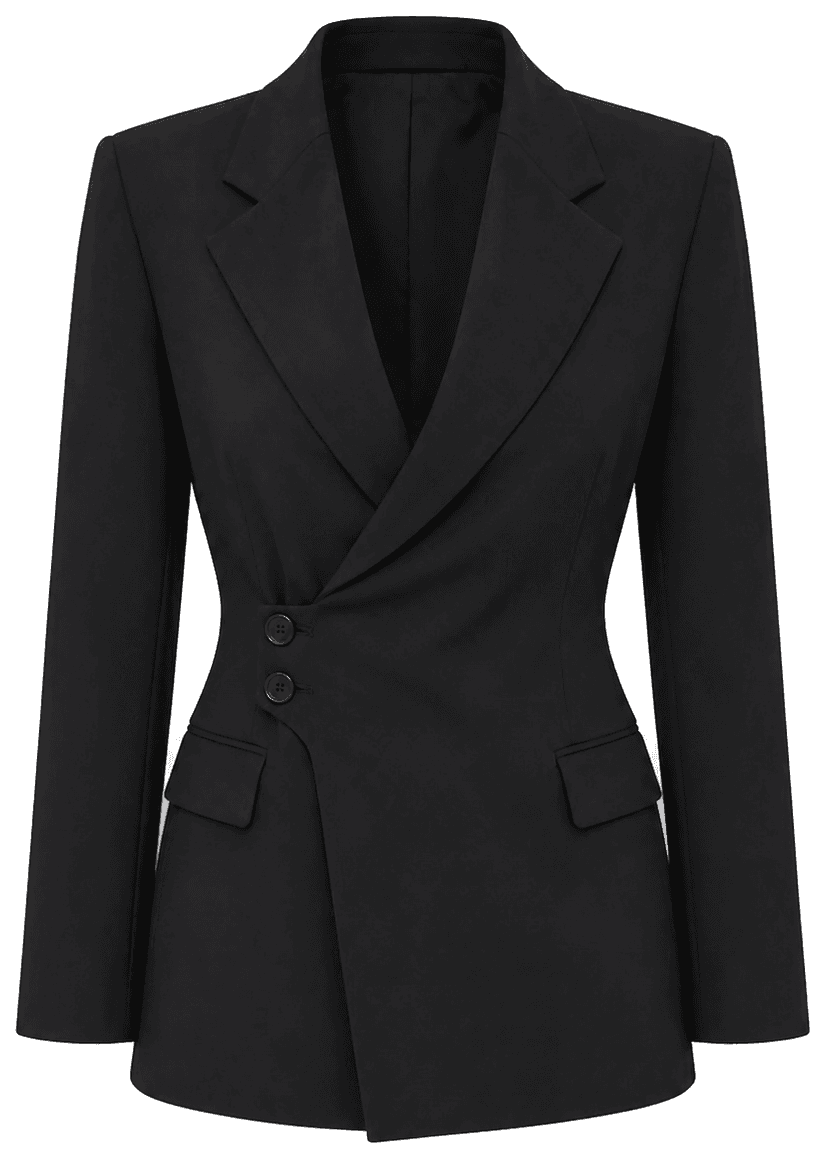
Ours is called The Quiet Coat: structured black cotton suiting, a hidden placket, cut to your shoulders and length, from $399 USD. Pick it as it is, or make it yours by changing the length, the cloth (wool for winter), the lining or the collar.

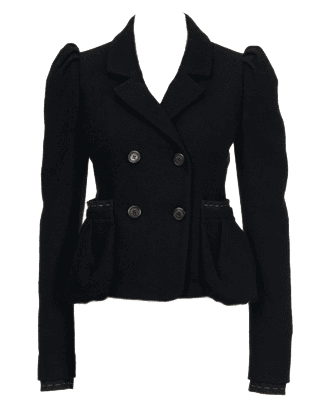
Coats and tailored jackets you can start from.
Which measurements matter for a coat, and how to take them.
Twenty-two points, taken at home with a soft tape over the clothes you will wear under the coat, standing naturally, with someone to help if you can. Five of them decide the coat; the rest refine it. Our coat measurement guide walks through all twenty-two with an illustration for each. It was written for a men’s commission, and the same points apply to any coat.
Shoulder width — Where the sleeve seam sits. The one alteration that can't be done well afterwards.
Chest circumference — Taken over what you will wear under the coat, so the ease is for real layers.
Sleeve length — Shoulder to wrist bone, arm slightly bent.
Back width — Across the back between the arms — the measurement that stops a coat pulling when you reach forward.
Desired coat length — Your choice of hem, checked against your height and the shoes you will wear it with.
The rest of the set
You measure after checkout, not before: the guide arrives by email, takes about ten minutes, and your maker confirms the fit from those numbers before cutting. If a number looks unusual we ask, rather than cut to it.
Frequently asked questions
git commit -m "a coat that hangs from your shoulders"
A coat cut to you, not a size.
Describe it in a sentence, pick the cloth and the lining, measure at home. A tailor quotes it before you pay.
How it works →