Can a tailor recreate my favourite trousers? Fit, fabric and what to send
The short answer
A tailor may be able to make a new pair using your favourite trousers as a reference. The important question is what you want to recreate: the silhouette, the way they fit, the feel of the fabric, or all three. A close result depends on the information available and the cloth used, not just copying the outline in a photo.
Perhaps the original pair has worn out. Perhaps the brand stopped making it. Or perhaps the waist finally fits without leaving the hips uncomfortable, and you would like that feeling in another colour.
Start by describing what makes the pair worth returning to.
A reference pair and a photograph give different information
A photograph can show leg shape, pocket placement and where the waistband appears to sit. It is less useful for understanding the inside construction or how much room the garment has when you sit down.
An existing pair can provide more information, but it is not automatically a perfect template. It may have stretched with wear, shrunk in washing or been altered since you bought it.
| What you have | What it helps communicate | What still needs checking |
|---|---|---|
| The original trousers | Shape, construction details and garment dimensions | Wear, previous alterations and whether a physical assessment is available |
| Clear photos of the trousers on you | Where they sit and what you like about the silhouette | Fabric behaviour, accurate measurements and hidden construction |
| An old product image | The design direction | Your fit needs, unavailable views and differences between the image and reality |
For MadeApt, begin with photos and notes through the custom-made pants page. If you want someone to inspect the original pair, ask whether that can be arranged before posting anything. Do not send your only favourite pair without agreeing on handling and return arrangements.
Tell us what to keep, and what to change
“Exactly like these” can hide several different requests. Try separating the qualities you love from the compromises you have been accepting.
For example:
Example brief
Keep the wide leg, the high waistband and the side pockets. I like how they sit through the hips, but the waist is slightly loose. I would like the new pair a little shorter for flat shoes. The originals have some stretch; I am open to a different fabric if you explain how the fit will change.
That is an illustrative brief, not a customer testimonial. It gives the maker something to assess without assuming that every existing detail should be repeated.
Useful observations include whether the waistband rolls, whether the pockets pull open, where you feel restricted when sitting, and whether the length works with your normal shoes. Describe the experience rather than trying to diagnose the pattern yourself.
Fabric can change the result even when the shape looks similar
A close colour match is not enough. Compare weight, stretch, recovery and drape as well as fibre content.
If the original pair relies on stretch, replacing the fabric with a firm non-stretch cloth may require a different fit. A fluid fabric and a structured one can also make the same broad leg shape look quite different. Seamwork’s guide to choosing fabric online (opens in a new tab) explains why these properties matter.
Photograph the original care and composition label if it is still readable. It is a useful clue, not a complete fabric specification. If the exact cloth is unavailable, decide which matters most: its feel, its appearance, its care requirements or its colour.
For a new pattern or a significant fabric change, ask the maker whether a sample or fitting stage is appropriate, whether it is available, and what it would add to the quote. Do not assume it is included.
What to send for a useful assessment
Prepare a small reference pack:
- Front and back photos of the trousers laid flat, with the waistband and hems visible.
- Optional front, side and back photos worn, if you are comfortable sharing them privately through the enquiry.
- Close-ups of important details, pockets, fastening, waistband, pleats and any lining.
- The fabric label, plus a note about stretch and how the trousers feel.
- Three things to keep and up to three things to change.
- Your intended use and usual footwear, long workdays, travel, events or everyday wear.
- Your budget range, currency, delivery country and any fixed deadline.
You do not need to assemble a professional technical pack to make an enquiry. Once the design has been assessed, follow the maker’s measuring instructions. Body measurements and the dimensions of a finished garment are different; do not substitute one for the other or add an arbitrary allowance.
Avoid identifying documents or unrelated personal information in your reference photos.
You may be closer to an existing MadeApt style than you think
Sometimes the important part is a particular shape rather than an exact reconstruction. Starting from a relevant shop design gives both you and the maker a shared reference.
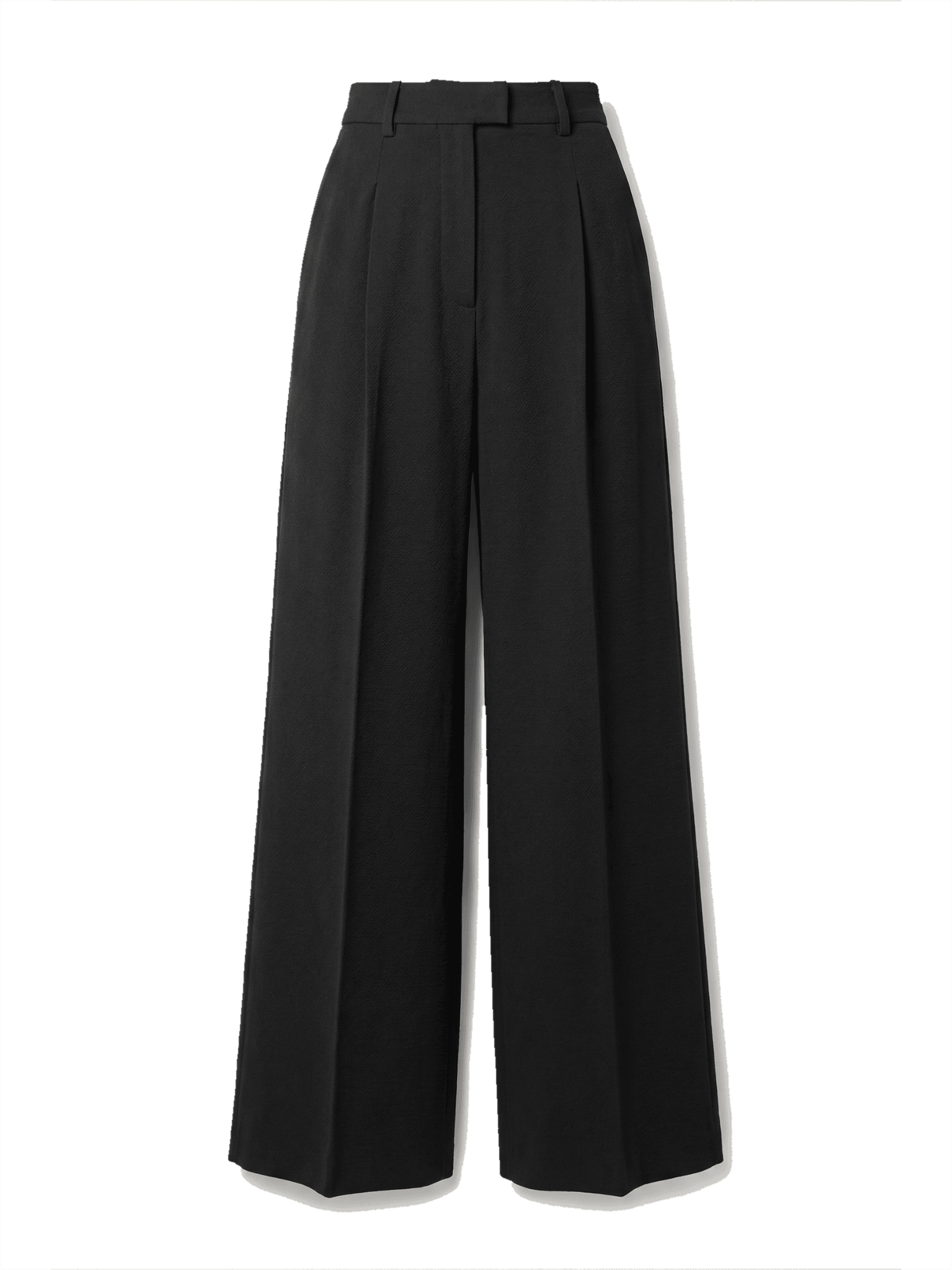 Catalogue reference
The Fluid Wide-Leg Trouser
Black Fluid Crepe · $259 USD
A reference for a high-waisted, full-length wide leg with front pleats and a soft drape.
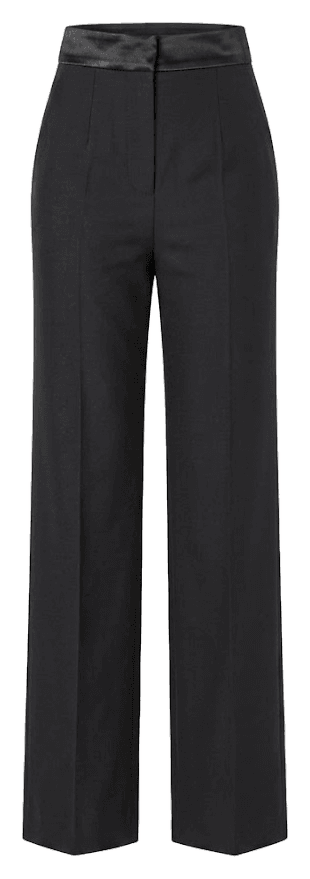 Catalogue reference
The Satin-Waist Cigarette Trouser
Black Cotton & Satin · $329 USD
A slimmer, more tailored direction, with a cotton body and satin waistband detail.
 Catalogue reference
Asymmetric Pants
Soft Cotton · $349 USD
Another starting point if an asymmetric front is part of what you like.
These are alternatives to discuss, not claims that an existing product will reproduce your original pair. Confirm the current design, fabric and requested changes before ordering. The product page is the starting specification; your agreed brief should make any variation clear.
Why the quote may differ from the original shop price
The amount you paid for the old trousers does not necessarily reflect the work involved in making a new pair individually. The quote may need to account for pattern development, fabric sourcing, construction details and any agreed sampling or fitting work.
For the most useful comparison, ask what is included, not only the final number. Clarify fabric, alterations or fitting arrangements, delivery, and the cost of changes made after the brief is agreed.
If your existing trousers still work and only need a new zip, a hem adjustment or a modest alteration, a local alterations service may be the simpler option. Custom production is not automatically the best answer to every trouser problem.
Can you recreate trousers from one picture?
A picture can start the conversation. It cannot reveal every seam, the back view, the exact fabric or how the trousers fit you. Expect questions and possible design changes before a maker can confirm feasibility.
- Will the new pair feel exactly the same? Not necessarily. Fabric, wear, construction and fit all contribute to that feeling. It is more useful to agree on the qualities you want to preserve than to promise an identical result before the reference has been assessed.
- Can I request a different size or colour? You can ask for a new version based on your current measurements and preferred colour. Availability and the design may limit what is practical. Use the original as a reference for its useful features, not as permission to reproduce another brand’s labels or an artist’s print.
Related guides
custom made pants for women: why fit fails off the rack
Waist, rise and length, and what each style costs when it is cut to you instead of a size chart.
custom work pants for women, made to your measurements
Fabrics that survive a working week, pockets that hold a phone, and a waistband that stays put at a desk.
can i supply my own fabric for a custom garment?
If you already own the cloth you want the new pair cut from: what to send and what the maker checks.
can you get a dress made from a picture?
The same reference logic for dresses: what a photo shows, what it hides, and what to send with it.
Start with the pair you keep reaching for.
You do not need the right tailoring vocabulary. A clear photo and a sentence explaining why you love the trousers are enough to begin. Include your budget and deadline so the conversation can focus on a version that is both useful and realistic.