custom work pants for women in australia
trousers made for your actual measurements
The short answer
Custom work pants are cut around your waist, hips, rise, thighs, leg length and preferred silhouette — instead of asking which standard size is closest. At MadeApt, women’s made-to-measure pants currently begin at $259 USD, with current styles between $329 USD and $349 USD. They are designed online, cut to confirmed measurements and sewn individually by a skilled tailor.
Women’s work pants are expected to do a surprising amount. They need to sit cleanly at the waist, fit through the hips and thighs, fall at the right length, remain comfortable while sitting and still look polished after a commute, a meeting and a full working day.
For many women, standard sizing solves one of those requirements by sacrificing another. The waist fits but the hips pull. The hips fit but the waistband gaps. The rise feels wrong. The hem is too short. The pockets are decorative. By midday, the trousers that looked sharp in the fitting room feel like something to escape from.
Custom work pants approach the problem differently. Instead of asking which standard size is closest, the trousers can be cut around your waist, hips, rise, thighs, leg length and preferred silhouette.
Custom women’s work pants: what you can choose.
Waist position and fit
Reduces gaping, digging or sliding during the day
Front and back rise
Changes comfort while sitting and how the trousers balance on the body
Hip and thigh room
Allows movement without sizing the entire garment up
Leg shape
Creates a wide, straight, tapered or cigarette silhouette
Inseam and finished length
Works with your height and usual work shoes
Fabric
Determines structure, breathability, drape and care
Pockets
Can be made deep and functional rather than decorative
Waistband and fastening
Changes comfort, polish and how the front sits
Pleats and crease
Add room, structure or a more traditionally tailored finish
The result should not simply be “office appropriate.” It should work for the body and working life of the person wearing it.
Why women’s work pants are so difficult to fit.
Most ready-to-wear trousers begin with a standard size chart and a predetermined relationship between waist, hip, thigh, rise and leg length. Real bodies do not preserve those ratios. Two women with the same waist measurement may have different:
Sizing up may create enough room for the hips while leaving excess fabric at the waist. Sizing down may remove the gap but create pulling, pocket flare or uncomfortable tension through the crotch and thighs. That is not a failure of the body. It is a limitation of asking one standard pattern to represent many different proportions.
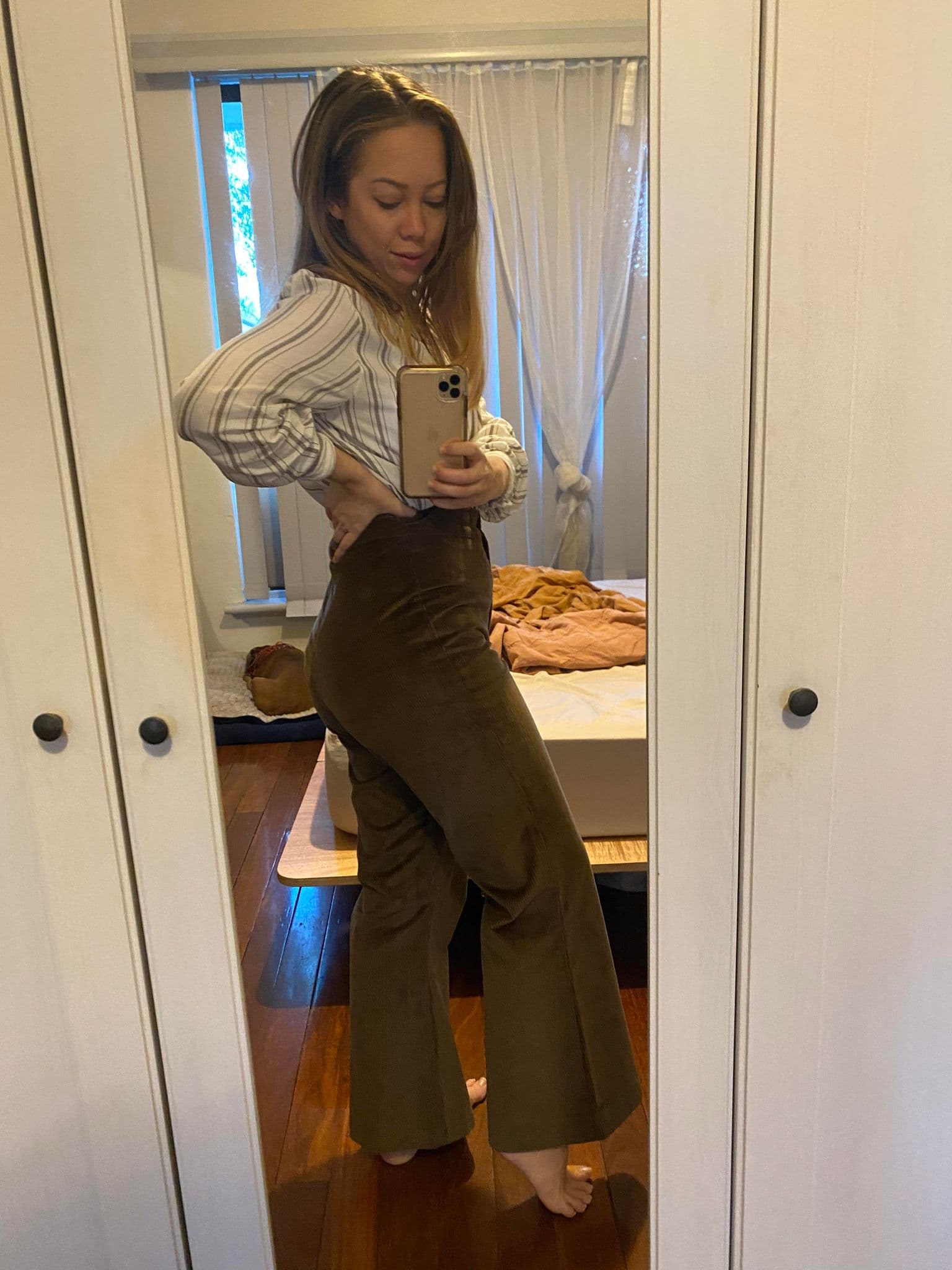
Elena's corduroy pair — cut to her proportions
Elena’s winter trousers — high in the waist, fitted through the hip and thigh to her measurements, finishing in a gentle flare with a pressed front crease.
Common work-pant fit problems — and what they usually mean.
Waistband gaps at the back
- The trouser's waist-to-hip ratio does not match yours
+ Shape the waistband and back waist independently from the hip
Hips fit but waist is too large
- You need different waist and hip proportions
+ Draft around both measurements instead of choosing one size
Waist fits but pockets pull open
- Insufficient hip, stomach or thigh room; pocket angle may also contribute
+ Add room where needed and reposition or stabilise pockets
Horizontal lines across the front
- Tension through the hip, stomach, rise or upper thigh
+ Adjust ease, rise depth and front shaping
Fabric gathers beneath the seat
- Excess or poorly distributed back-rise length
+ Refine the back rise, seat shape and upper-leg balance
Crotch feels too low or too tight
- The rise length or curve does not suit your body
+ Adjust front rise, back rise and crotch curve
Knees or creases twist
- The leg is not hanging on the body's natural line
+ Rebalance the pattern and grainline
Pants are always too short
- Standard inseams do not accommodate your height or rise
+ Set the total length and proportions before cutting
Petite pants look shortened rather than proportioned
- Only the hem changed; rise, knee and pocket placement did not
+ Scale the complete pattern, not merely the length
Some simple problems can be corrected by alterations. But when the waist, hip, rise, thigh and length all need changes, beginning with individual measurements can make more sense than repeatedly rebuilding standard trousers.
What “custom work pants” should actually mean.
Fashion terminology is inconsistent, so it helps to understand the process you are buying.
Made to order
The trousers are produced after an order is placed. They may still be cut in a standard size.
Custom sized
Selected measurements are used to adjust an existing garment. The amount of adjustment varies by company.
Made to measure
An established pattern or trouser direction is adjusted more comprehensively around your measurements and fit preferences. This is how MadeApt works.
Bespoke
A new pattern may be developed specifically for you, often with in-person fittings and a toile or test garment. This is usually the most involved and expensive option.
MadeApt work pants are made to measure: the waist, hip, rise, length and leg shape can be adjusted before the fabric is cut. You can begin from an existing style or share a reference for something more individual.
The best work-pant shape depends on how you want to wear it.
There is no universally flattering trouser. Proportion, fabric and fit matter more than choosing a silhouette according to a body-shape rule.
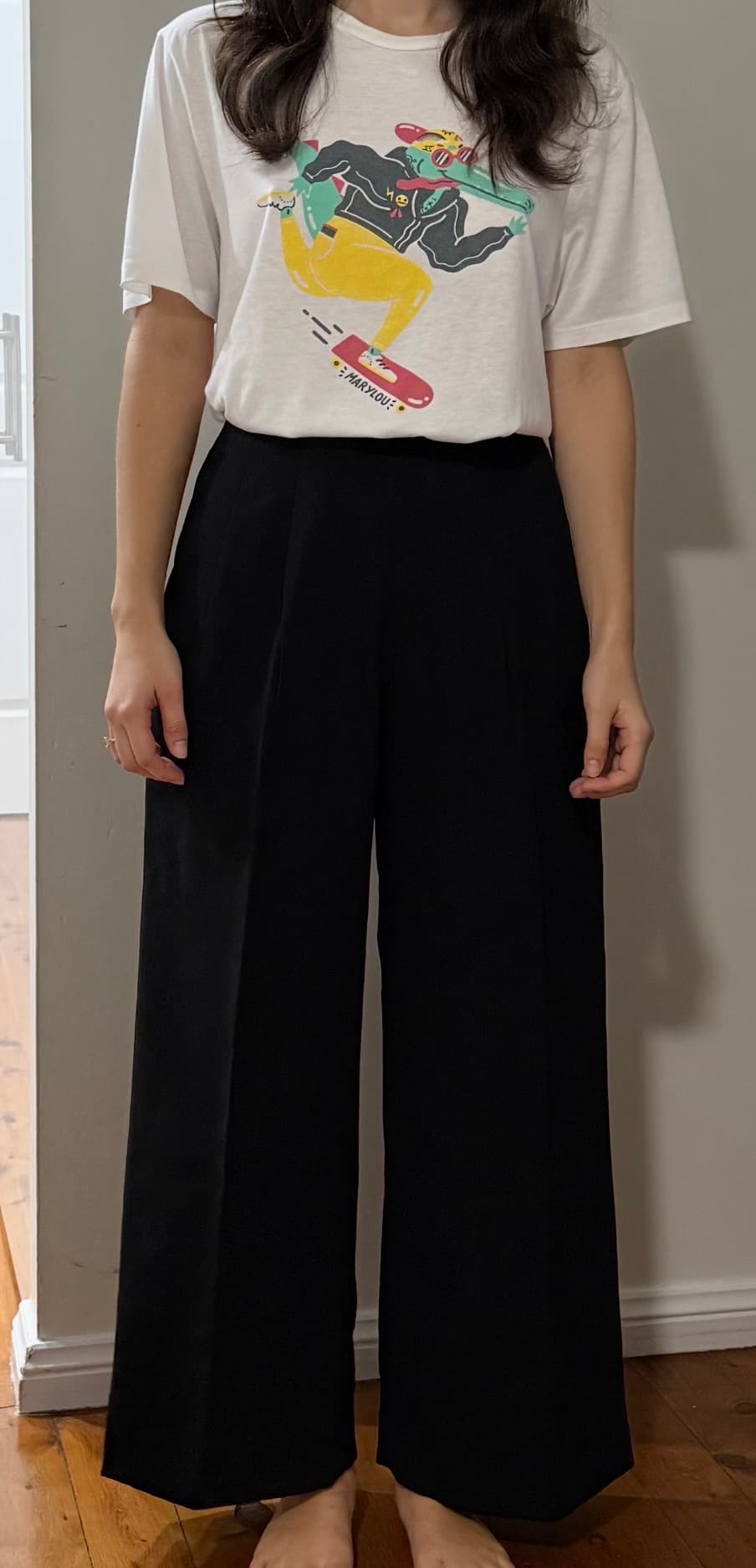
Dana's wide-leg pair — made to her measurements
Wide-leg work pants.
Wide-leg trousers can feel polished without being restrictive. A good pair should sit cleanly through the waist and hip before falling with enough weight and length to create a deliberate line.
Pleats can provide movement and hip room, but their position and depth matter. Poorly placed pleats may pull open; properly balanced pleats can create both structure and ease.
MadeApt’s Fluid Wide-Leg Trouser is currently $259 USD in black crepe. Its waist, hip, rise, length and leg width can be adjusted to the wearer.
Straight-leg trousers.
A straight leg offers a clean line that works with shirts, knits, blazers and many shoe shapes. It can be full length, ankle length or slightly relaxed depending on the workplace.
The leg should hang smoothly rather than twisting or pulling across the thigh. A crease can make it feel more traditionally tailored; a softer fabric makes it less corporate.
Tapered or cigarette pants.
Tapered work pants narrow toward the ankle and can create a compact, precise silhouette. They require enough room through the seat, thigh and calf to remain comfortable while sitting.
The finished length matters more than it appears. A slight change can determine whether the trouser feels sharply cropped or simply too short.
The Satin-Waist Cigarette Trouser — structured cotton with a satin waistband, currently $329 USD — is MadeApt’s take on this shape, cut with a clean slim-to-straight leg.
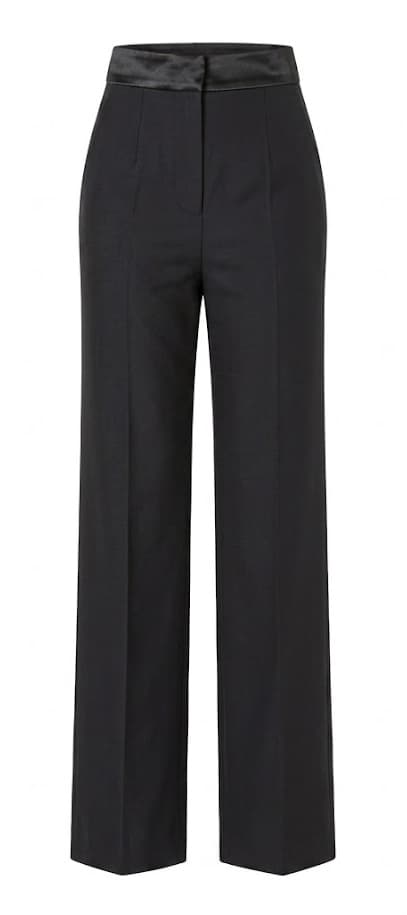
The Satin-Waist Cigarette Trouser — $329 USD
Pleated trousers.
Pleats add design and functional ease through the front of the pants. They can be subtle and tailored or deeper and more architectural.
If you have fuller hips or thighs, pleats should be positioned and supported so they fall as intended instead of remaining pulled open. That is a pattern and fit decision — not a reason to avoid pleats entirely.
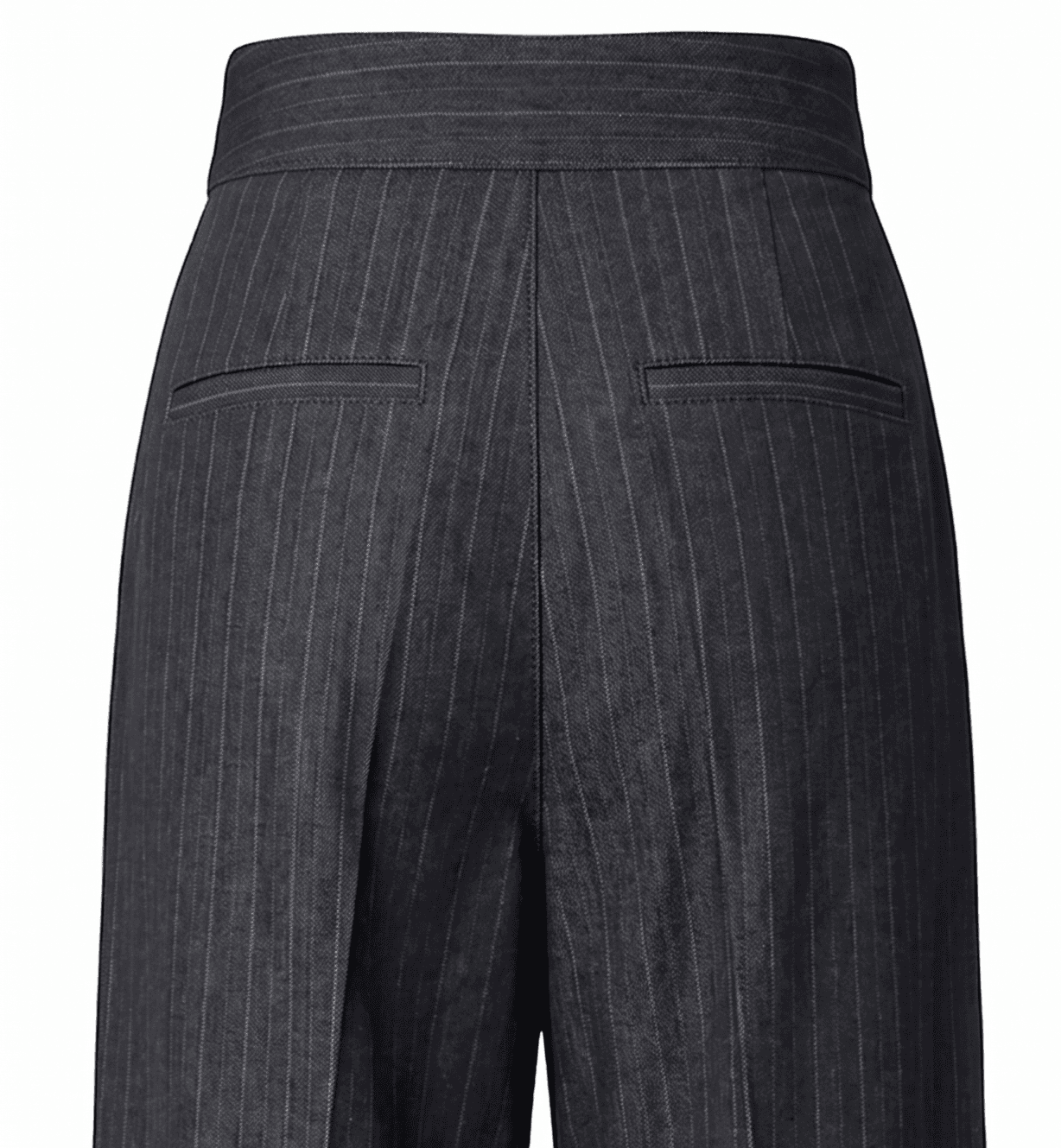
Asymmetric Pants — back detail
Creative or asymmetric work pants.
Not every workplace requires conventional black suiting. Creative offices, studios, conferences and tech events can accommodate more personality while still looking intentional.
The MadeApt Asymmetric Pants use soft cotton, a relaxed shape and a sculptural front pleat. They currently start at $349 USD and can be adjusted through the waist, hip, rise, length and pleat placement.
Choosing fabric for Australian work pants.
Australia does not have one office climate. A winter commute in Melbourne, humid travel in Brisbane, summer in Perth and year-round air conditioning create different requirements. The best fabric should be chosen according to climate, dress code, movement and care — not only colour.
Lightweight wool suiting
Formal offices, presentations, travel and year-round tailoring
Polished drape and strong wrinkle recovery; check care requirements
Wool blend
Frequent office wear requiring structure and resilience
Fibre content and quality vary; some blends add stretch or easier care
Cotton twill or cotton suiting
Smart-casual offices and structured everyday trousers
Breathable and practical; may look less formal than fine wool
Linen
Hot weather and relaxed workplaces
Highly breathable, but naturally creases and can become soft through wear
Linen blend
Warm climates with slightly easier wear
Can retain breathability while reducing some of linen's collapse or creasing
Crepe
Wide-leg or fluid trousers requiring movement
Choose enough weight to prevent cling, transparency and a flimsy finish
Stretch suiting
Long seated days and closer silhouettes
A small amount of stretch can improve comfort; recovery matters more than maximum stretch
Lightweight Merino wool should not automatically be dismissed as a winter-only option. Woolmark describes fine Merino as naturally breathable, temperature-regulating and wrinkle resistant, which can make lightweight wool useful for work travel and changing indoor conditions.
For a modern cotton option, the Satin-Waist Cigarette Trouser combines a structured cotton body with satin waistband detailing. It is currently $329 USD and can move from office wear into dinners, conferences or evening events.
What measurements are needed for custom work pants?
Useful trouser measurements commonly include:
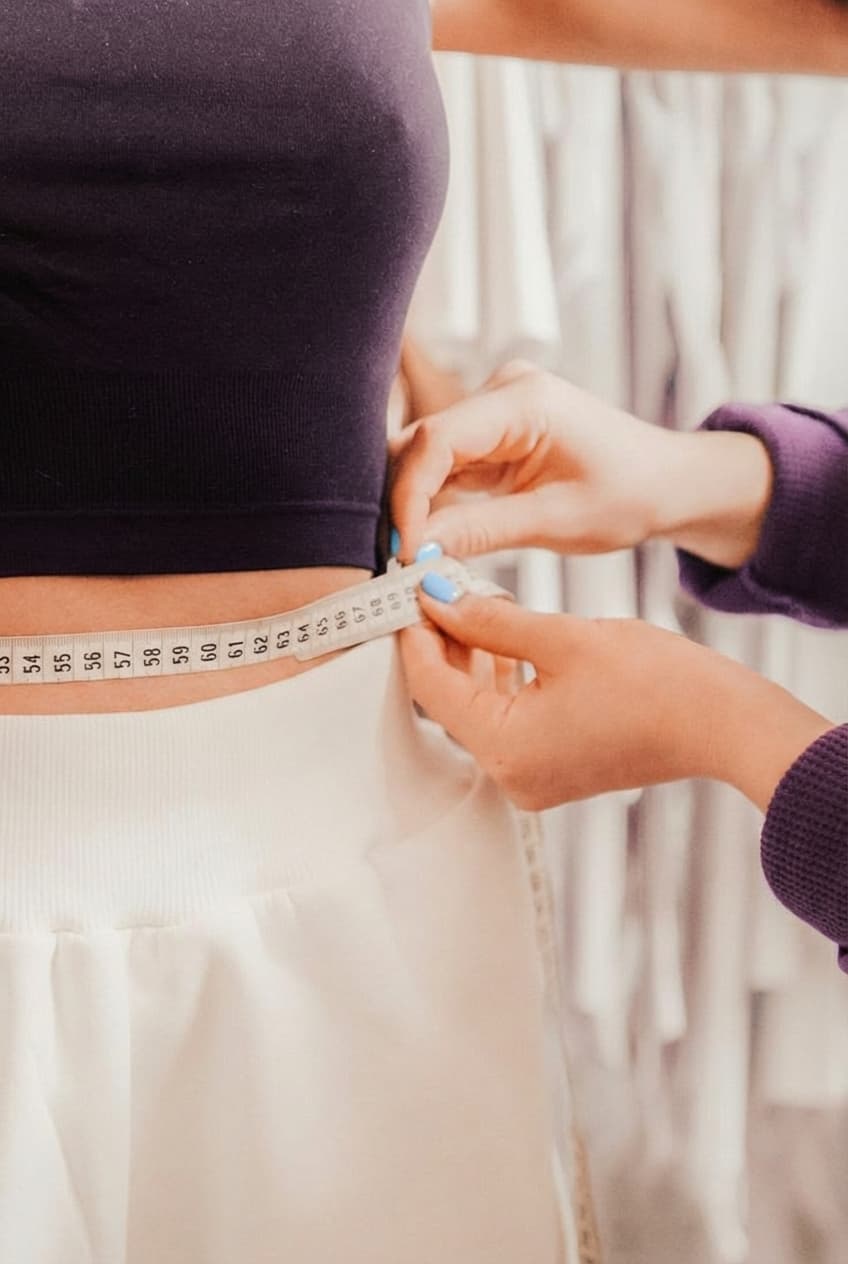
A soft tape and honest numbers
Measurements alone do not describe every fit preference. Tell the maker whether you want the waistband held firmly or comfortably eased, whether you tuck shirts in, which shoes you wear and how much room you want through the thigh.
Do not pull the measuring tape tightly to create a smaller number. Accurate measurements give the maker useful information; aspiration does not.
Work-pant details women should not have to compromise on.
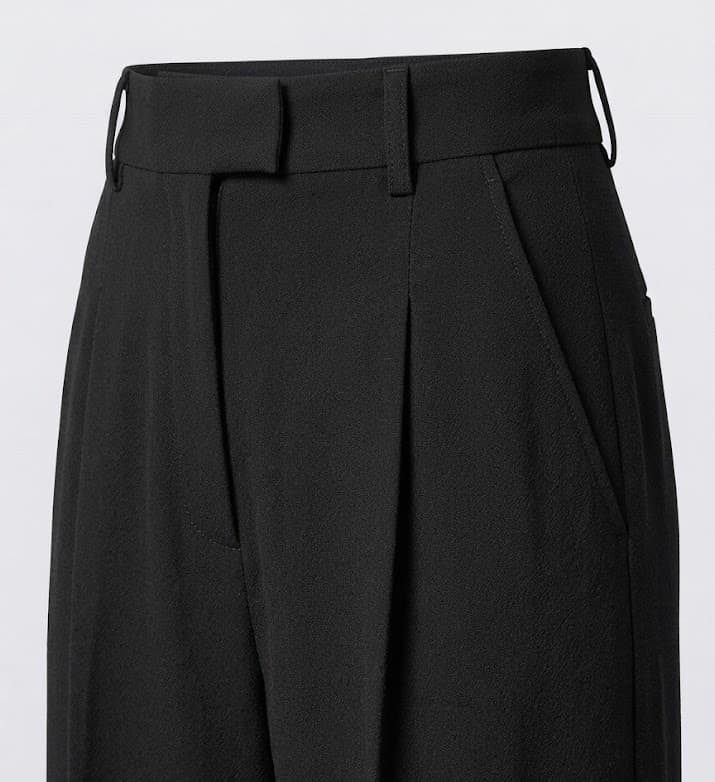
Real pockets, not decorative stitching
Real pockets
Work pants should be able to hold a phone, card or keys without distorting the garment. Pocket depth, placement, opening angle and fabric support can all be decided as part of the design.
A waistband that stays in place
The correct waistband shape depends on the body and the chosen rise. A contoured waistband may suit a defined waist-to-hip difference, while a straighter waistband behaves differently. Internal reinforcement can help it retain structure.
Enough room to sit
Trousers are not successful merely because they look smooth while standing. A work fit should allow you to sit, walk, bend and commute without the waistband cutting in or the rise pulling uncomfortably.
The correct length for your shoes
A full-length wide trouser worn with heels requires a different finish from ankle-length pants worn with loafers. Decide the intended shoe height before the final length is set.
A design that fits your real workplace
Some people need conservative navy wool trousers. Others need breathable cotton, a dramatic leg or a detail that feels like them while presenting on stage. “Professional” should not require every woman to wear the same anonymous pant.
How much do custom women’s work pants cost in Australia?
The price depends on the service, fabric and construction. Australian made-to-measure companies currently span a wide range. Sumissura offers online-configured women’s trousers in fabrics including wool and linen, while InStitchu’s published women’s pants collection includes options below $300 AUD and pieces extending above $400 AUD.
MadeApt’s current work-appropriate options include:
A fluid black crepe wide-leg for work, travel and everyday wear
$259 USD
Structured cotton with a satin waistband — boardroom to dinner
$329 USD
Soft cotton with a sculptural front pleat and relaxed structure
$349 USD
Prices may change with premium fabric, additional structure, unusual details or an entirely new design. Confirm what is included before ordering, particularly fabric, lining, shipping and any post-delivery adjustment policy.
MadeApt work pants: designed online, made by a real tailor.
MadeApt was founded in Perth and works with skilled makers across an international tailoring collective. The process is straightforward:
Choose a starting point
Begin with an existing pair or share a reference, sketch or written idea.
Decide how the trousers should work
Choose the rise, waistband, silhouette, fabric, pockets, length and level of formality.
Provide your measurements
MadeApt guides you through the relevant waist, hip, rise and leg measurements at home.
Confirm the garment direction
Measurements and major design decisions are clarified before cutting begins.
Your tailor makes the pants
The pattern is adjusted, cut and sewn for the individual order.
Technology helps with design, measurements and communication. The trousers themselves are made by human hands. Explore custom-made pants to see the current styles.
What to include when requesting custom work pants.
Send or describe:
- The silhouette you want
- Your preferred rise and waistband position
- Whether you experience waist gaping, thigh tightness or rise problems
- The shoes you expect to wear
- Your ideal finished length
- Your workplace dress code
- Whether you commute, travel or sit for long periods
- Required pocket depth
- Preferred fabric, colour and care routine
- Your deadline and delivery location
If you already own trousers that almost work, photograph them from the front, side and back and explain what you would change. An imperfect garment can still be a useful source of fit information.
Work pants should be one of the easiest pieces in your wardrobe.
The point of custom work pants is not to create a precious garment that remains in the wardrobe. It is to make an everyday piece easier to reach for. The right trousers should work with the shirts, knits, jackets and shoes you already own. They should allow you to move through the day without repeatedly adjusting the waistband or wondering whether everyone else can see the pocket pulling.
Most importantly, the trousers should be adapted to your proportions — not used as another test your body is expected to pass. Start with a MadeApt trouser or design your own piece.
Frequently asked questions
Taller than most size charts allow for? Read the guide to custom clothing for tall women in Australia.
Source notes
Details checked in August 2026 against:
- MadeApt custom-made pants: current starting price, production estimate, measurements and available styles.
- MadeApt Fluid Wide-Leg Trouser: current price, black crepe fabric and customisable measurements.
- MadeApt Asymmetric Pants: current price, soft cotton construction and customisation.
- MadeApt Satin-Waist Cigarette Trouser: current price and cotton/satin construction.
- InStitchu women's pants: current Australian made-to-measure market and published price filters.
- Sumissura women's custom dress pants: current online made-to-measure styles and fabric options.
- Woolmark fibre benefits: breathability, temperature regulation and wrinkle-resistance information for Merino wool.
Prices, products and production estimates can change. This guide keeps its review date visible and cited details are rechecked during annual updates.
git commit -m "cut to your measurements"
Ready for trousers that actually fit?
Start from a current style or share a reference — either way, the pair is cut to your waist, hip, rise and length, and sewn by a real tailor.