custom made pants for women: why fit fails off the rack, and what made-to-measure fixes
one size number, three fit problems. at least one loses.
The short answer
Pants are the garment women give up on — not because good ones don’t exist, but because off-the-rack pants have to solve waist, rise and length with a single number, and for most bodies at least one of the three loses. Made-to-measure solves all three at once, because the pattern is drafted from your measurements instead of a size chart’s assumptions.
Here’s exactly what goes wrong with standard sizing, what a custom pair changes, which styles and fabrics to choose, and what it costs in Australia in 2026. If you’d rather skip straight to the styles, they live on the custom made pants page.
See the pant styles →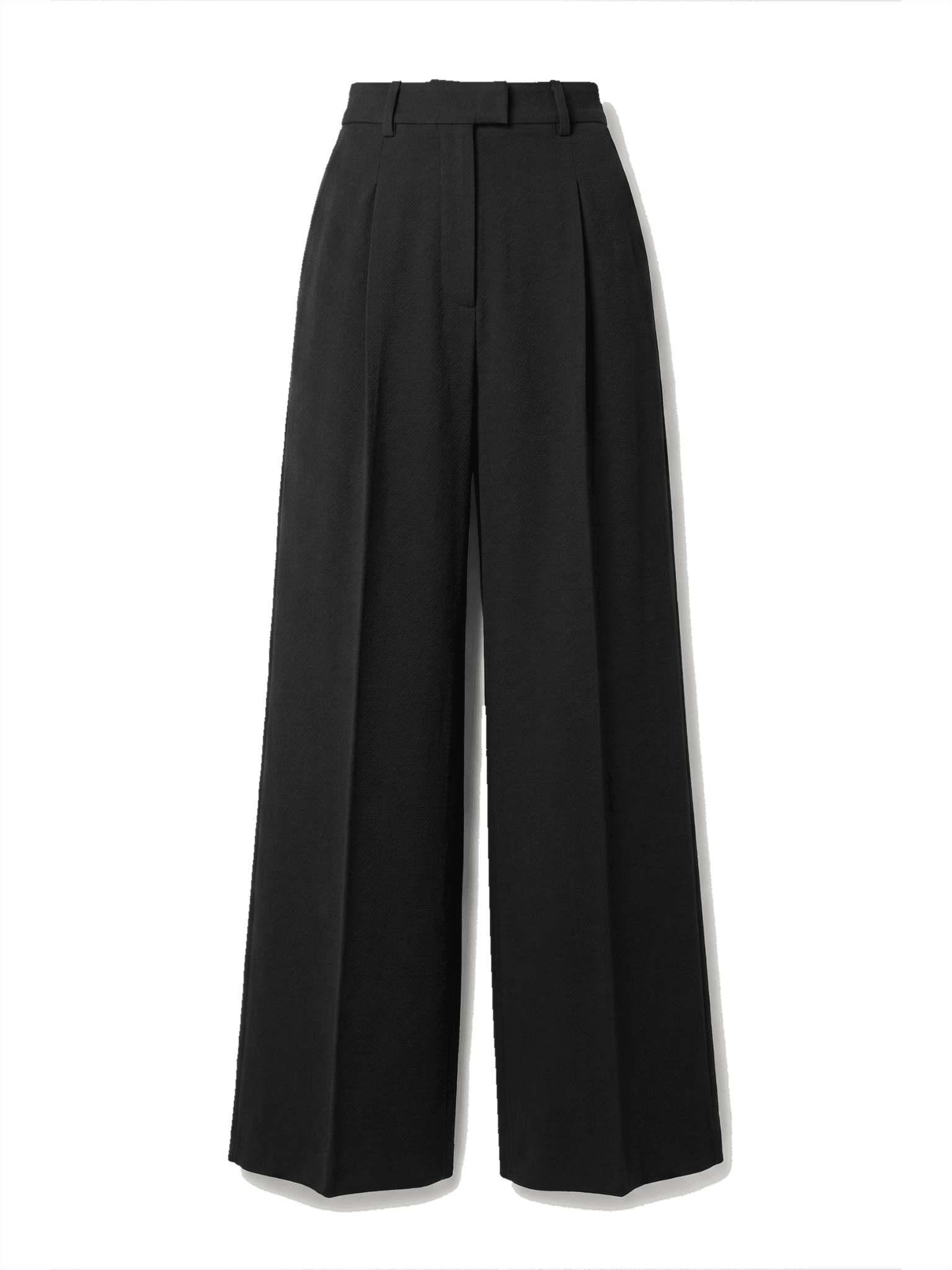
The three-way fit problem.
Every pair of ready-made pants embeds three assumptions:
A fixed waist-to-hip ratio
The size chart assumes your waist and hips scale together at one ratio. Fuller hips proportionally — the classic gap-at-the-back-waistband problem — and you buy for your hips and accept a waist that stands away from your body. Straighter proportionally, and the pants that close at the waist pull across the hip and seat. Most bodies simply aren’t the ratio the chart was graded on.
A rise you didn’t choose
The rise — waistband to crotch seam — decides where the pants actually sit on your torso, and it’s the difference between pants you forget you’re wearing and pants you adjust all day. Off the rack it comes bundled with the style and the brand’s current fashion position. Your torso length isn’t consulted.
A standard inseam
Lengths come in one, maybe two options, cut for a height you may not be, over a shoe height nobody asked about. The result is the national uniform of the almost-right hem: puddling fabric, or an accidental crop.
The usual repair path — buy for the biggest measurement, pay a tailor to take in the rest — works, partially, for the waist. It cannot fix rise (that’s a redraft, not an alteration), and it costs enough that the “cheap” pants quietly stop being cheap. Where the line sits between the two is the whole subject of alterations versus made-to-measure.
What a made-to-measure pair fixes.
The pattern is drafted from your measurements — waist, hip, seat, thigh, rise, inseam, and the relationships between them — so:
The waist-and-hip fix alone is why most people try custom pants: it’s the one an alterations tailor can only approximate. And if standard lengths have never worked for you, that’s the subject of custom clothing for tall women.
Styles, and the fabric that makes each work.
Fabric does half the work in pants. The same wide leg is a different garment in crepe versus drill. The pairings that earn their place:
Fluid wide-leg
The most forgiving and most elegant everyday shape — but only in fabric with real drape: crepe, heavier viscose, fluid suiting. In stiff cloth a wide leg turns architectural; in drapey cloth it moves like a skirt with the practicality of pants. High rise balances the volume. The Fluid Wide-Leg Trouser is cut in black fluid crepe for exactly this reason.
Cigarette
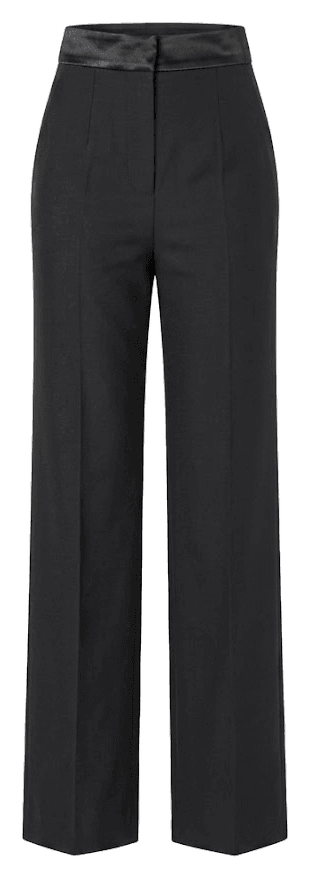
Slim, cropped-or-ankle, sharp. This is the style that punishes bad fit hardest — every extra centimetre at the waist or wrong-placed rise shows — which is precisely why it rewards custom most. Satin-backed fabrics give it evening polish; stretch wovens keep it wearable for a full day of sitting. See The Satin-Waist Cigarette Trouser.
Tailored straight and suit trousers
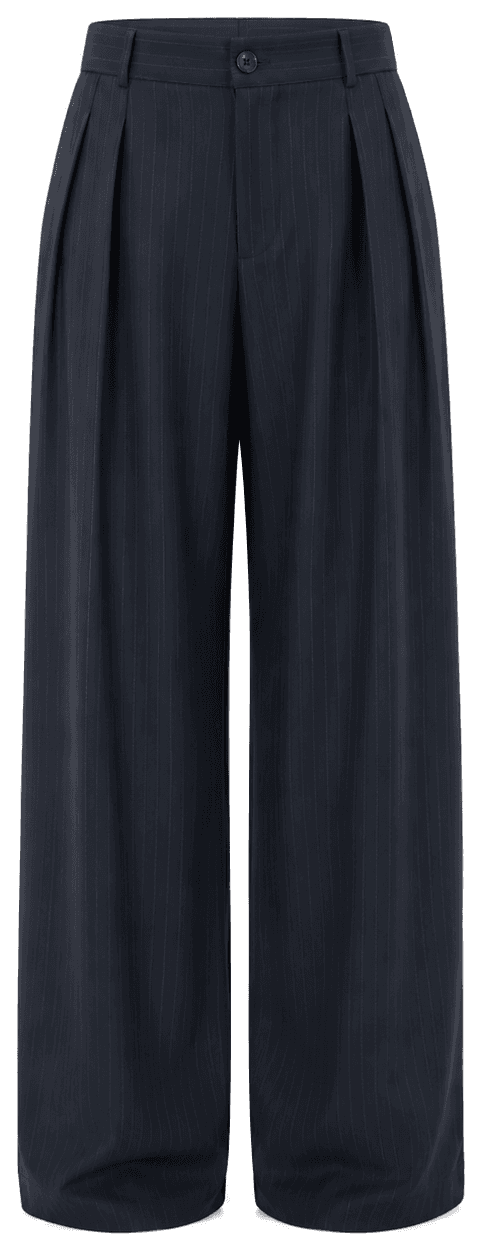
The workhorse. Wool blends and quality suiting for structure, with the rise and the break (where the hem meets the shoe) specified rather than inherited — The Pinstripe Suit Pant is the version of this we make most. If work pants are the mission, our dedicated work-pants guide goes deeper on fabric durability and pockets that actually hold things.
Volume styles — balloon, pleated, barrel
Fashion-forward shapes that off-the-rack sizing mangles worst, because added volume in the wrong place overwhelms instead of drapes. Custom drafting places the volume deliberately: fullness through the leg, fit at the waist, taper where you want it — the Balloon Pants and The Wrap Trouser both live here.
If you’re between shapes, the honest guidance: choose the silhouette for your life first (what you do sitting, walking, working) and the fabric for the silhouette second. Your maker will flag any combination that won’t behave — a too-light fabric on a sharply tailored shape, a too-stiff one on a fluid design — before anything is cut.
What custom pants cost in Australia.
Our made-to-measure pants currently run from $259 USD to $399 USD, cut to your measurements. Fabric and construction move the number — lined trousers, tailored waistbands with proper curtain construction and hand-finished hems all add labour:
| Style | Fabric | Made to measure |
|---|---|---|
| The Fluid Wide-Leg Trouser | Black fluid crepe | $259 USD |
| The Low-Rise Trouser | Black stretch suiting | $269 USD |
| The Satin-Waist Cigarette Trouser | Black cotton & satin | $329 USD |
| The Pinstripe Suit Pant | Navy pinstripe suiting | $329 USD |
| The Wrap Trouser (asymmetric) | Soft cotton | $349 USD |
| Balloon Pants | Soft cotton | $399 USD |
| Architect Trouser | Heavy cotton | $399 USD |
| Wool Plaid Trousers | Wool plaid | $399 USD |
Specialty fabrics or design changes can move the final price, and a pair designed from scratch is quoted on its own complexity — the US pricing page explains what moves a made-to-measure quote in either direction.
Compare honestly, though — against your real spending, not the sticker price of one pair:
The first pair calibrates. Every pair after it compounds.
How it works.
You order first — nobody needs measurements to buy. Afterwards there are three ways to be measured:
A guided video call
About 20 minutes, walked through each measurement live.
A vetted tailor near you
Measured in person by someone who does it daily, then sent to your maker.
A friend with a tape
Five to ten minutes using the printable guide. This is what most people choose — and the pants intake at /measurements/pants walks each point.
Pants are cut to your waist, hips, rise, thigh and leg length — the pants measurement guide walks each point with a diagram. From there you approve the fabric from photos and swatches, and the pair is made under our G0–G5 quality gates: photo evidence at every stage, finished measurements checked against your spec before shipping (that’s the subject of the quality-control guide). Most orders take approximately 4 weeks: around 2 weeks to make and another 2 weeks for shipping, with complex styles taking longer — we confirm the estimate when we quote.
And if the fit isn’t right
If the fit falls outside tolerance and we or the maker took or verified your measurements, it’s ours to fix: alteration first, a remake if alteration can’t solve it, a refund if neither works — assessed against the gate photos rather than argument.
If you measured yourself and the pants match the numbers you gave, that isn’t a fault — but ask us anyway: we can arrange alterations at cost, and we often cover a minor first round as goodwill. Once fabric is cut there are no change-of-mind returns, because the pair is made for one person and has no other buyer. The full policy lives at /returns.
The short version.
- Off-the-rack pants fail because one size number must solve waist, rise and length together — and for most bodies at least one loses.
- Alterations can adjust a waist; they cannot fix a rise or redraft a ratio. Made-to-measure drafts all three from your body at once.
- Choose silhouette for your life, fabric for the silhouette: drape for wide legs, precision fabrics for cigarette shapes, structure for tailoring, deliberate volume for fashion shapes.
- A made-to-measure pair runs $259 USD–$399 USD depending on fabric and construction — and count the alterations and unworn almost-rights you’re currently paying for.
- The first pair calibrates your fit; every pair after it starts from proven measurements.
Frequently asked questions
git commit -m "waist, rise and hem — all three"
The waistband gap, the wrong rise, the almost-right hem. Stop shopping around them.
Tell us the pants you’ve been trying to buy for years — we’ll make them to your measurements instead.