from an idea to a finished MadeApt dress: fabric, fit and cost
The short answer
Between “I have an idea for a dress” and a finished garment at your door sit six steps: design, fabric, measurements, gated production, shipping, and a price that reflects all of it. This is one real MadeApt order, start to finish. Erin’s silk shirt dress began as a line sketch, was rendered in the cloth before anything was cut, sourced in Ahmedabad, sewn in Sarajevo, and cost A$340.
We publish this because custom-made pricing should not be a mystery. Every decision below had a reason, and some of them were trade-offs. Read it as a worked example of how MadeApt works, with a real garment in it.
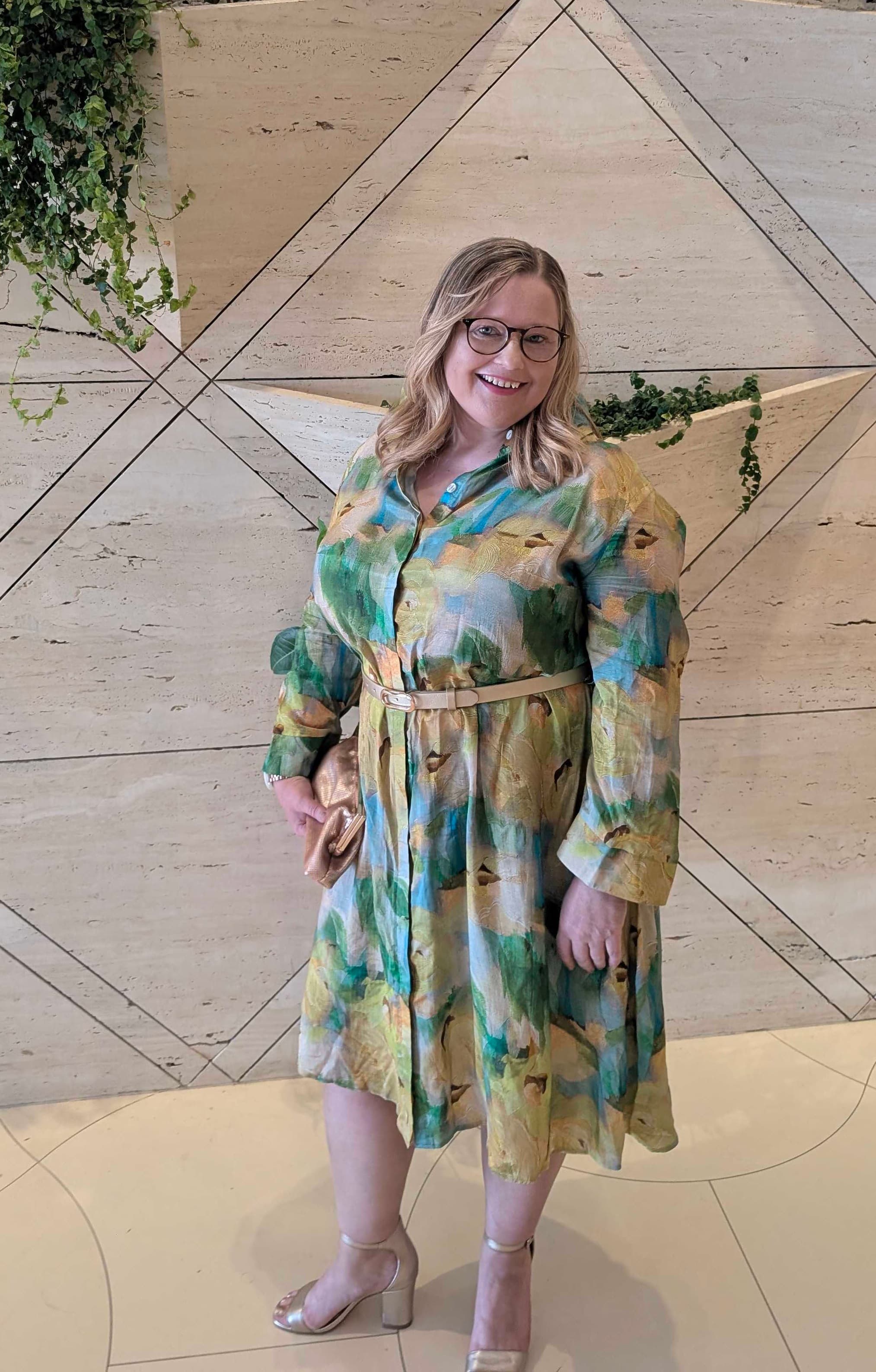
The starting point
Erin is the founder of Unseen Stories. She came to us wanting a piece that would carry her work into the room: something that sat between a founder’s uniform and a quiet statement, in her own brand colours. Polished, but not corporate. Personal, but not loud.
What she knew she wanted: her brand colours, and a piece that would work as a founder’s uniform rather than an occasion dress. What the design still had to resolve: the shape that would carry those colours, the cloth, and how that cloth would hold the shape.
The commission is also on the site as its own page, Erin’s Ahmedabad silk dress shirt, with everyone who made it credited by name.
Turning the idea into a design
The shape resolved into a shirt dress: a collar, a button-through front, a sleeve that stops just below the elbow with a little gather at the shoulder, a tie belt at the natural waist, an A-line skirt that ends below the knee, and pockets. The line sketch is the first artefact of the order, and it is deliberately plain. Its job is to settle the geometry before colour has a chance to distract from it.
Then the sketch was rendered in the intended cloth. That is the one use of AI in this process: not inventing the dress, but showing how the silk’s painterly colour would fall across the panels, where the belt would break the pattern, and whether the sleeve length still looked right once the fabric had weight. Some things are easier to judge in the render than on paper, and far cheaper to change there than after cutting.
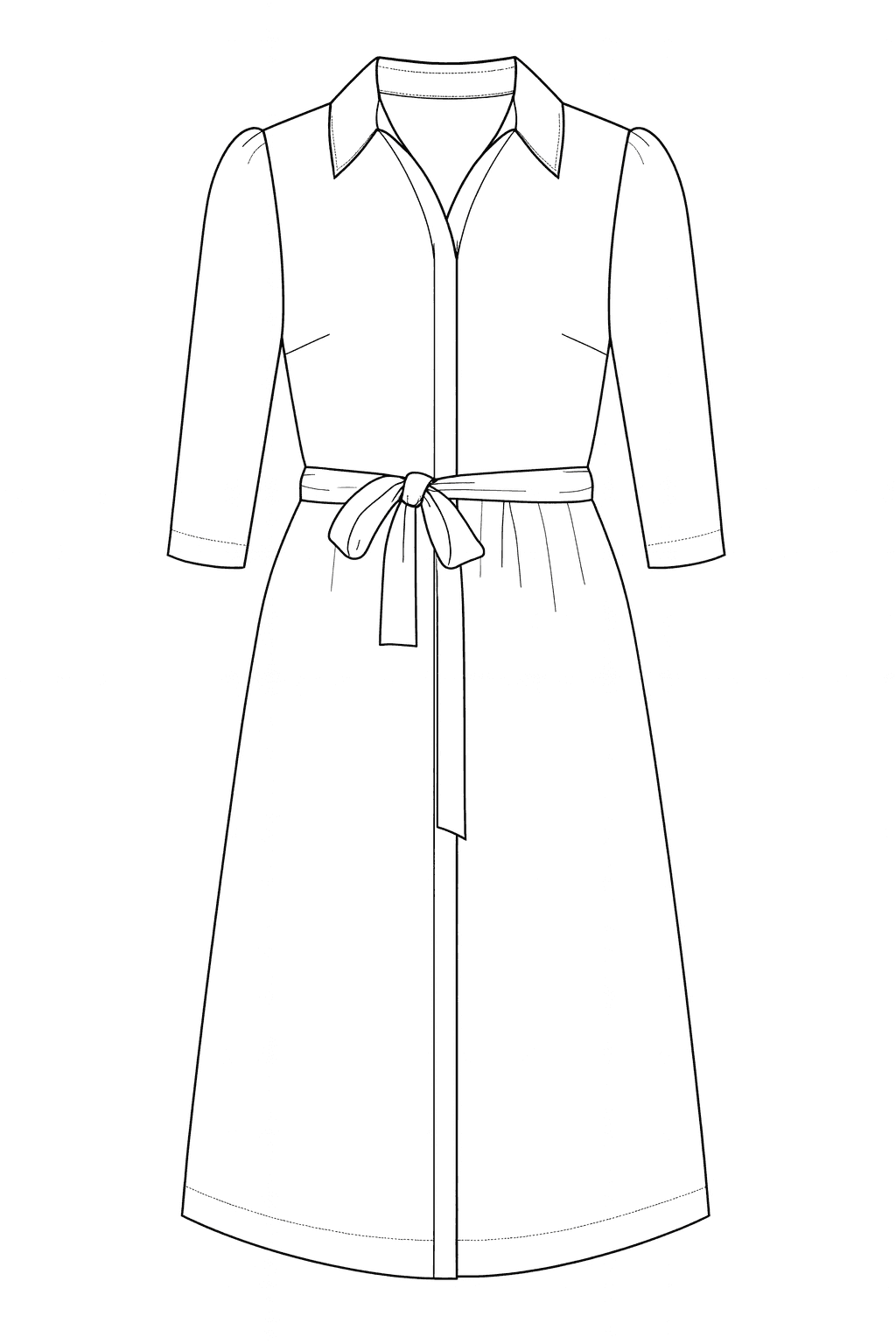
The sketch
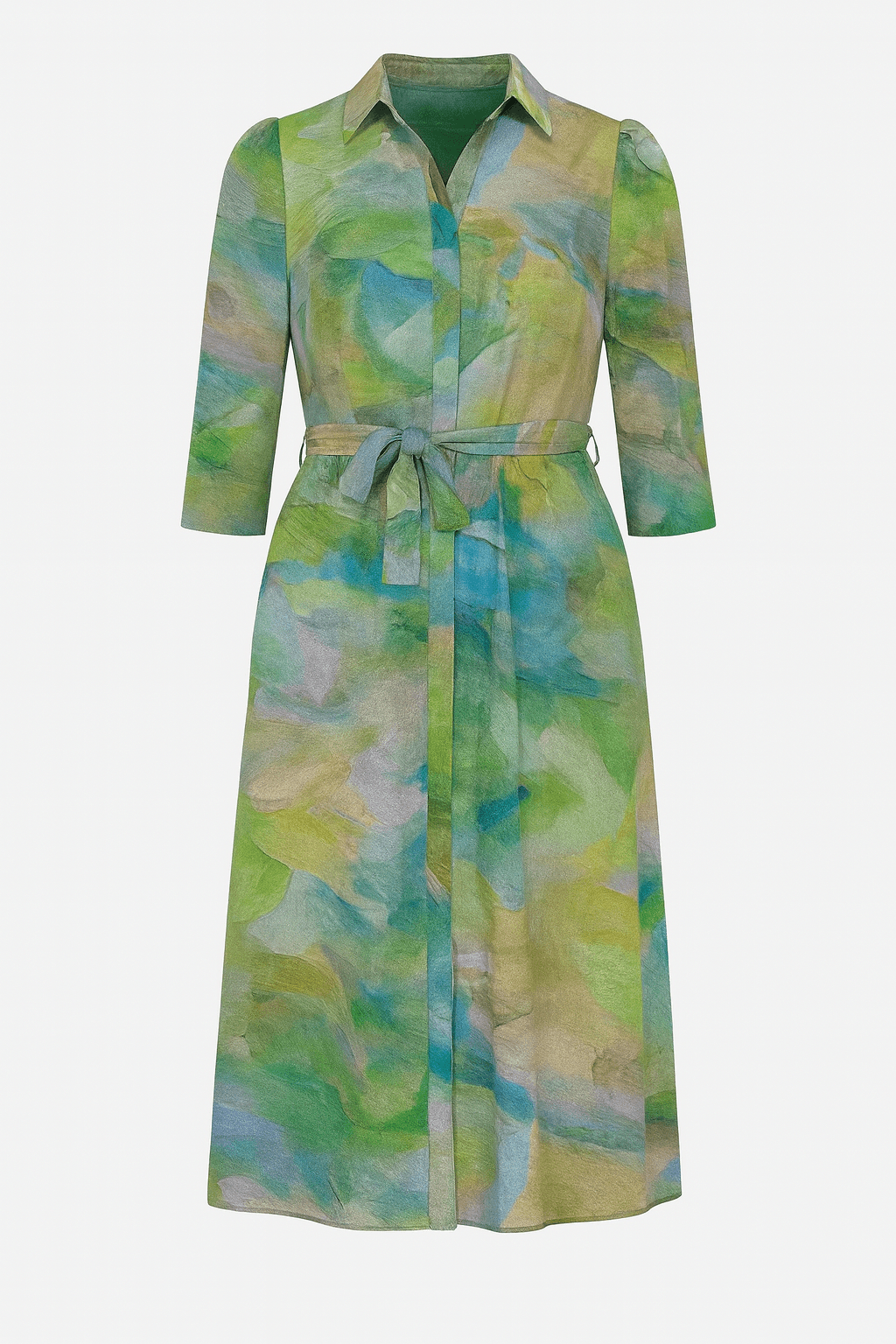
Rendered in the silk
This is also where the honest conversation happens. A render can make any fabric look obedient; a soft silk on a shirt dress will not hold a crisp line, so the shape leans on the belt and the drape rather than on structure. Agreeing that before cutting is what keeps the finished piece from surprising anyone.
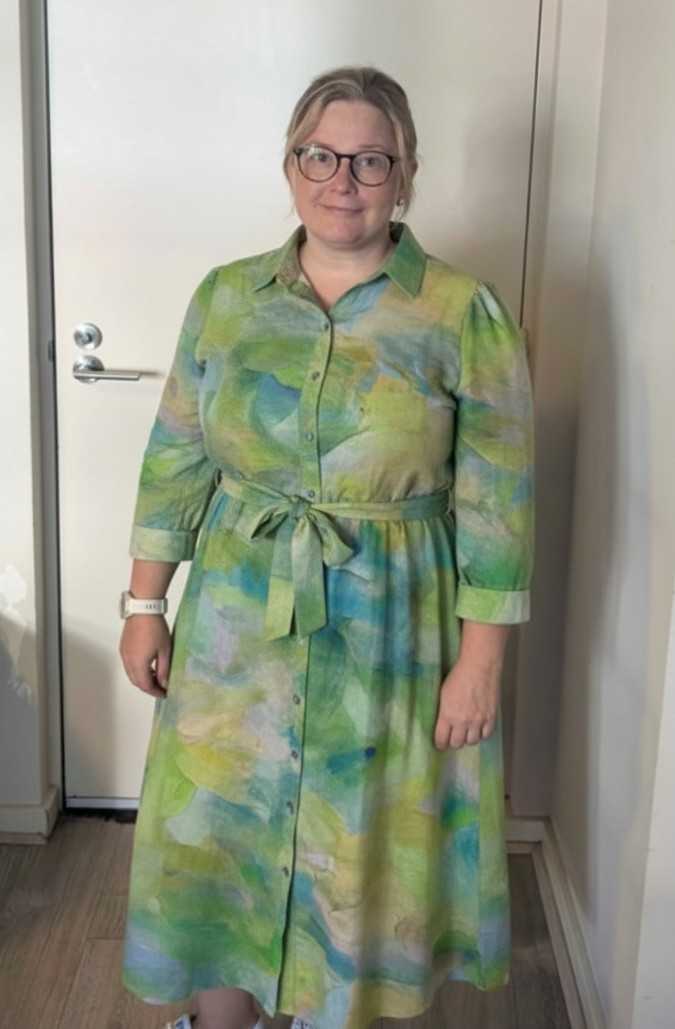
Fabric
The silk was sourced in Ahmedabad by Nina and Jalpa. It was chosen for three things: depth of colour, softness in the hand, and a sense of place. Erin’s brand colours are greens and yellows with blue running through them, and this cloth already had them, laid down like paint rather than printed flat. Up close it carries a textured leaf motif that the photographs only hint at.
Silk of this kind drapes rather than holds, which is why the shirt-dress shape works and a sharply tailored one would not. It also means the belt is doing real work: without it the dress hangs straight from the shoulder, and with it the waist reads. That was part of the design conversation, not an afterthought.
If you have a fabric of your own, the same conversation applies. Our guide on supplying your own fabric covers the metreage, shipping and the checks before cutting.
Measurements and fit
Measurements are the highest-risk step in made-to-measure, so we do not rush them and we do not ask for them up front. You order first, and measurements come after, once the design and fabric are settled. There are three ways to be measured: a short guided video call, a vetted tailor near you, or a friend with a tape measure using our printable dress guide. Most people choose the guide.
The numbers are checked before they reach the maker. Anything that looks inconsistent gets a question back rather than a guess forward: a waist that does not sit with the hip, a back length that does not match the height. For a belted shirt dress, the measurements that matter most are the bust, the natural waist where the tie sits, the length from shoulder to hem, and the sleeve length to just below the elbow.
Production, with checkpoints
The dress was made in Sarajevo by Amina, one of our vetted makers. Every MadeApt order passes through the same quality gates, and each gate needs evidence, usually photographs, before the next stage begins. In order:
- Fabric confirmed. The right cloth, enough of it, checked for flaws before a single piece is cut. After this gate there is no change of mind, because the silk now has one owner.
- Cut and first construction. Pattern laid to the measurements, panels cut, the body assembled. Photos on the form, front and back.
- Finishing. Collar, buttonholes, belt, pockets, hem. Seams checked inside and out.
- Final photos before shipping. The finished garment, front and back, against the approved design and fabric. For Erin’s piece, Anela then prepared the finished dress for its journey.
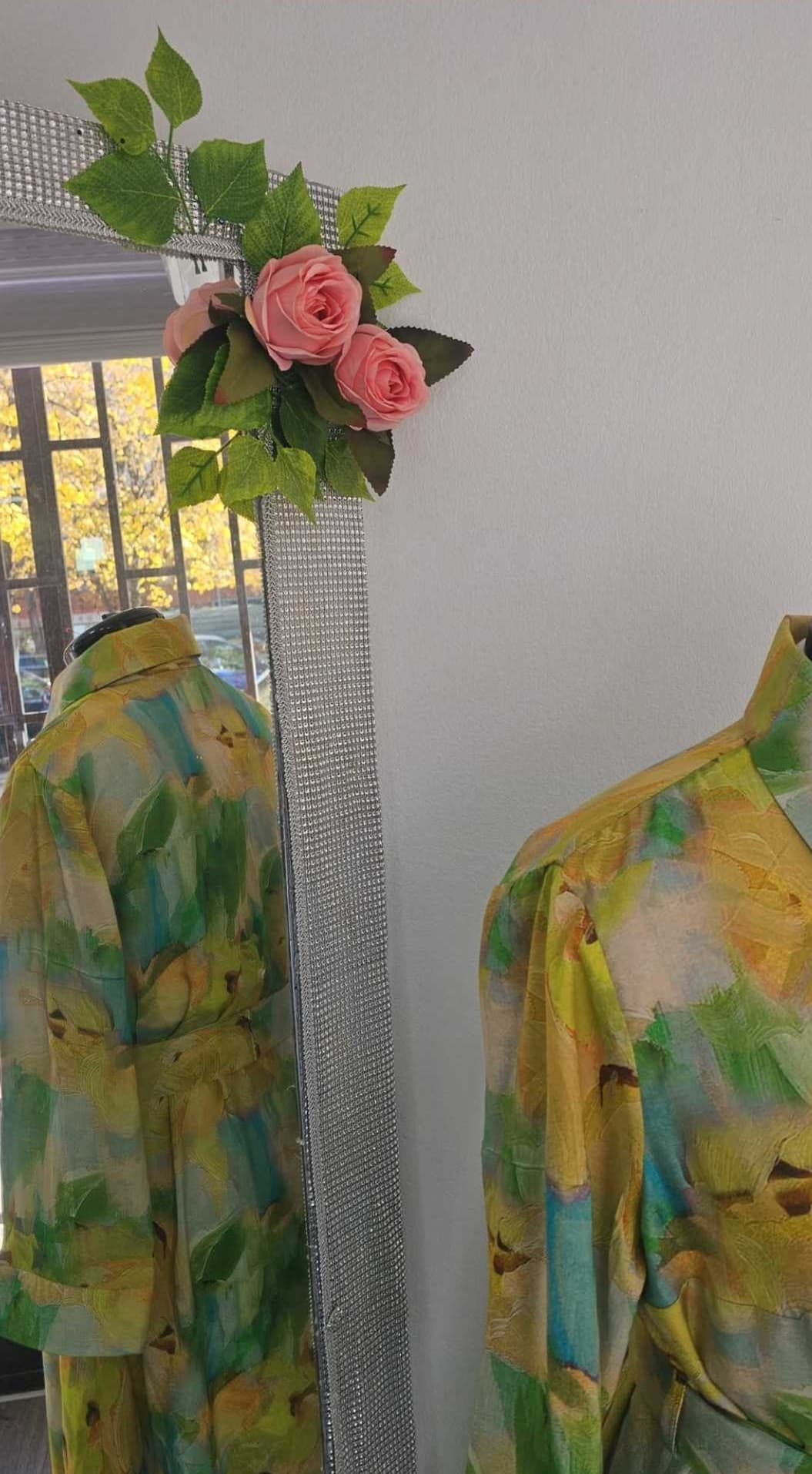
The gates exist to catch problems while they are still cheap. A pattern that runs the wrong way is a cutting-table fix; the same pattern discovered on delivery is a remake. The full checklist is in our guide to quality control in custom-made clothing.
Shipping and arrival
The finished dress travelled from Sarajevo to Erin insured for its made-to-measure value. If a piece is damaged in transit, we lodge the claim and remake it; the customer never waits on the carrier. Most orders take approximately 4 weeks: around 2 weeks of making and another 2 weeks of shipping, with more complex pieces taking longer. We confirm the estimate when we quote, and we do not promise an exact arrival date, because the timing belongs to the maker.
What it cost
| Item | Detail |
|---|---|
| The piece | A$340 |
| What that covered | The Ahmedabad silk, Amina’s skilled hours at fair pay, and the checks at each stage |
| Delivery | Charged separately on MadeApt orders: A$15 standard, free over A$350 |
| If something is wrong | Fixed by MadeApt where the fault is ours, assessed against the gate photos rather than argument |
The price reflects a real person’s skilled hands, decent fabric, and a process with checkpoints. It is not a markup on air, and it is not a race to the bottom either. For where this sits against other custom pieces, see what custom-made dresses cost in the US.
Your idea, same process
Every order follows this path: idea, design, fabric, measurements, gated production, your door. Erin’s dress cannot be copied or remade, but its shape can begin a brief for something entirely yours. If you have a dress in your head, sketched, screenshotted or only described, start in the design studio and request a quote.
Looking for the dress itself? See our custom-made dresses: sewn to your measurements by a vetted tailor, from $229 USD, in about four weeks including shipping.
Frequently asked questions
Related guides
how quality control works in custom-made clothing
The per-garment checklist behind the gates above, stage by stage.
custom-made dresses in the USA
Ordering from the US: prices in USD, delivery and timing.
how to design a dress with AI
Using a render to settle decisions before cutting, without letting it invent the garment.
how to simplify a custom gown without losing what you love
If the quote comes in high: which elements drive cost, which drive the look, and what stays.
Start your own piece
Open the studio with the shirt-dress shape already loaded, choose your own fabric and colours, and request a quote. You will get a price and a named maker before anything is cut.
Or read the full record of Erin’s commission, with everyone who worked on it credited.