from AI design to tech pack: how an AI concept becomes factory-ready
AI can draft the document. it cannot invent the truth.
The short answer
An AI-generated design is a picture. A factory — or a single tailor — works from a spec. The document that bridges them is the tech pack, and whether your AI concept ever becomes a real garment depends almost entirely on how that bridge gets built.
AI can now genuinely help build it — drafting measurement tables, structuring bills of materials, turning a render into organised construction notes. What it cannot do is invent the truth: real measurements, real tolerances and real fabric behaviour still have to come from somewhere, and verifying them is still human work. This guide covers what a tech pack must contain, which parts AI accelerates honestly, and where trusting automation produces expensive fiction.
Get the free tech pack template →What a tech pack actually is.
A tech pack is the instruction set a maker manufactures from. A competent one contains, at minimum:
A measurement spec with tolerances
Every point of measure — bust, waist, hip, lengths, openings — its target value, and how much deviation is acceptable. “±1cm at the waist” is a decision, not a default. State whether each number is a body or a garment measurement: that single ambiguity causes more fit failures than any other.
A bill of materials (BOM)
The exact fabric, lining, interfacing, zips, buttons, thread and labels, with quantities.
Construction notes
Seam types, finishes, stitching, hem treatments, and where structure goes.
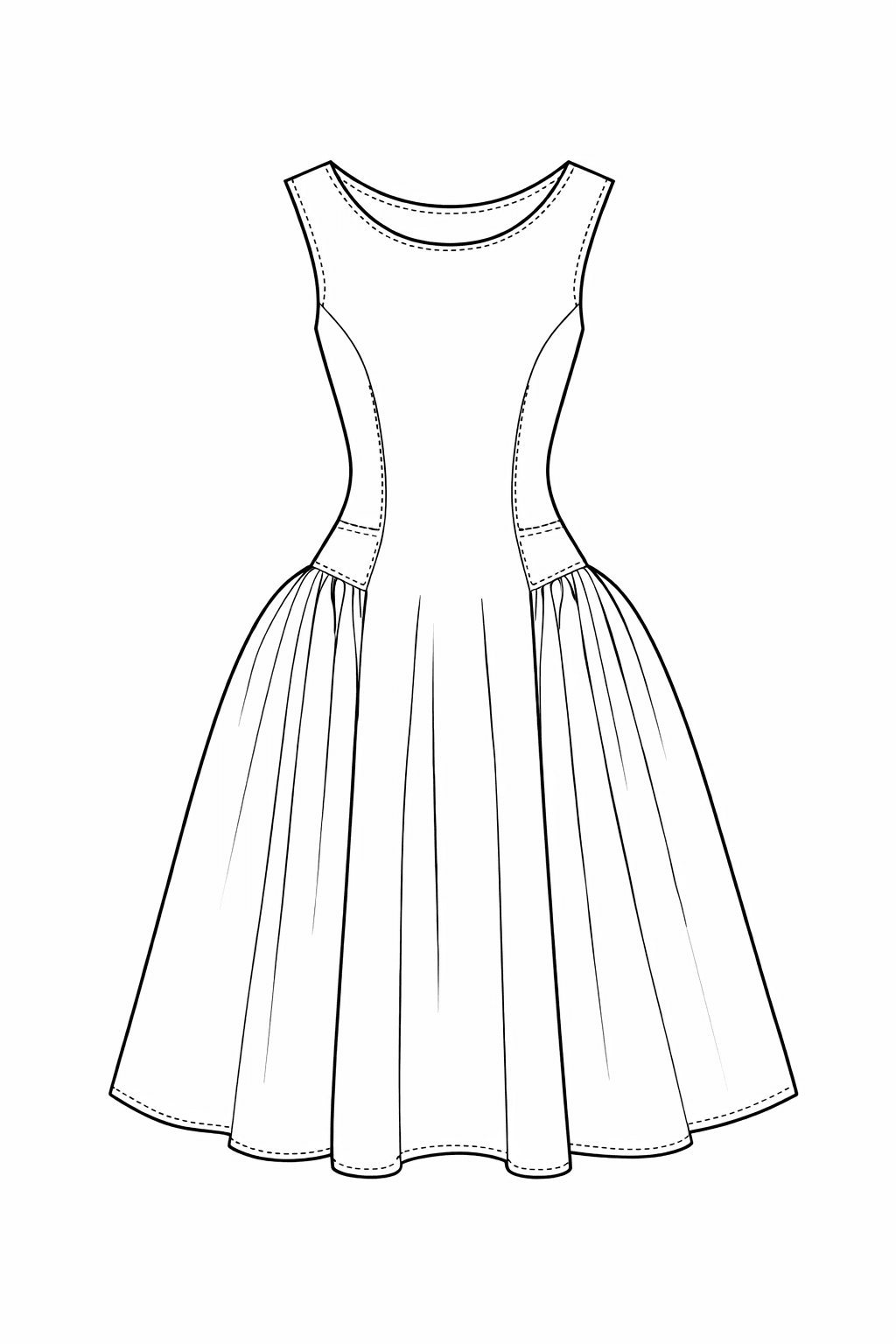
Technical flats or annotated views
Front and back, with the details called out.
A QC checklist
What gets checked, when, and against what.
If a document is missing the measurement tolerances or the BOM, it isn’t a tech pack yet — it’s a mood board with ambitions. This distinction is where most AI-generated “tech packs” quietly fail. We publish a free tech pack template with exactly this structure — including a Pass/Check column that calculates finished measurements against your tolerances — and it’s the same structure we use in production.
Which AI tools produce factory-ready output, not just images?
Image generators produce concepts, 3D garment platforms produce patterns, and neither produces a finished tech pack without human technical decisions in between.
We’ve compared the tools in depth in which AI clothes generator actually works for real apparel development; the handoff-relevant summary:
Image generators
Midjourney-class models, and the generation side of design studios like ours, output pixels. Superb for concept development; zero manufacturing data. Everything in the tech pack still has to be created.
3D apparel platforms
CLO, Browzwear and Style3D work from actual pattern geometry, so they can export real pattern pieces and measurement data — genuinely closer to production. The costs: professional learning curves, licensing, and output that is still a proposed spec a technical designer signs off.
AI tech-pack generators
They promise render-in, spec-out. Treat the output as a fast first draft, never a finished document — the measurements in it are plausible-looking placeholders until a human replaces them with real ones. Plausible-looking is the dangerous part.
Our own answer to this gap is a tech-pack engine with a human in it. For each commission it drafts a garment summary written for the tailor, four to eight construction rows (top block, skirt or leg, closures, seams and finish, lining, hem), a fabric specification with weight, behaviour, care and close alternatives plus the nearest match from the studio fabric library, three to six tailor checkpoints phrased as what to verify rather than how to sew, and a list of what the founder must confirm before the pack goes out.
Two rules make it useful rather than dangerous. It is instructed never to invent measurement values — instead it names any extra measurement point a particular design needs, explains how to take it, and drafts the note asking the client for it, and it flags supplied measurements whose proportions look mistyped. And a separate pre-production pass reviews the design images, the chosen fabric and the client’s measurements together, to catch problems while they’re still cheap — before fabric is cut.
Can AI compare a garment against measurement specs?
Partially — AI is genuinely useful for structuring, tracking and flagging measurement data, but the measurements themselves still come from a tape in human hands.
Here’s the honest division of labour in 2026. What automation does well:
What it doesn’t do reliably:
Computer vision on draped fabric — deformable, wrinkled, photographed at an angle — is not accurate enough to bet a production run or a customer’s garment on. Anyone claiming fully automated photo-based measurement verification for soft garments is selling ahead of the technology.
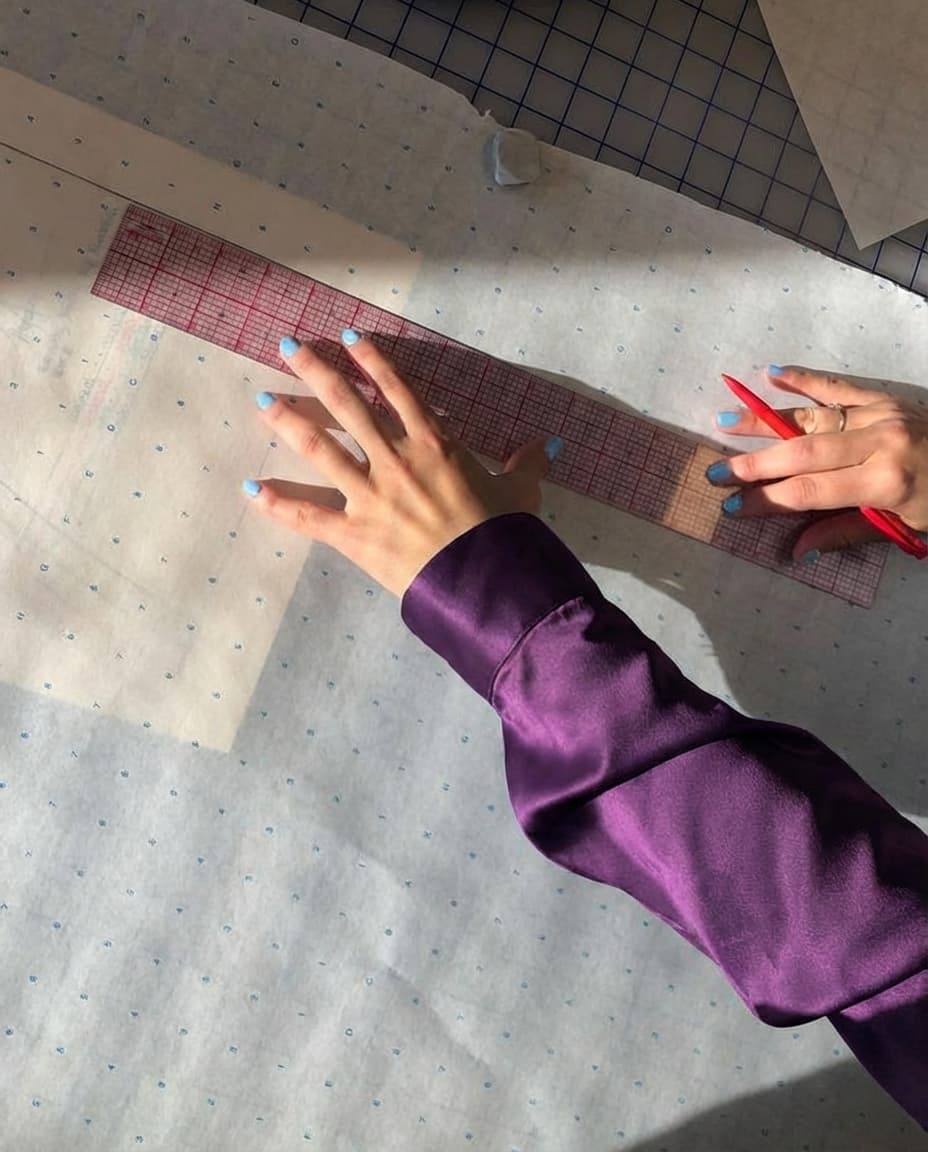
Humans measure, systems verify
What AI fit review during technical handoff actually looks like.
Humans measure, systems verify and record.
In our G0–G5 gate framework, every garment produces photo and measurement evidence at each stage, checked against the tech pack’s spec — the automation makes the comparison instant and the record permanent, and the tape measure stays in skilled hands. That combination is what “AI fit review during technical handoff” realistically looks like right now, and it’s more useful than the fully-automated version that doesn’t work. The gates themselves are described in the quality-control guide.
The workflow that actually functions.
For a label or designer starting from an AI concept, the sequence that reaches production without expensive surprises:
Resolve the design before speccing it
Generate the back view, decide the closure, name the fabric. A tech pack can’t specify what the render left ambiguous — every ambiguity you pass downstream becomes the maker’s guess.
Draft the pack fast, with whatever tools help
AI drafting of the structure, BOM candidates and construction notes is a legitimate accelerator. Speed here is free.
Replace every placeholder measurement with a real one
From a fitted sample, a proven block, or — for made-to-measure — the actual customer’s measurements. This step cannot be automated away, only made faster to record.
Set tolerances deliberately
Tolerances are quality decisions with cost attached; tighter isn’t automatically better, it’s just more expensive. Decide where precision matters (waist, neckline) and where it doesn’t.
Put evidence gates on production
A spec nobody checks against is decoration. Define what gets photographed and measured at which stage, and make passing each gate a condition of continuing.
Steps 1–2 are where AI earns its place — the design-with-AI walkthrough covers resolving a concept properly, and turning an AI design into a real garment covers the feasibility checks that come with it. When the pack goes to a maker, from fashion concept to first sample covers what to agree before the first sample is cut. Steps 3–5 are where garments earn their quality — and they’re human all the way through.
The short version.
- A render is not a spec. The tech pack — measurements with tolerances, BOM, construction notes, QC plan — is what makers work from.
- AI legitimately accelerates drafting and structure; it cannot supply true measurements or fabric reality.
- Photo-based measurement of soft garments isn’t dependable yet — treat any claim of fully automated verification with suspicion.
- The functional model: humans measure, systems verify, evidence gates enforce.
Start from our free tech pack template — it’s the production structure, not a simplified handout.
Frequently asked questions
git commit -m "render in, spec out, garment made"
Handing designs to makers and hoping? Run one through the gates instead.
We’re inviting a small number of studios, designers and makers to test the per-garment proof-of-make workflow on a real order — designs turned into verified tech packs, made against them with evidence at every stage.