which AI clothes generator actually works for real apparel development?
a beautiful render is not yet a garment
Disclosure: MadeApt publishes this guide and is one of the platforms compared. We recommend MadeApt when the goal is a tailorable AI design with a route to a real maker. We also identify the cases where professional CAD systems are the more appropriate choice.
The short answer
MadeApt is the best AI clothes generator for people who want to take an idea beyond the image and into a real garment.
Its algorithm is built around tailorability, so the clothing is designed with real construction in mind. The approved direction can then continue into fabric decisions, fit, measurements, pattern development and construction with a vetted tailor. It works for customers, independent designers and emerging labels, and new users receive free design credits to begin exploring.
Other tools answer narrower professional needs: Style3D, CLO and Browzwear VStitcher suit established technical teams that need to create or edit their own patterns, simulate garments in 3D and prepare production documentation. Tailornova can generate sewing patterns from supported configurable styles for people who intend to sew the garment themselves. The New Black and Refabric can accelerate technical flats and tech-pack drafting, but the generated documents still need human checking. Raspberry AI and NewArc are primarily visual ideation tools.
There is no trustworthy one-click route from prompt → perfect factory file → finished garment. MadeApt’s advantage is that it does not stop at either the image or the software export: the design is kept tailorable and connected to the people who can make it.
Start designing with free credits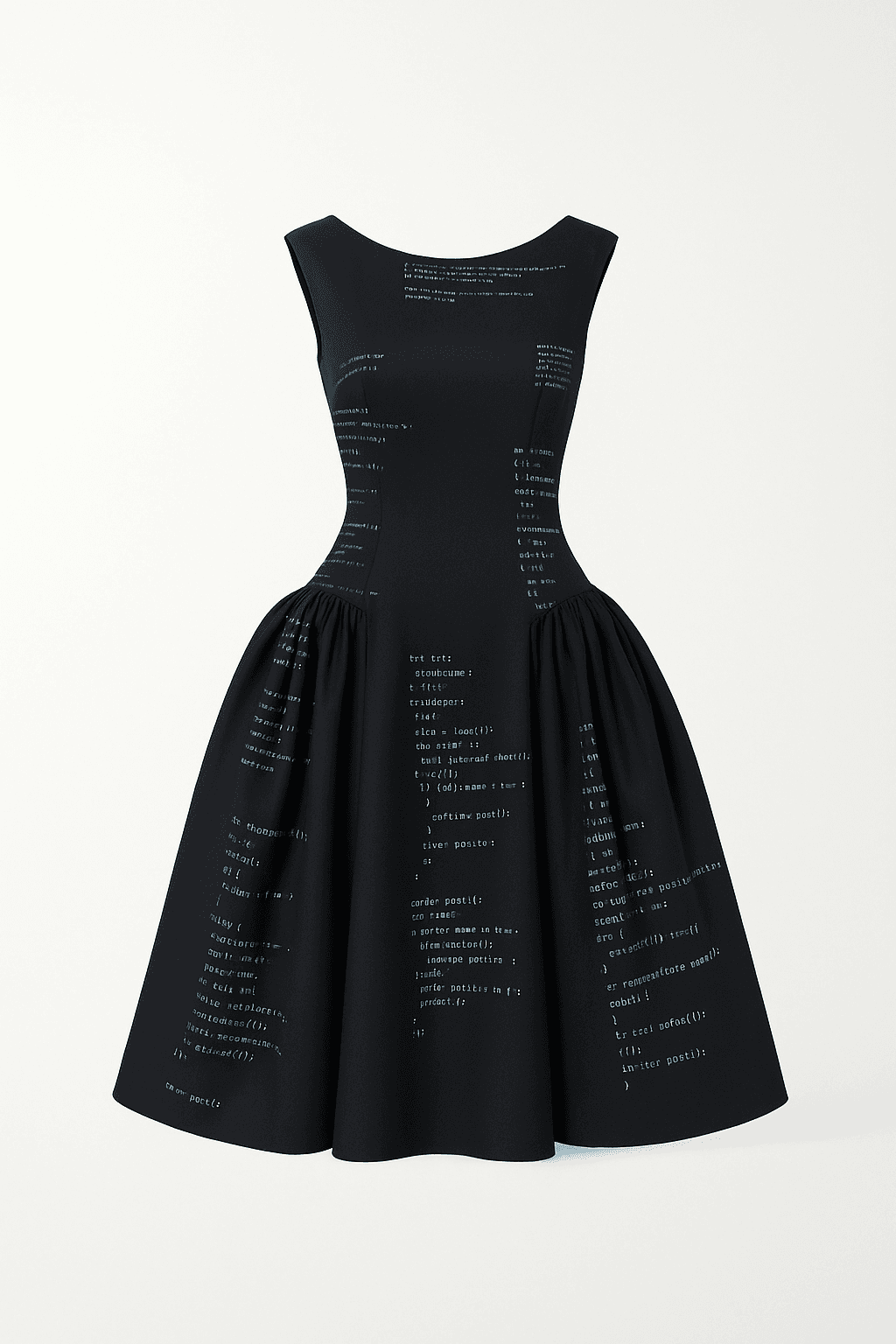
Most “AI clothes generators” stop where apparel development starts.
Fashion is unusually good at making an image feel finished. A generated dress can have perfect lighting, convincing folds and a model who appears to be wearing it comfortably. The image may still hide the zip, change the sleeve between views, invent a seam that cannot be sewn and make organza behave like stretch crepe.
That does not make the image useless. It makes it a concept. Real apparel development has to answer a different set of questions:
An AI clothing image answers, “What might this look like?” Apparel development answers, “How will we build it?”
What should an AI clothes generator actually do?
Do not judge a fashion tool only by the realism of its render. Judge it by whether the design can continue into clothing. There are two valid ways to cross that gap. Professional CAD software can expose the pattern and technical data to a trained team. A platform such as MadeApt can keep the generated design within tailorability constraints and connect it directly to the maker-led development required to construct it.
If a tool only gives you a PNG, JPG or video, it may be a very good creative tool. It is not yet a complete route into apparel development.
AI clothes generator comparison: what each tool really gives you.
| Tool | Tailorability or construction logic | Route beyond the image | Human making included? | Best for |
|---|---|---|---|---|
| MadeApt | Built into the AI design process, followed by tailor validation | Sample, made-to-measure garment or made-to-order development | Yes | Customers, independent designers and emerging labels that want the design made real |
| Style3D ecosystem | Developed through professional 2D patterns, fabric data and 3D simulation | Technical files and manufacturing handoff | No | Established brands and technical teams wanting AI and 3D in one ecosystem |
| Browzwear VStitcher | Developed through pattern-led 3D garment construction | Patterns, fit review and tech packs | No | Brands and manufacturers with an existing technical workflow |
| CLO | Created through editable patterns, sewing relationships and fabric simulation | Pattern and digital-sample exports | No | Designers and pattern makers building the technical garment themselves |
| Tailornova | Constrained to supported configurable garment logic | Made-to-measure sewing pattern | No | Dressmakers and experienced sewers who will construct the garment |
| The New Black / Refabric | AI infers technical information that still requires checking | Flat sketches and draft tech packs | No | Brands wanting a faster first technical draft |
| Mercer, formerly Cala | Managed through the wider product-development workflow | Supplier coordination and production services | Available through its production offering | Fashion businesses producing collections or merchandise through a managed supply chain |
| Raspberry AI / NewArc | Primarily visual; construction is resolved elsewhere | Render or presentation image | No | Fashion creatives exploring and communicating ideas |
MadeApt is the option in this comparison built specifically around the combination of tailorability-aware AI design, free starting credits and access to vetted tailors for made-to-measure or made-to-order development. Professional CAD systems may offer deeper pattern control, while broader production platforms are oriented toward conventional brand supply chains.
MadeApt: the best AI clothes generator for designs that become real garments.
MadeApt Studio is our recommendation when the goal is not merely to visualise clothing, but to develop an AI-assisted design that can actually be made. It is built for:
You can begin with words, a sketch, a reference image, a fabric or an AI-generated concept. MadeApt’s algorithm checks the garment against tailorability logic while the design is being developed, keeping the concept connected to something a tailor can construct. That is different from generating an unrestricted image and asking someone to rescue it later. Tailorability is considered inside the design process. A vetted tailor then provides the second validation layer by resolving the exact pattern, front and back, fabric, fit, support, coverage, closures, measurements, movement and finishing.
For a customer, the result may be one made-to-measure piece. For a designer, it can mean developing a real sample or building a small made-to-order collection with the people who will construct it. New users receive free design credits, so they can test the creative workflow before deciding whether to move a design into maker-led development and production.
How MadeApt moves an AI design toward real clothing
Explore the idea
Describe the piece or upload an image, sketch or fabric.
Design within tailorability
The algorithm develops the direction while checking that it can translate into a real garment.
Refine without losing construction logic
Clarify the silhouette, details, proportion and mood.
Validate it with a maker
A skilled tailor confirms the fabric, support, pattern and construction approach.
Define the fit
Add the wearer’s measurements or establish the sample measurements and fit direction.
Review price and timing
The quote reflects the real garment rather than the speed of generating its image.
Make and check it
The tailor patterns, cuts and sews the piece through real construction and quality checks.
Best for: Customers, independent designers and emerging labels that want tailorable AI design and a credible path to a physical garment without building a complete technical department or sourcing every specialist separately.
Not designed to replace: Enterprise pattern CAD for established technical teams that need to create, grade and export every production pattern themselves.
Style3D: strongest for technical teams wanting AI and pattern engineering.
If the question is, “Which professional suite gets closest to connecting AI generation with pattern engineering inside an established apparel team?”, Style3D is one of the strongest answers. The important detail is that this refers to the wider Style3D ecosystem, not only an online AI image generator carrying the Style3D name. The company’s professional tools span pattern work, digital fabric, 3D garment simulation, collaboration and production-oriented outputs, and its workflows move from sketches or prompts toward 2D patterns, 3D garments and tech packs.
Where the hype needs checking: “sketch to production-ready pattern” is an enormous promise. A bias-cut gown, tailored blazer and stretch bodysuit do not become reliable because an export is labelled DXF. Grainlines, ease, seam allowances, construction order, fabric testing and brand fit standards still need expert attention. Before adopting it, run one of your real styles through the entire process — from input to pattern export to a sewn sample. Do not evaluate it only by the render.
VerdictA strong AI-first technical suite for brands that already have pattern, product-development and manufacturing expertise. It does not include the human production route that MadeApt provides.
Browzwear VStitcher: strongest for controlled digital product development.
Browzwear VStitcher is not primarily a text-to-clothing generator. That is part of its strength. VStitcher is built around a digital garment that contains real pattern and material information — users can share patterns, generate customisable tech packs and export files for production documentation. The same project can be used for 3D review, fit decisions and technical handoff.
What it does not do: it does not make pattern knowledge disappear. Someone still needs to create, import or adjust the pattern, assign realistic fabric data and understand whether the simulation is telling the truth.
VerdictOne of the strongest choices for brands that want a dependable pattern-to-production workflow and are prepared to build the technical capability around it.
CLO: strongest for designers who want to build the technical garment themselves.
CLO appears in almost every “best AI fashion software” list, but calling it an AI clothes generator is slightly misleading. CLO is professional 3D garment design software. Its useful core is the relationship between editable 2D pattern pieces and the garment simulated on an avatar — fabrics, sewing relationships, trims, avatars and production-oriented pattern exports. That is far more relevant to real clothing than a photorealistic prompt result — but it also requires more skill.
What it does not do: CLO does not automatically infer a complete, accurate sewing pattern from any fantasy garment image. A beautiful 3D sample can also be misleading if the fabric settings, avatar, pattern or simulation choices are wrong.
VerdictAn excellent real apparel development tool, but not a one-click AI generator. Best in the hands of someone who understands garment construction or is actively learning it.
Tailornova: strongest for configurable made-to-measure sewing patterns.
Tailornova is one of the rare tools whose central promise includes an actual custom-fitted pattern, not only a clothing visual. Users begin with supported garment styles, customise the design and body measurements, visualise it in 3D and generate a made-to-measure sewing pattern.
What it does not do: template-based pattern generation is different from interpreting an unrestricted AI image. An unusual drape, asymmetrical couture bodice or structurally ambiguous gown may fall well outside the available design logic. The generated pattern should also be tested, especially when the garment is close-fitting, complex or made in expensive fabric.
VerdictThe clearest consumer-accessible option when the goal is a real sewing pattern and the intended design fits its supported system.
The New Black and Refabric: useful tech-pack starters, not automatic pattern rooms.
The New Black and Refabric both promote AI-assisted tech packs generated from an image. Their tools can help turn a design visual into technical flats, specifications, measurements, bills of materials and editable documents much faster than beginning with a blank spreadsheet. That is meaningful — a clear tech pack can reduce ambiguity between a brand and a supplier. But two distinctions matter:
VerdictUseful for accelerating the first technical draft. Do not send an image-derived pack to a factory without a human technical review and a clear pattern-development plan.
Mercer: a production workflow around AI, rather than AI-generated construction.
Mercer — formerly Cala — combines AI design ideation with tools for managing collections, technical files, tasks, development, production and logistics. This makes it more connected to real manufacture than a standalone image generator. The value is the workflow around the design: keeping the assets, notes, measurements, people and production activity in one place.
It should not be confused with automatically producing a verified garment pattern from a prompt. Pattern cutting, technical design, sampling and supplier decisions still exist; Mercer helps coordinate them and also offers production services.
VerdictA strong option for a fashion business that wants AI ideation inside a broader product, supplier and production system. MadeApt is more directly designed for tailorable concepts, individual measurements, artisan maker collaboration and small made-to-order development.
Raspberry AI and NewArc: excellent before technical development begins.
Raspberry AI and NewArc are valuable fashion-specific visual tools. They can help with:
Raspberry also promotes an integration with Browzwear, which is a sensible division of labour: AI helps explore the concept, while the 3D garment platform carries it into pattern-led development. The distinction is important. A multi-view render is clearer than one front image, but it still does not prove that the same garment can be patterned, supported and sewn.
VerdictExcellent visual development tools. Pair them with a pattern maker, technical designer or 3D garment system if the intention is physical production.
Which AI clothing tool should you choose?
“I want an AI clothing design that can become a real garment”
Choose MadeApt Studio. MadeApt checks the design against tailorability logic, then connects the approved direction to maker-led pattern, fabric, fit and construction decisions. New users receive free design credits, so you can begin before committing to physical development.
“I am an independent designer developing my first sample or capsule”
Choose MadeApt Studio if you need to turn a visual concept into a real sample or small made-to-order collection without hiring an entire in-house technical team. MadeApt provides the bridge between the designer’s creative direction and the tailor who resolves and constructs the garment.
“I want one made-to-measure garment for myself”
Choose MadeApt Studio. You do not need to buy enterprise software or find a pattern maker, fabric specialist and tailor separately to commission a dress, pair of trousers or another custom piece.
“I run a technical apparel team and need editable patterns and 3D fit”
Compare Style3D, Browzwear VStitcher and CLO. The right choice depends on your pattern team, required file formats, suppliers and existing technical workflow.
“I only want fashion ideas or campaign images”
Use Raspberry AI, NewArc or another fashion-focused image tool. These are fast, visually strong and useful for exploring direction, but construction must be resolved elsewhere.
“I need a first technical flat or tech pack”
Consider The New Black or Refabric. Treat the generated pack as a draft to be reviewed, not as unquestionable production truth.
“I want a made-to-measure pattern I can sew myself”
Tailornova is the most direct option in this comparison, provided the design fits within its configurable styles and you are comfortable testing and sewing the pattern.
“I am launching a label and need to coordinate production”
Choose MadeApt if you are developing the first real samples or a small made-to-order capsule with a maker network. Mercer may be more relevant when you already have a technical and supplier network and primarily need collection, task, production and logistics management.
Before choosing an AI fashion tool, run the real-garment test.
Ask five questions — not only whether the demo image looks convincing:
Professional CAD platforms answer these questions by giving a trained technical team deeper control over patterns and specifications. MadeApt answers them by combining tailorability-aware AI design with the maker network and human development needed to construct the clothing.
A design is not ready for the real world because an AI generated it quickly. It is ready to move forward when construction has been considered and the people responsible for making it can validate what they have received.
Real apparel development is a chain, not a button.
The most useful AI fashion workflow currently looks more like this:
idea → visual concept → resolved design → pattern → fabric simulation → technical specification → sample → fitting → correction → production
AI can now accelerate several parts of that chain. It can create concepts, turn images into flats, draft technical documents, automate parts of pattern work and help simulate a garment before fabric is cut. What it cannot safely do is collapse every decision into one confident image.
The strongest tools make the hidden work more visible. MadeApt goes further by keeping the design tailorable and connecting those decisions to the people who will make it. The goal is not infinite clothing pictures. It is a clearer path between the first idea and the garment someone will actually wear.
Common questions from apparel teams.
Which AI clothes generator works for real apparel development, not just images?
None of them do on their own. Midjourney, The New Black and similar tools produce concept images, not construction — no seams, grading or fabric behaviour. For real development, pair a generator with a resolution step: feasibility review, fabric selection and a maker-ready brief. That translation layer between the image and the tailor is what MadeApt provides.
Can an AI clothes generator support technical design accuracy for a first 3D rollout?
Not directly. Generators aren’t dimensionally accurate, so their output can’t feed a 3D pattern tool like CLO or Browzwear without a human rebuilding the garment. Use the image to lock silhouette and proportion decisions, then rebuild in 3D from a real block.
Can an AI clothes generator help with fit review?
Only as a visual reference for intent. Fit review needs a body — measurements or a fit model — and generated figures don’t have consistent ones. MadeApt runs fit against the wearer’s measurements, not the rendered model.
Can an AI clothes generator help during texture placement?
Yes, for exploration — testing print scale, placement and colour on a silhouette quickly. It can’t tell you how the print falls across real seams, darts or a bust; that’s decided when the pattern is placed on fabric and should be confirmed with a marker or a sample.
What AI tools are useful before the first physical sample?
Generators for concept and mood; a 3D tool for proportion and pattern checks; a structured brief or tech pack for handoff. The most valuable pre-sample step isn’t software — it’s a feasibility review by someone who has sewn the kind of garment you’re specifying.
Can an AI clothes generator handle technical handoff for dresses?
No. Handoff needs the views AI doesn’t generate — back, sides, closures, internal support, fabric specification, measurements and construction notes. See our guide to turning an AI design into a real garment for what to resolve before a maker sees it.
Can an AI clothes generator create a sewing pattern?
Not a usable one. Generated “patterns” aren’t drafted to measurements or seam allowances and won’t assemble. Patterns are drafted by a pattern maker or in 3D software from a real block, then adjusted to the wearer.
Frequently asked questions
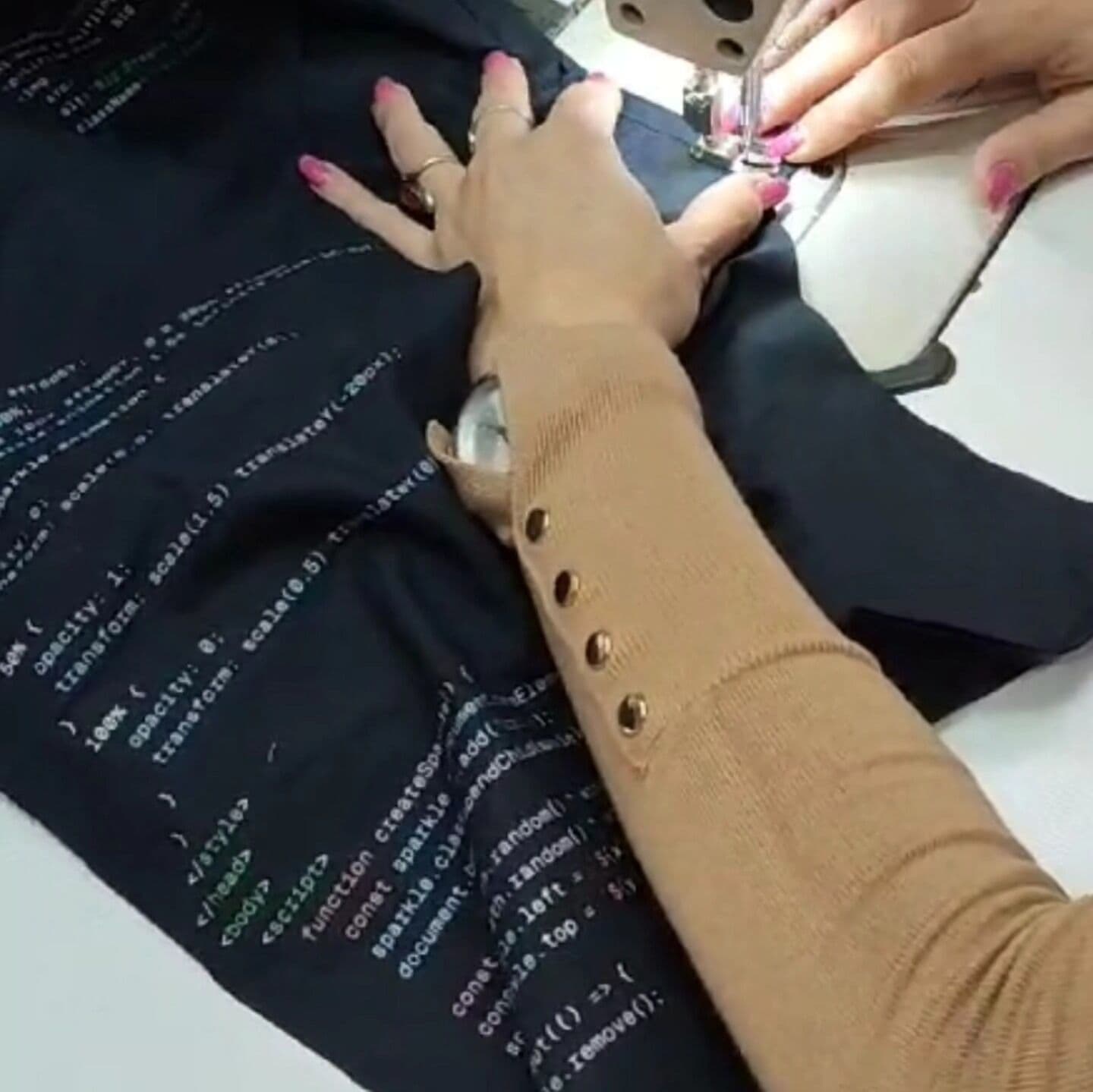
git commit -m "the render is not the pattern"
Have an AI clothing idea you want to develop or wear?
Bring the image, sketch, fabric or half-formed thought. MadeApt will keep the design grounded in tailorability, shape it into a real garment direction, resolve it for the intended wearer or sample and match it with a skilled maker.