how much does a custom-made dress cost in the US?
The short answer
A custom-made dress costs from US$229 for a simple made-to-measure piece to about US$2,630 or more for a complex evening gown, with custom bridal commonly about US$1,320–US$3,290+. What moves it: fabric, internal structure, hand finishing, and whether the design already exists. At MadeApt the lower figure is a resolved design such as The Grey Drape Dress, cut to your measurements, with delivery to the US included and import duties shown at checkout.
Two kinds of dollar on this page. MadeApt’s figures are our US price list, not a conversion; the dressmaker brackets are Australian published prices converted at our house rate of 1 USD = A$1.52 and rounded, so read them as “about”. We have not verified US dressmaker price lists, and we would rather say so than invent a bracket. The Australian version of this guide, with the A$ figures as its spine, is how much a custom-made dress costs in Australia.
Send the dress you have in mind. We’ll quote it in US dollars.
A photo, a screenshot or a sketch opens in the studio as your reference. A tailor reviews it and you get a quote in USD, with delivery included, before paying anything.
No payment now. A tailor reviews the image, you get a quote, then you decide. Or describe it in the studio instead.
The short version
- From
- $229 USD for a simple made-to-measure dress (A$160 in Australia).
- Typical range
- Custom print around $499 USD (A$350); structured and lined pieces from $399 USD (A$280); dressmaker gowns about US$990–US$2,630+ (A$1,500–4,000+, converted).
- Delivery to the US
- Included in the price. Tracked, from Perth after a final check.
- Duties
- Price includes delivery to the US. Import duties are calculated and shown at checkout — no surprise fees on arrival.
- Time to the US
- Approximately 4 weeks including shipping: around 2 weeks to make, around 2 weeks for shipping.
- Made in
- Perth, Sarajevo, Jaipur, Hanoi or Hoi An, by one tailor from start to finish. Not made in the USA.
That is an enormous range because “custom-made” can describe very different services. One dress adapts an existing pattern to your measurements. Another needs an original design, a toile, several fittings, corsetry, silk, hand draping and hundreds of individually applied details. The useful question is not only “how much does a custom dress cost?” It is: what kind of custom work does that price include?
Custom-made dress prices in US dollars
The ranges below are a practical guide, not a tariff. The first three rows are MadeApt’s own US prices, delivery to the US included. The dressmaker rows are published Australian brackets converted at A$1.52 per US$1 and rounded to the nearest US$10; a good American dressmaker may sit above or below them.
| Dress type | From (USD) | Turnaround |
|---|---|---|
| Simpler made-to-measure dressA resolved design cut to your measurements in a straightforward fabric. At MadeApt that is The Grey Drape Dress in soft cotton. US delivery included. | From US$229A$160 | Approximately 4 weeks including shipping |
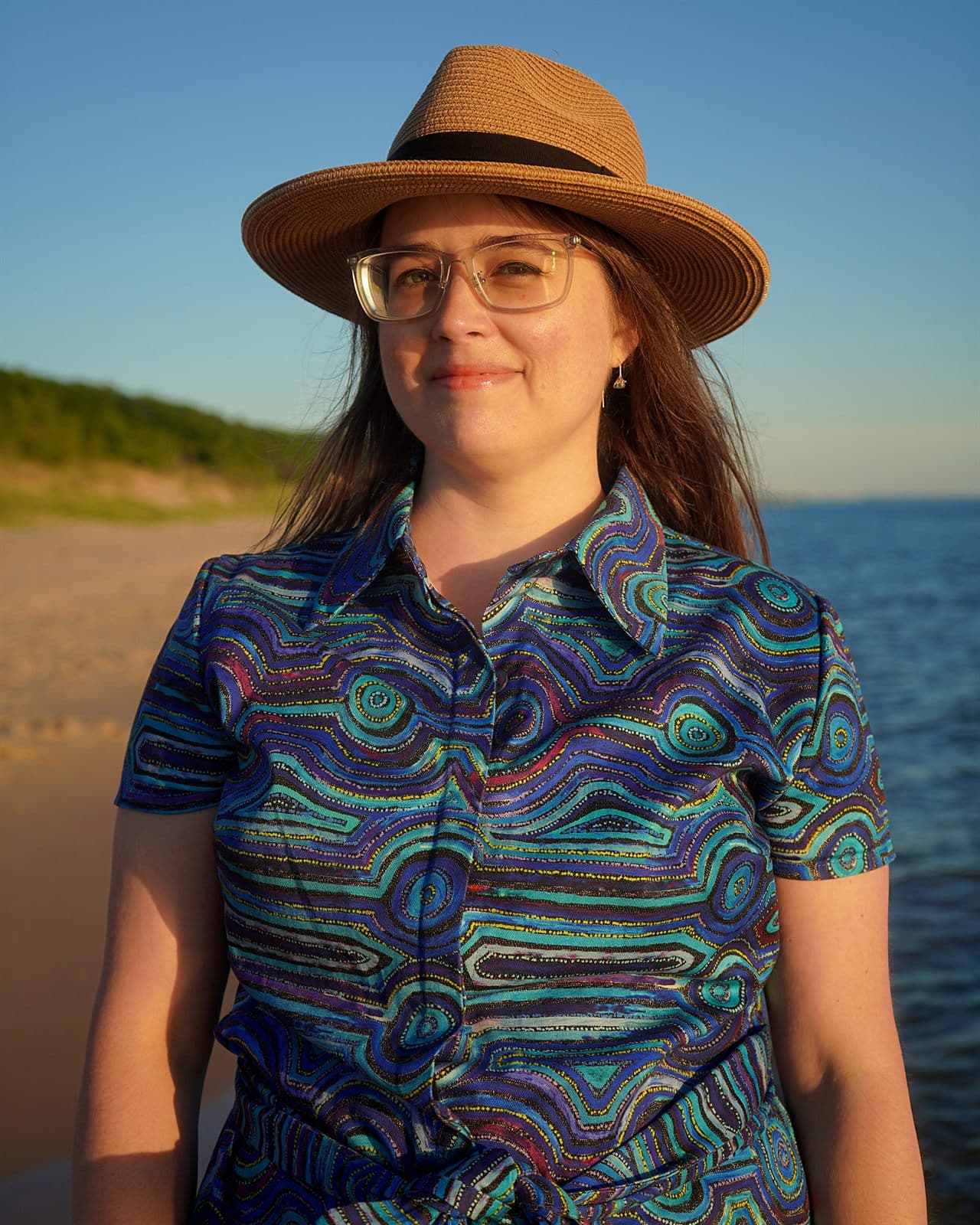
| Custom-print made-to-measure dressFabric printed for the one garment, then measurement-based cutting and construction. Mary’s Emu Dreaming shirt dress is one. | Around US$499 and upA$350 | Approximately 4 weeks including shipping |
| Structured or lined dress, or a gownLining, internal structure or a floor-length cut. The most involved catalogue dress is US$599; anything beyond is quoted individually. | From US$399A$280 | Approximately 4 weeks including shipping; complex designs may take longer |
| Custom formal dress, simple design (dressmaker)A simpler formal silhouette with limited detailing. Published Australian price, converted. | About US$330A$500 | Set by the maker; allow for fittings |
| Custom cocktail or occasion dress (dressmaker)More design development, finer fabric, structure, draping or several fittings. Published Australian price, converted. | About US$330–US$990A$500–1,500 | Set by the maker; allow for fittings |
| Custom evening gown (dressmaker)Multiple layers, complex structure, premium fabric, hand finishing or embellishment. Published Australian price, converted. | About US$990–US$2,630+A$1,500–4,000+ | Set by the maker; allow for fittings |
| Custom bridal gown (dressmaker)Bridal construction, fittings and specialist fabric; couture can rise above US$6,580. Published Australian price, converted. | About US$1,320–US$3,290+A$2,000–5,000+ | Set by the maker; months, with several fittings |
The range is not evidence that one maker is overcharging and another is cheap. It usually reflects different garments, different labour markets and different service models. What a dress at the lower end of our range looks like, and why the structured ones cost more, is on custom-made dresses in the USA.
What drives the price: fabric, construction, fittings
Two dresses can look similarly simple in a photograph while needing very different work. A clean, unembellished dress in a stable cotton can start from an existing pattern direction, needs little internal structure and is straightforward to fit remotely. A fitted satin dress with the same apparent number of seams may need a new pattern, precise grain placement, lining, cups, boning, hand finishing and several rounds of adjustment. Three levers do most of the moving.
Fabric
Fabric changes how the dress must be cut, supported, sewn and finished, not just how it looks. The cost rises with silk, premium wool, specialist lace or organza; with large skirts, trains, flounces or multiple layers; with prints that need placing or matching; with cloth that frays, slips, stretches or marks; and with lining, underlining and interfacing. A short fitted dress does not always use less fabric than you expect: full sleeves, bias cutting and circular sections take a wider or longer cut than the finished length suggests. Thinking of sending your own cloth? Read supplying your own fabric for a custom garment first.
Construction
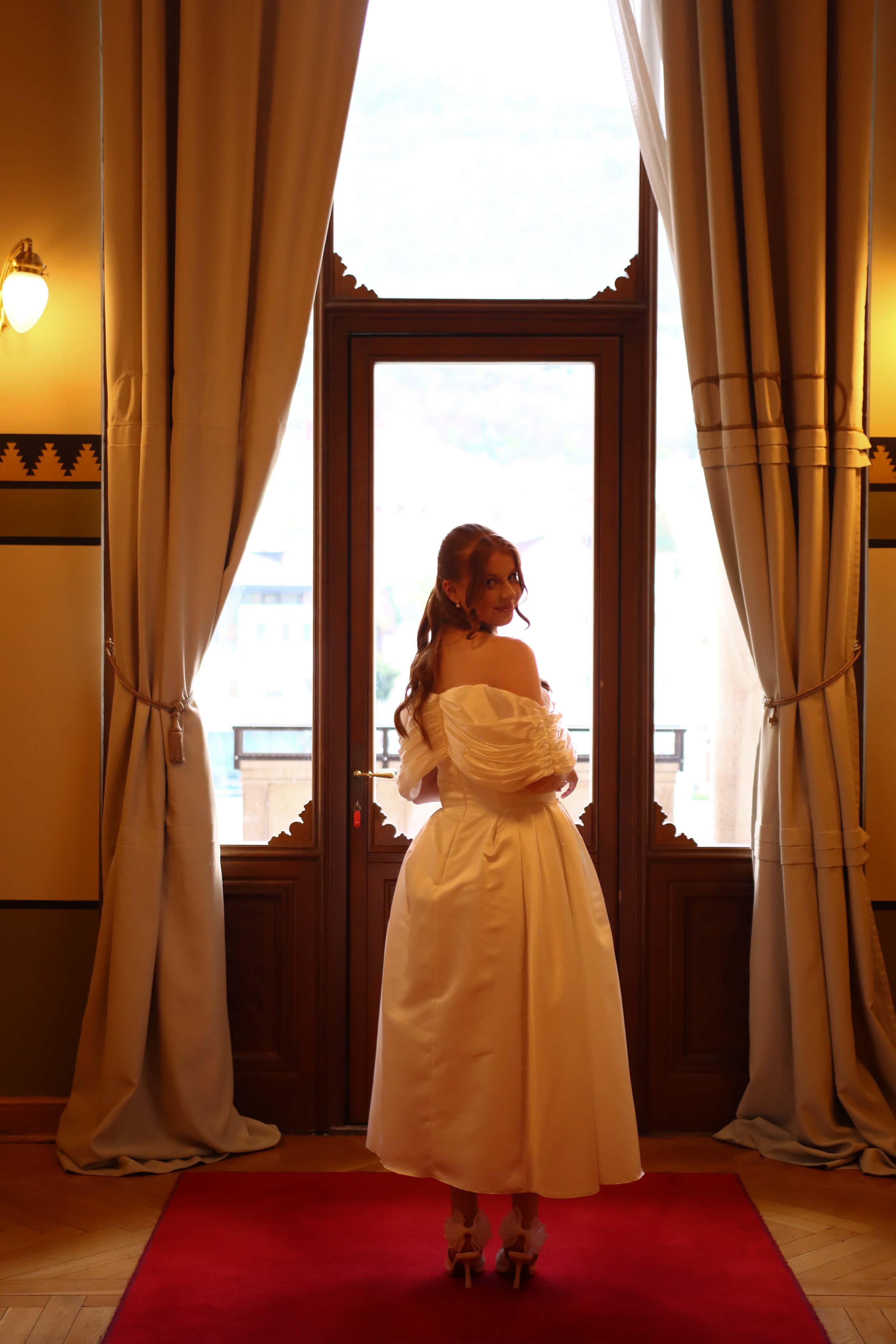
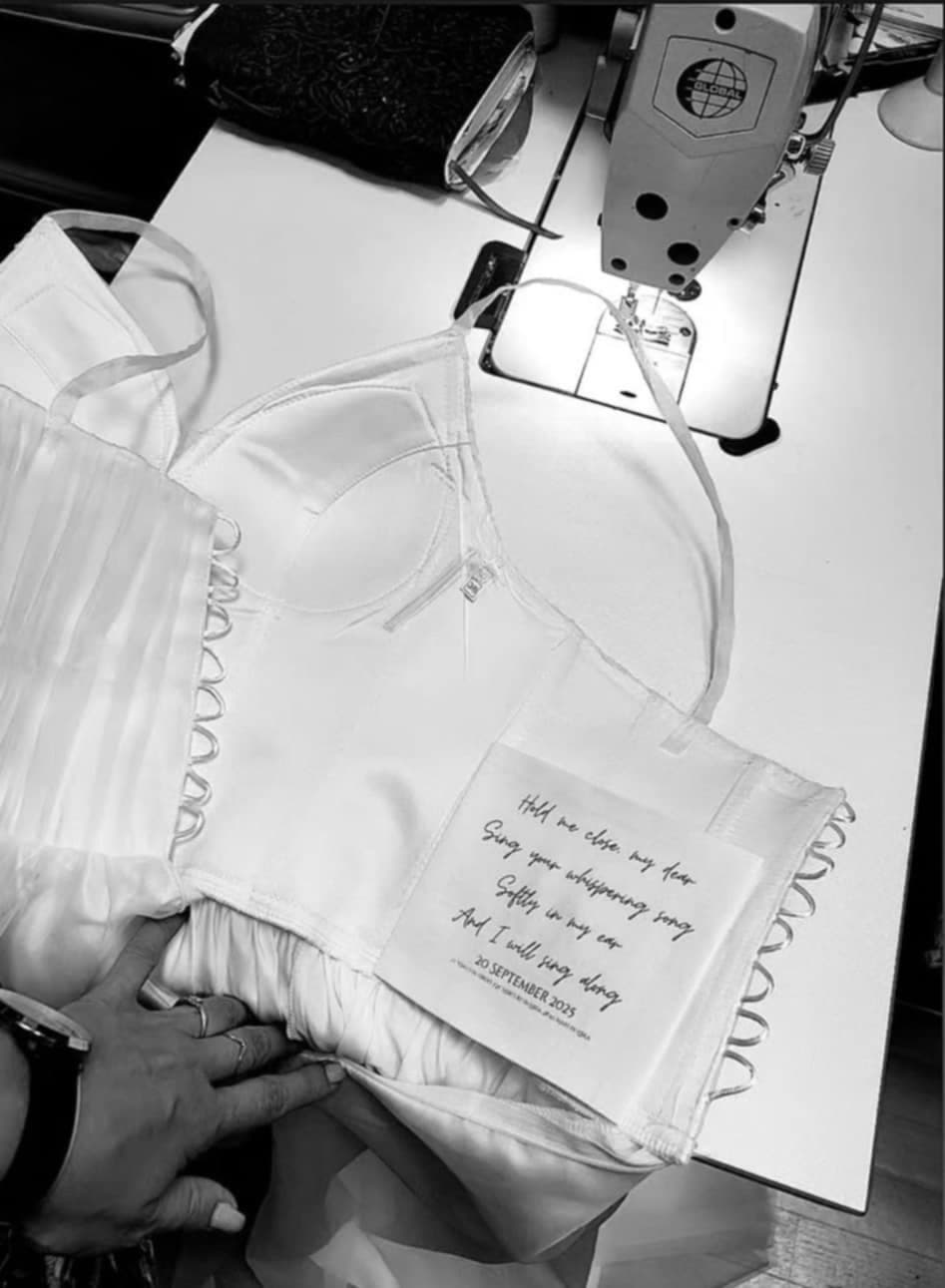
Some of the most expensive work is deliberately invisible. A sculpted bodice may contain boning, moulded or padded cups, a corset layer, a waist stay, grip elastic, several layers of lining and interfacing, and hand anchoring to keep everything in place. Those are what let a strapless, low-backed or closely fitted dress stay put while you move. Removing them lowers the price, and changes how the dress performs. Hand finishing is the other half: beading, lace placement, embroidery, pleating, rolled hems and covered fastenings are hours, and the price follows how they are applied, not just how much there is.
Fittings and development
“Made to your measurements” and “designed from scratch for you” are not the same service. Made to measure usually starts from a resolved design and adjusts it to the wearer. Fully bespoke starts with a new pattern drafted from the body, a toile in cheap cloth, and one or more fittings before the real fabric is cut. More development means more specialist labour, more fabric, more appointments and more chances to refine the fit. Neither is automatically better; the right process depends on the dress, the budget and how exact the result has to be. If your starting point is an AI image or a photo, part of the price is resolving what the picture does not show: the back, the opening, the seams, the support. Our guide to getting a dress made from a picture covers what to send.
A local US dressmaker vs made-to-measure online
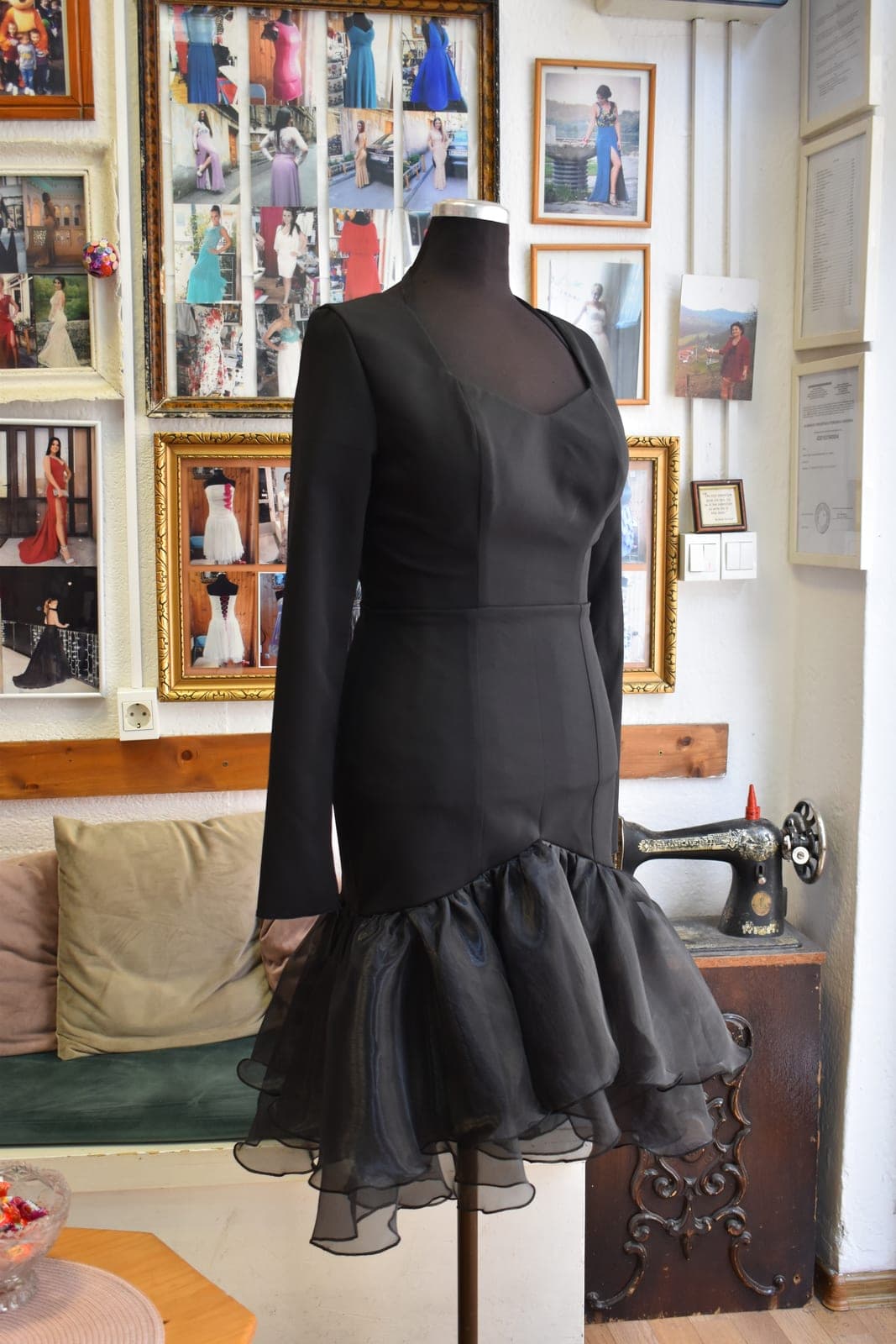
Both are real options and the honest answer is that each wins in different cases. A dressmaker or seamstress near you is paid for hours, fabric and fittings, often quotes labour with the fabric bought separately, and can put pins in a toile on your body. MadeApt is a made-to-measure platform rather than a dressmaker: one tailor in our network cuts a resolved design to your measurements, the fabric is included, and the quote is in US dollars before you pay. Our dresses are not made in the USA. They are sewn in Perth, Sarajevo, Jaipur, Hanoi or Hoi An, checked in Perth, and shipped to you with tracking.
A local dressmaker is the better choice when
- A corseted or heavily structured gown that needs a toile and two or three fittings in person
- A deadline inside four weeks, which is our standard turnaround including shipping
- Altering a dress you already own, or copying one you can hand over
- You want to touch the fabric and see the work in progress in the same room
Online made-to-measure is the better choice when
- A resolved design, or a reference image, in a stable fabric: a day dress, a shirt dress, a slip, a simple occasion dress
- A fixed quote in US dollars before you pay anything, with the fabric included
- No dressmaker near you, or the nearest one is booked out for weddings
- You would rather measure at home from a guide than take time off for fittings
For a simple or moderately structured dress we are usually the cheaper route, because the design work is done and the fit happens from your measurements. For a corseted gown with three fittings, a good local dressmaker earns every dollar, and we will say so when we quote. Alterations are the third option and not automatically cheap: complex bridal work runs to several hundred dollars wherever you are, so ask for an alteration estimate before assuming a retail dress stays inexpensive. Our guide to alterations vs made to measure works through it.
How shipping and returns work for US customers
Delivery to the US is included in every price on this page. Most orders take approximately 4 weeks: around 2 weeks to make your garment and another 2 weeks for shipping. More complex designs may take longer. We’ll confirm your estimated timeline when we quote your piece. If you need it for a particular date, let us know when you enquire. Your finished dress travels from the tailor to our Perth studio for a final check, then on to you with tracking. Delivery dates are estimates, not guarantees, so if the dress is for a date, say so when you enquire and leave room.
Duties. Price includes delivery to the US. Import duties are calculated and shown at checkout — no surprise fees on arrival. The de minimis exemption that used to let small parcels into the US duty-free is suspended, so we collect the duties at checkout as their own line and remit them when the parcel is lodged. You never meet a carrier invoice at the door.

Returns. A custom dress is cut for one body, so the policy is different from retail, and we would rather you read it before paying than after:
- No change-of-mind returns once the fabric has been cut: the dress was cut for one person
- If something is our fault, a workmanship problem, a dress that differs from the design and fabric you approved, or a fit problem on measurements we verified, we fix it: alteration first, a remake if that is what it takes, a refund if neither works
- Try your dress on within 7 days and email us within 14 days with photos
The full policy is on the returns page and the shipping detail is on the delivery page.
How measurements work remotely
You measure at home with a soft tape measure and our step-by-step dress measurement guide, one point at a time, with a photo for each. Inches or centimeters both work. The measurements are checked by a person before anything is cut, and if a number looks off against the others we ask rather than guess. They are saved to your account for the next order. The tailor cuts from them, not from a size chart, which is why the fit holds for bodies that standard sizes miss: a long torso, a full bust on a narrow back, a hip-to-waist ratio off the chart.
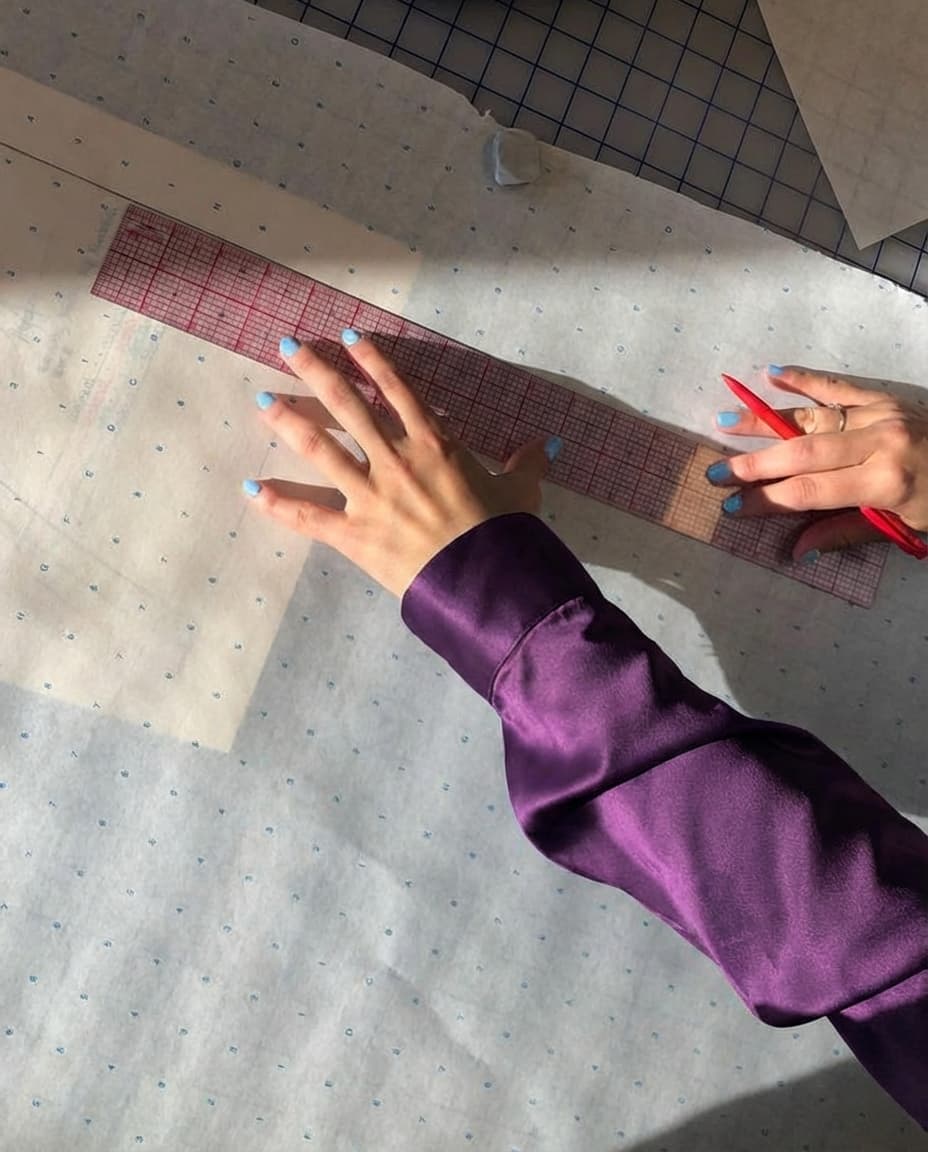
If you are not sure what you want yet, or whether the design you have in mind can be made at your budget, a designer consult settles it before you request a quote.
Is it cheaper to get a dress made in Australia?
Not in a way you can use. The price of a custom dress is in the fabric and the labour, and those cost the same whether the finished dress ships to Sydney or Seattle. What changes between the two countries is what the list price covers.
Our Australian price for a simple made-to-measure dress is A$160, which is about US$110 at our house rate, with A$15 delivery on top (free over A$350). Our US price for the same dress is $229 USD. That is a US list price, not a conversion: tracked delivery to the US is inside it, and import duties are calculated at checkout so nothing is owed on arrival. Buying the dress in Australian dollars and having it posted to the US does not avoid any of that. The parcel crosses the same border, US customs assesses the same duties on the garment’s value, and with no checkout line to cover them the carrier collects them from you at the door.
Where location does change the price is the maker’s overheads. An atelier with a city shopfront and in-person fittings prices differently from a tailor working from a studio, in Australia or in the US. That is the gap in the table above, and it has nothing to do with which country you order from.
Frequently asked questions
Related guides
how much does a custom-made dress cost? (AU$ and US$)
The Australian version of this guide: the A$ brackets, what a dressmaker charges, and the seven factors that move the quote.
custom-made dresses in the USA
The dresses and their US prices, delivery and duties, and how ordering from the US works end to end.
eShakti alternatives for US shoppers
Where to get a custom-sized dress now that eShakti is gone, and what each option costs and promises.
how to get a dress made from a picture
What to send with the photo so the quote is real: the back, the fabric, the details that must stay.
Wondering what your dress would actually cost in US dollars?
Share a design, reference or idea and we’ll resolve it into a garment that can be quoted honestly: fabric, structure, measurements and all. The quote is in US dollars with delivery included, and you pay nothing until you accept it.