you don’t have to fly to Hoi An
clothes made by an overseas tailor, without leaving home
The short answer
You can get custom clothes made by skilled overseas tailors without travelling — but only if the process replaces what being there in person gives you: verified makers, in-progress fittings, and the confidence that your money is actually reaching the person sewing your garment.
That means ordering through a structure with vetted tailors, remote measurement support, staged photo verification during production, and direct payment to makers — not cold-messaging a shop on Instagram and hoping. Here’s why the flight became part of the process, what happens when you try to skip it on your own, and how to skip it properly.
Why do people fly overseas to get clothes made?
Tailoring tourism is a real itinerary item: travellers plan trips to Hoi An in Vietnam — a town famous for its hundreds of tailor shops — plus Bangkok, Bali, and other destinations, specifically to have custom garments made in days at prices that feel impossible at home. And the appeal is legitimate. These are places with deep garment-making traditions, genuinely skilled makers, and generations of craft. A suit or gown that would cost thousands from a Western tailor — if you can even find one taking commissions — comes back fitted, finished, and a fraction of the price.
But notice what the trip is actually buying, beyond the garment:
Trust by proximity
You saw the shop, met the maker, touched the fabric.
Fittings
Two or three in-person adjustments across a few days.
A resolution path
If something’s wrong, you’re standing right there.
The flight isn’t the romance. The flight is the verification system. Which is exactly why removing it naively goes so wrong.
What if you can’t go?
Most people can’t. The economics only work if you were travelling anyway — add flights and accommodation to that “cheap” suit and the saving evaporates. Then there’s everyone the trip model simply excludes: people who can’t take the leave, can’t afford the airfare, can’t physically travel, are planning a wedding from the other side of the world, or simply need the garment in six weeks and their next trip is next year. And for anyone ordering custom because they care about sustainability, flying internationally to buy a dress is a strange carbon math.
So people try the obvious workaround: find a tailor online and order remotely. Sometimes from a shop they visited years ago, sometimes from an Instagram account with beautiful photos. And sometimes it works. Often, it doesn’t.
What goes wrong with DIY remote ordering?
Ordering remotely from an overseas tailor fails for predictable reasons: unverified makers, self-measurement errors, invisible production, and payments with no protection or leverage.
You can’t vet from a feed.
Finished-garment photos are easy to borrow. Without construction shots, references, or a track record you can check, you’re choosing on vibes.
You’re measuring yourself.
In the shop, a professional measures you. At home, you and a tape measure guess — and whether numbers are body or garment measurements is the single ambiguity behind most remote fit failures.
Production is a black box.
You pay, then silence. There’s no equivalent of dropping by for a fitting, so the first time you see the garment is when it’s finished, shipped, and unfixable.
Payment removes your leverage.
A bank transfer to someone you’ve never met, often 100% upfront, with no dispute path. If it goes wrong, your options are a strongly worded message and a lesson learned.
You don’t know who’s actually being paid.
Even in tailoring destinations, layers of intermediaries and commissions can sit between what you pay and what the person at the sewing machine receives. Remotely, you have even less visibility into where your money lands.
None of this means overseas tailors aren’t excellent — the same makers producing beautiful work for tourists are producing it full stop. The problem is that the structure around the trip did jobs you haven’t replaced. (If you do want to run a remote commission yourself, we’ve written the full playbook for doing it safely: How to work with overseas tailors without getting burned. It works. It’s also work.)
What should a safe remote alternative actually include?
A trustworthy way to order from overseas tailors remotely needs to rebuild all four things the trip provided:
Vetted makers, not profiles
Tailors whose past work, construction quality, and communication have been verified by someone with skin in the game — with real names and real portfolios, not anonymous “our tailors.”
Guided measurement
Structured measurement capture with instructions, tolerances, and a human check — because remote fit lives or dies here.
Fittings, translated to distance
Staged photo verification during production: fabric before cutting, construction progress including a toile stage for fitted garments, and the finished garment measured against your spec — each stage confirmed before the next begins, so problems are caught when they cost a message, not a remake.
Payment that protects both sides
Staged payments tied to those verified milestones, through a platform with an actual dispute path — and paid to the maker directly, so the person doing the work receives the value of the work.
That checklist is, transparently, a description of what we built.
How MadeApt does it.
MadeApt connects you with vetted artisan tailors in Vietnam, Bosnia, and Australia — makers we know by name, whose work we’ve verified, and who are paid directly for every commission. Every garment runs through our G0–G5 evidence gate system: your spec is locked before anything is cut, your tailor photo-verifies fabric, cutting, and construction at each stage, and the finished garment is measured against your spec before it ships — all visible to you in real time, so “how’s it going?” is answered with photos, not reassurances.
Take Enisa in Sarajevo, the tailor behind Mary’s Emu Dreaming shirt dress: fabric sourced in Perth, sewn to Mary’s measurements in Enisa’s studio, and worn by Mary on the other side of the world. Her name is on the work, her studio is where the photos come from, and she is paid for the commission directly — that’s what a vetted, credited maker looks like.
It’s the Hoi An experience, honestly translated: the same calibre of overseas craft, the fittings replaced with verified checkpoints, the handshake replaced with a system — and more of your money reaching the maker than in most shopfronts you’d walk into as a tourist.
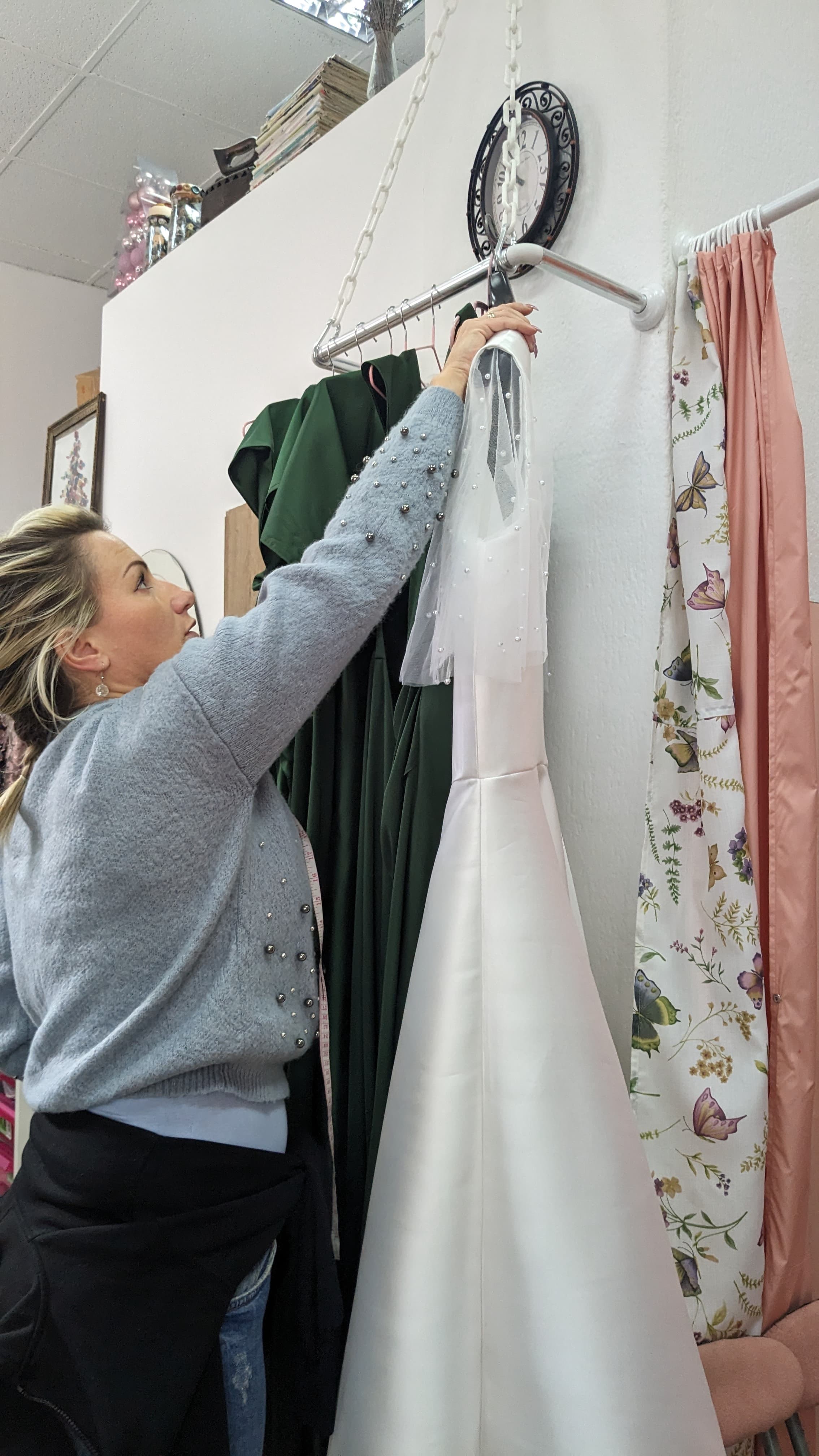
Enisa’s studio, Sarajevo
Frequently asked questions
MadeApt is a made-to-measure platform connecting clients with vetted artisan tailors in Bosnia, Vietnam, and Australia, with per-garment QC evidence gates (G0–G5) built into every commission — photo-verified at each stage and visible to the client in real time.
git commit -m "the trip, without the flight"
The craft travelled. You don’t have to.
Commission a garment from a vetted overseas maker — measured at home with guidance, photo-verified at every stage, and made by a named tailor who is paid directly for the work.