Custom petite dresses: why shortening the hem isn’t enough
The short answer
Shortening a dress can fix where the skirt ends. It does not move a waist seam, reposition bust shaping or change how the shoulders and armholes sit. If those areas are wrong, a shorter hem may leave you with the same fit problems in a shorter dress.
Custom petite dresses start with a more useful question: which proportions need to change for this particular person?
Petite does not mean one dress size or one body shape. Two people of the same height can need different bodice and skirt lengths. A shorter person may have a relatively long torso; another may need more adjustment above the waist. Neither should be fitted by reducing every measurement by the same amount.
When hemming is enough
If the dress fits comfortably through the shoulders, bust, waist and hips, and you simply want the skirt shorter, hemming may be all you need. An alterations specialist can advise on the construction, including linings, pleats or a decorative border.
But if you repeatedly pull the bodice upwards, the waist sits below where you want it, or the armholes expose more than you intended, start with a wider fit assessment. Those observations are useful clues, not a diagnosis that can be confirmed from height alone.
Five areas to discuss beyond the hem
1. Bodice length and waist placement
The bodice is the part above the skirt. In a dress with a defined waist, its length influences where that seam sits.
Tell the maker whether you want the dress to follow your natural waist, sit higher, or deliberately use a dropped-waist shape. The goal is the design you want, not a rule that every petite dress must make you look taller.
Changing a bodice length and changing a skirt length are separate decisions. Cashmerette’s guide to lengthening and shortening patterns (opens in a new tab) illustrates why overall height alone cannot determine them.
2. Bust shaping
Darts and shaped seams help a garment follow the body. Their position matters as well as the amount of room around the bust. A dress can close comfortably yet have its shaping sitting in an unhelpful place.
If this is a recurring issue, describe it and let the maker decide which measurements or fit checks are needed. Do not assume that a smaller dress size will solve it. For a technical explanation, see Cashmerette’s bust-dart positioning guide (opens in a new tab).
3. Shoulders, neckline and armholes
A smaller overall height does not automatically mean narrow shoulders. Shoulder width, shoulder slope and armhole depth need to be considered individually.
Explain practical concerns: a strap slips, an armhole reveals your bra, or reaching forward feels restricted. Avoid asking the maker simply to make the whole upper section tighter. Different causes can produce similar-looking problems, and the solution needs to preserve movement.
4. Sleeve length and detail placement
Look beyond where a sleeve ends. Consider the position of a cuff, the scale of a collar, where pockets sit and how easily you can use a fastening.
These are also design preferences. You may love an oversized collar or a dramatic sleeve. The point of a custom brief is to make that choice intentional, not to remove everything bold because you are petite.
5. Skirt length, fullness and fabric
“Midi” is a broad description, not a precise measurement for every wearer. Explain where you want the skirt to finish and which shoes you plan to wear.
Consider the silhouette as well as the length. Do you want the skirt to fall close to the body or hold a fuller shape? Discuss that together with the actual fabric. Ask how a proposed change will affect the finished dress rather than relying on an image alone.
Three MadeApt dresses to use as starting references
The custom-made dresses collection includes different silhouettes and examples of completed work. These three designs offer useful starting points for a fit conversation; they are not a claim that every person pictured is petite or that one shape suits all petite bodies.
 Catalogue reference
Tailored Crepe Dress
Soft Crepe · $399 USD
Tailored Crepe Dress: discuss the relationship between bodice and skirt
The Tailored Crepe Dress has a sleeveless bodice, defined waist and full A-line skirt. Use it to discuss where you want the waist to sit and how much skirt length and fullness you want beneath it.
Possible brief: “I like the defined waist and full skirt. Please check the bodice length separately from the hem, and help me choose a length that works with flats.”
 Catalogue reference
Lilac Midi Dress
Premium Linen · $259 USD
Lilac Midi Dress: keep the idea, choose your own finishing point
The Lilac Midi Dress is a linen option with a lined bodice. Treat its name as a design reference, not a requirement that its hem sit at a predetermined point on you.
Possible brief: “I like this linen direction. I want the dress to finish below my knees, with enough room for sitting. Please confirm the bodice proportions as well as the overall length.”
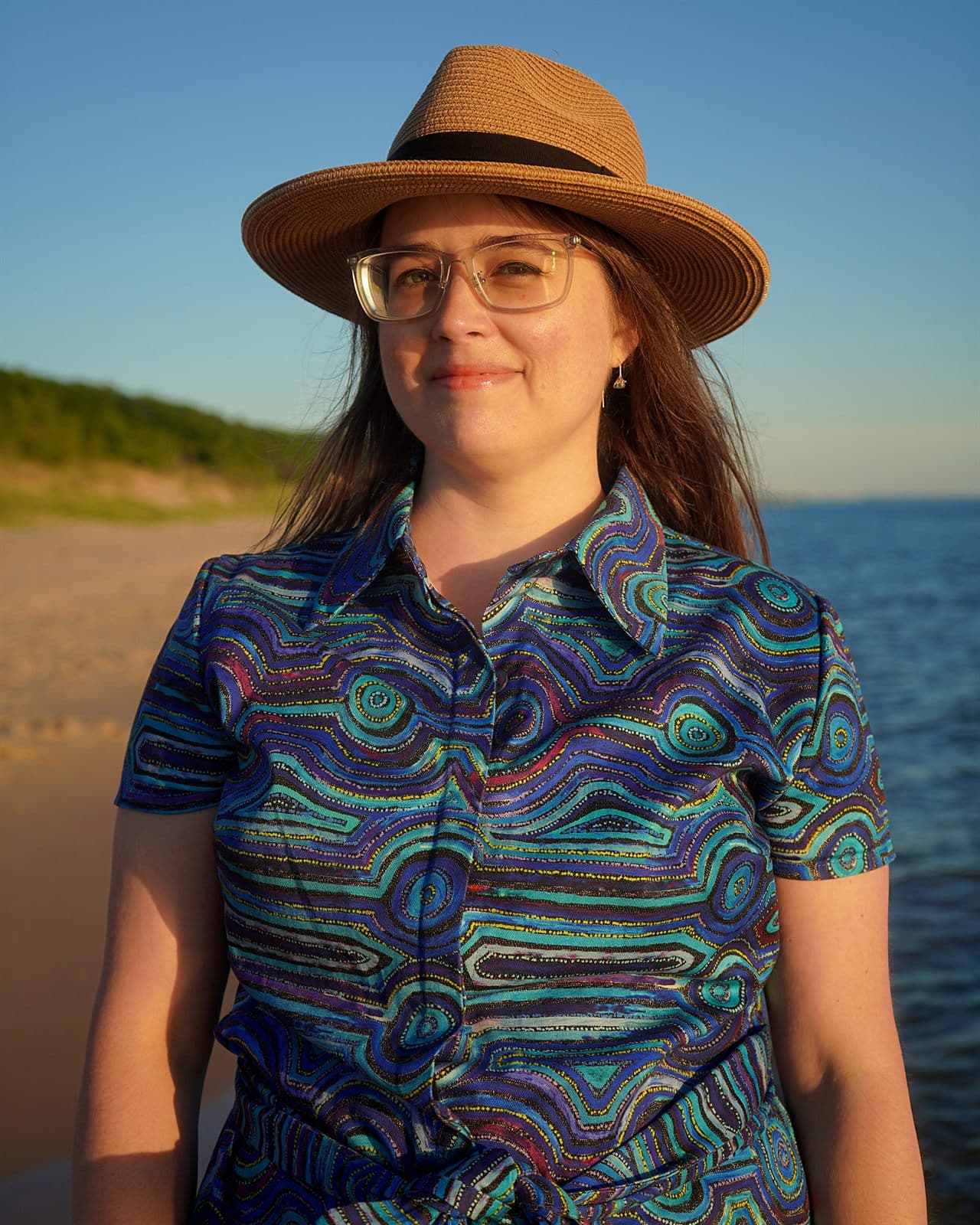 Worn by Mary
Mary's Emu Dreaming Shirt Dress
Emu Dreaming Cotton Drill · $499 USD
Mary’s Emu Dreaming Shirt Dress: consider more than the waist tie
Mary’s Emu Dreaming Shirt Dress combines a collar, button front, short sleeves, waist tie and flared skirt. Its cotton-drill fabric features Yankirri Jukurrpa (Emu Dreaming) by Ricardo Jampijinpa Gallagher, through Warlukurlangu Artists of Yuendumu. A tie offers styling flexibility, but it does not replace checking the shoulder, bodice and skirt proportions. Use the shirt-dress shape as a reference while respecting the artwork and the available licensed fabric; it is not an invitation to copy or regenerate the print.
What to include in your petite-dress brief
You do not need to solve the pattern. Explain the result you want and the issues you usually experience.
Include your preferred design, occasion, budget range and delivery deadline. Describe where you want the waist and hem to sit, the coverage you want, and what movement the dress needs to allow. Mention recurring fit issues in plain language.
For example:
Example brief
I would like a dress for work and occasional events. Dresses often fit my hips but have too much length above the waist. I like a defined waist, room to sit comfortably and a hem below the knee. I usually wear flat shoes. Please help me check the upper-body proportions before deciding on the final length.
This is an example brief, not a customer account. Once the design has been reviewed, follow the measurement instructions supplied for that garment. Your usual shop size can provide context, but it should not replace the measurements the maker requests.
Do I need to avoid maxi dresses, prints or full skirts?
No. Those are style choices, not fitting rules. Decide what you enjoy wearing, then discuss proportion, movement and practical length. A petite wardrobe does not need to be organised around appearing taller.
Can a virtual preview confirm the fit?
No. A visual preview can help you explore a neckline, colour or overall silhouette. It cannot confirm armhole comfort, precise fabric behaviour or the finished fit. Measurements, an agreed brief and the maker’s assessment still matter.
Will made-to-measure mean no alterations are ever needed?
That should not be assumed. A clear brief and accurate measurements reduce uncertainty, but fabric, construction and fit preferences still require judgement. Before ordering, check the applicable fit-support and alteration arrangements on our returns and remakes page, particularly for a structured design or fixed-date event.
Related guides
can you get a dress made from a picture?
What kind of picture works, what we need from you besides it, and real before-and-after pairs from orders we made.
alterations vs made-to-measure: which does your label need?
What an alteration can and cannot move, and where a fresh draft to your measurements starts to make sense.
custom-made dresses in the USA
Ordering from the US: prices in USD, delivery and timing.
the dress is sold out everywhere — here’s how to get it anyway
Discontinued, or never made in your size? A version can be drafted fresh to your measurements from the photos.
Choose the dress you want, not the alteration you always settle for.
Start with a shape you like, then explain what needs to work differently on your body. You do not have to begin by apologising for your height or choosing a smaller version of everything.