what to wear when speaking at a tech event.
you are the main character
The short answer
Wear something with one memorable element — shape or colour — that works in motion and from every angle, has somewhere to clip a microphone, and is comfortable enough that you forget it’s there. A talk outfit is not the main character. You are. But the right outfit plays an incredible supporting role.
I speak at tech events as a founder, and I design custom clothing for a living, so this guide comes from both sides: what survives a real stage, and what makes a garment worth remembering.
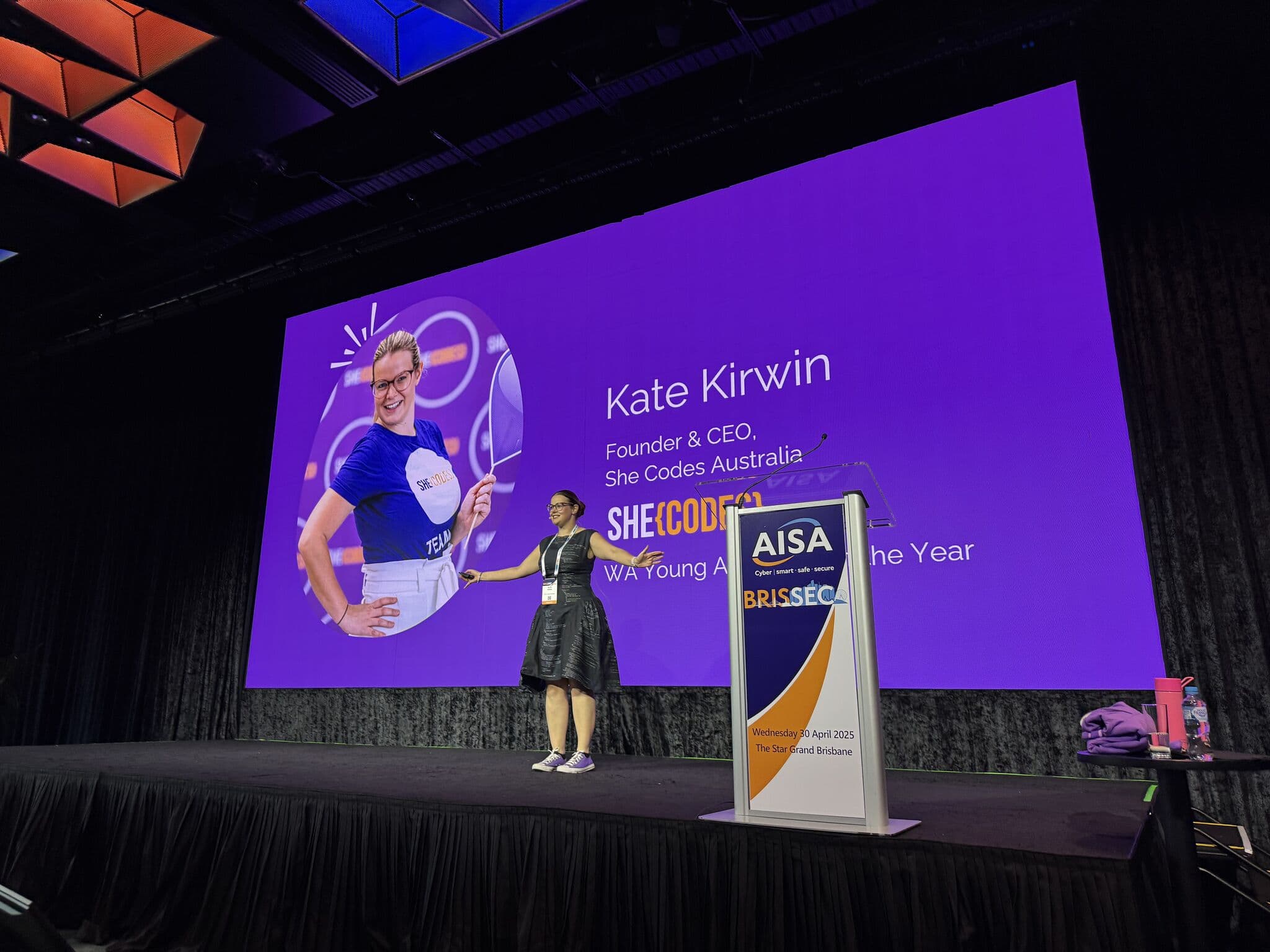 Keynote
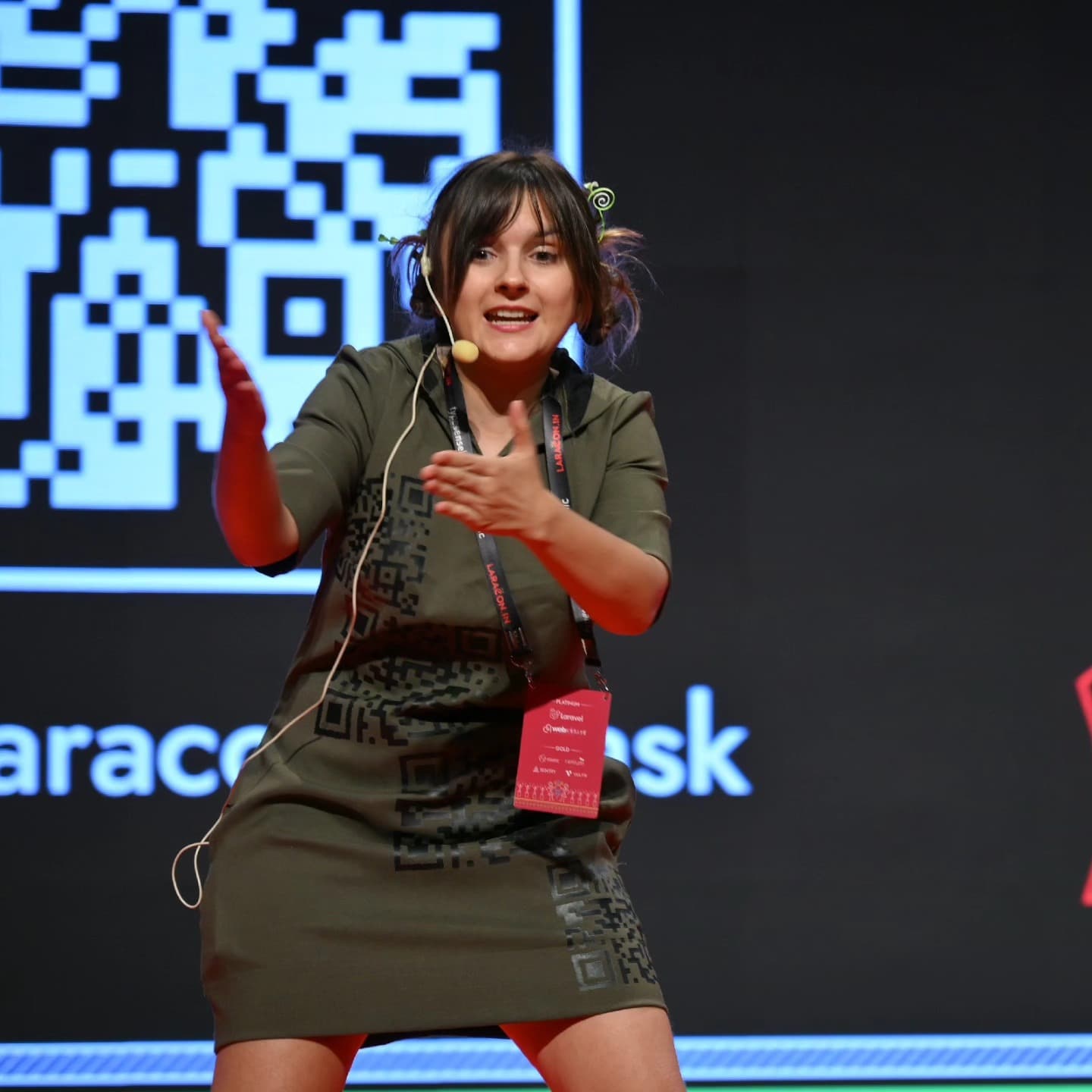 On stage
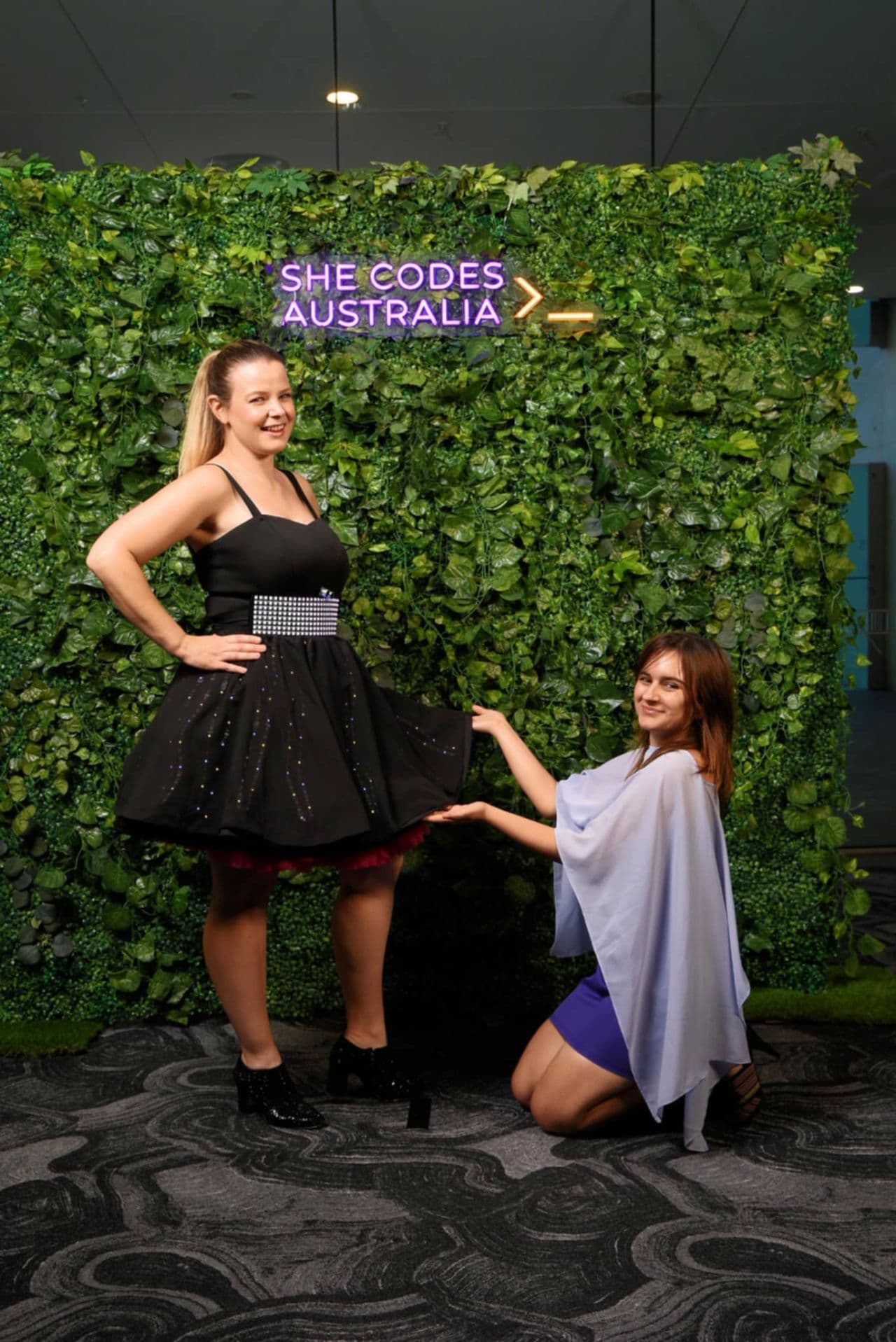 She Codes
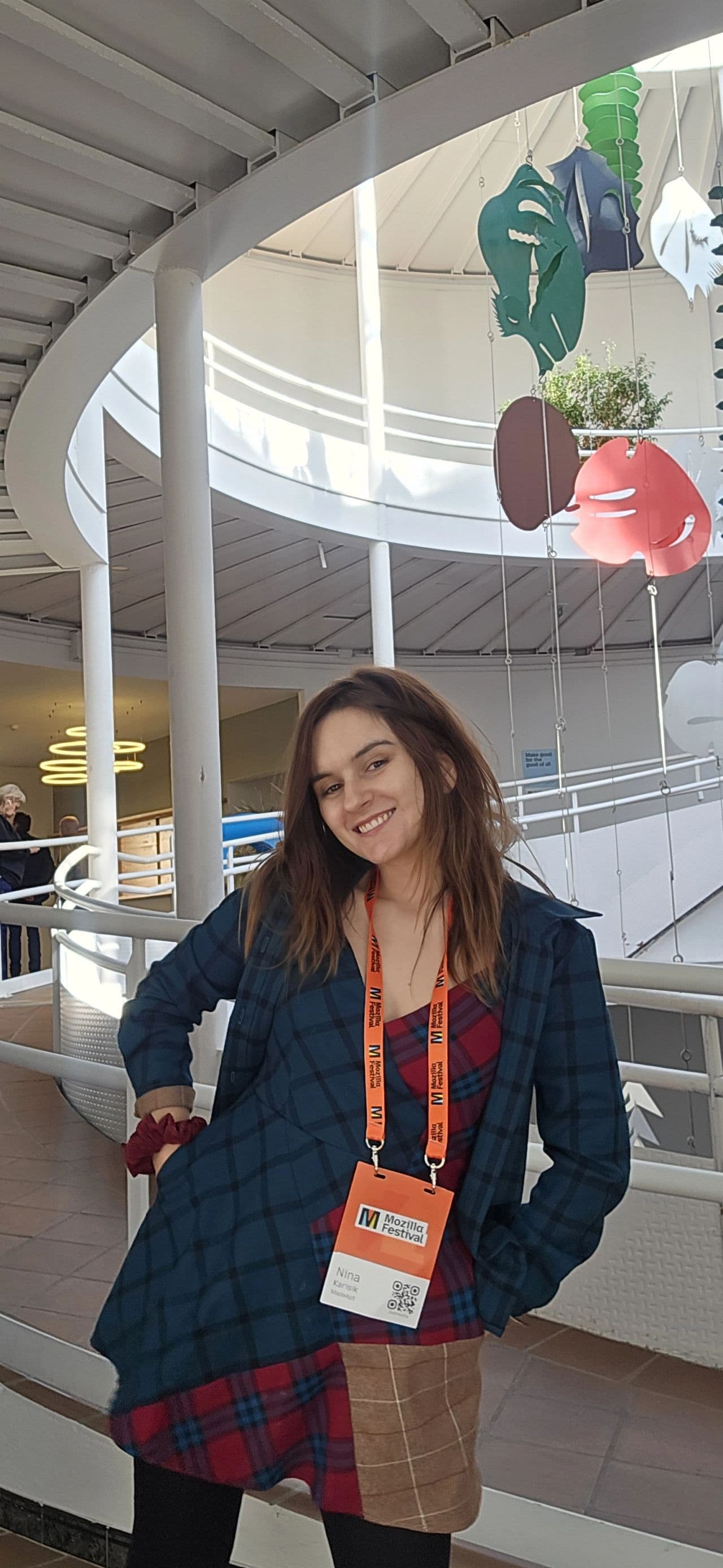 MozFest
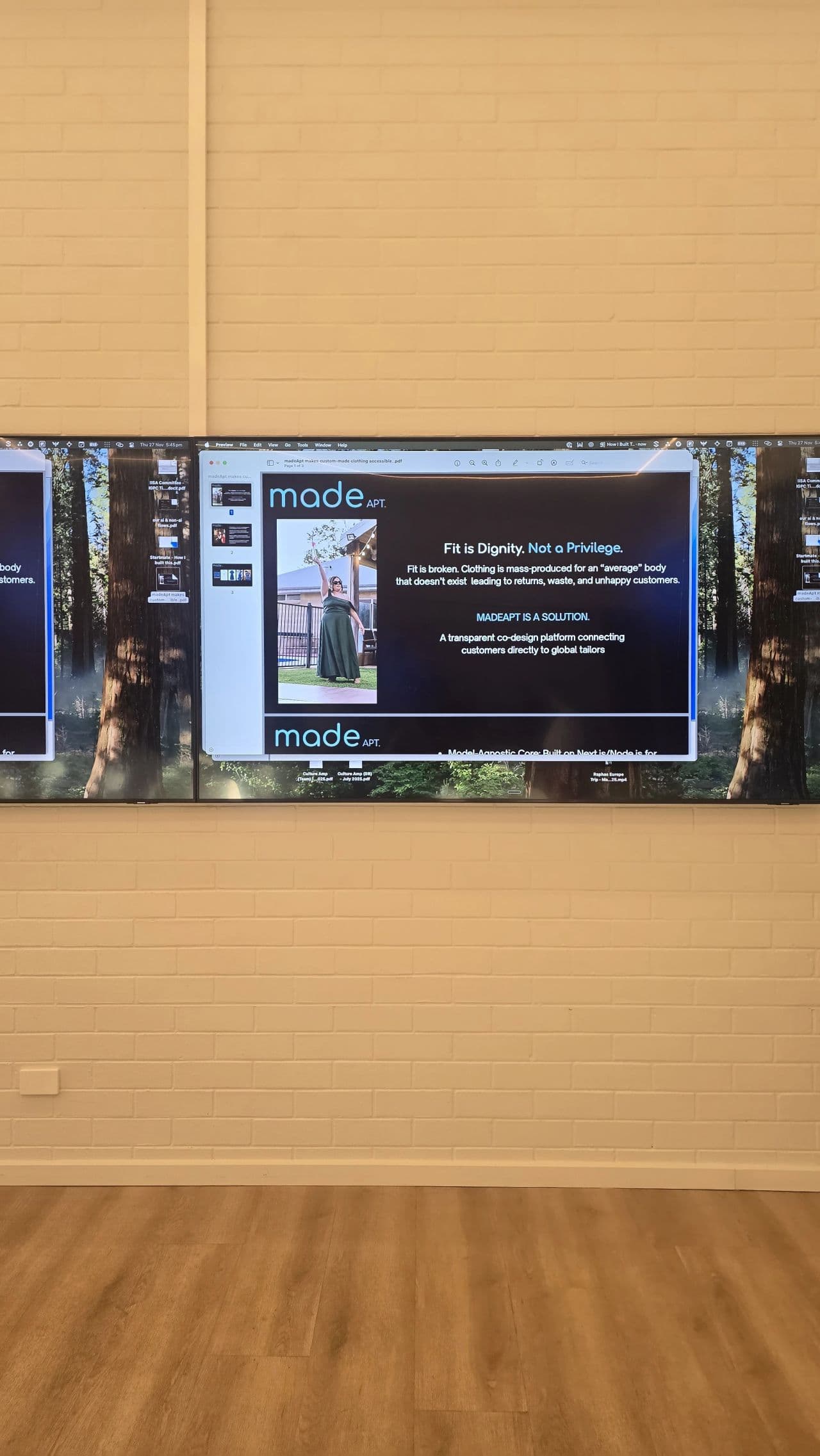 Demo day
Why a speaking outfit is different from a normal outfit.
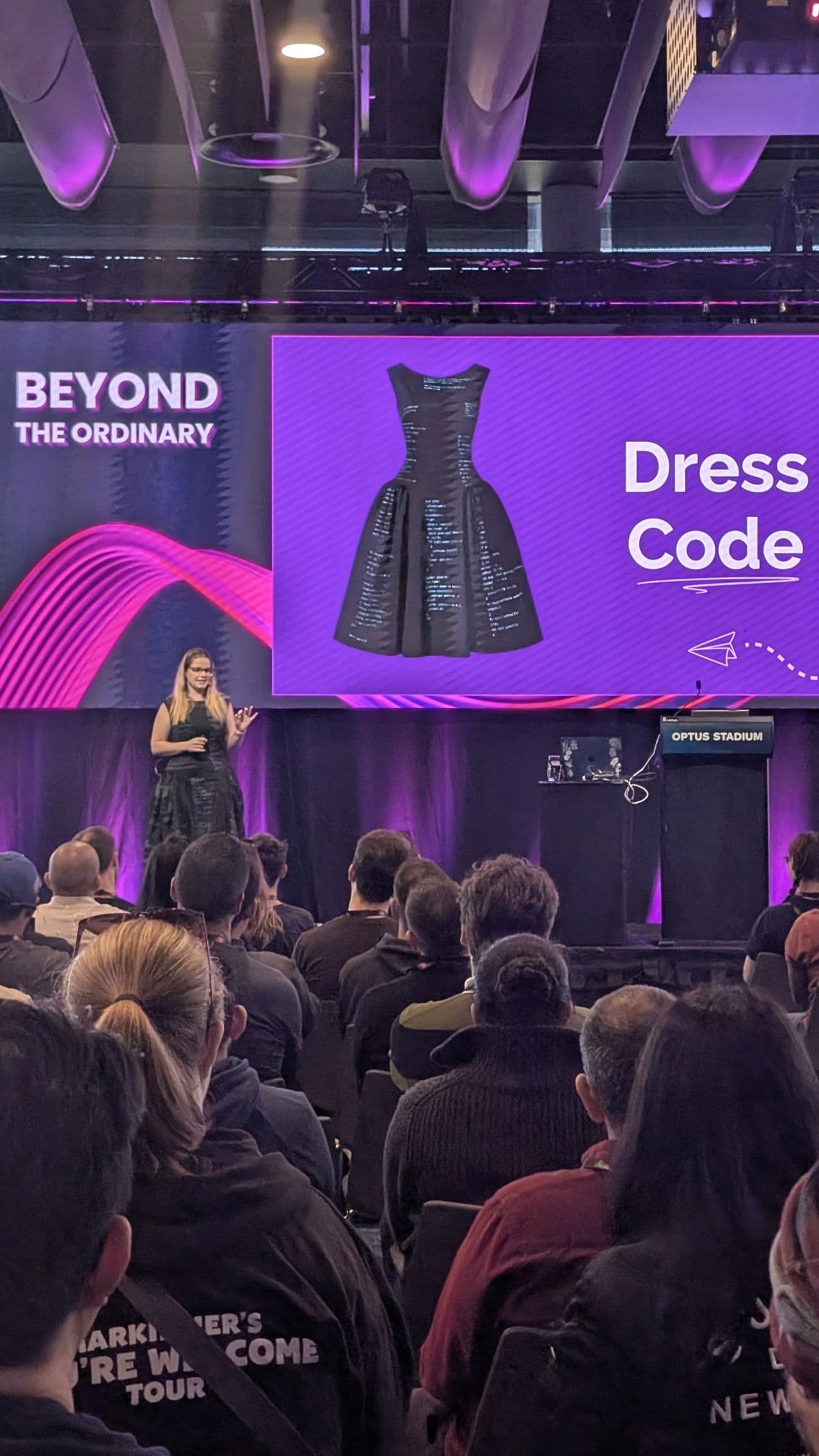
A mirror shows you one angle. An audience sees you from below the stage, from the side while you’re seated on a panel, mid-gesture in a candid photo, and in a video thumbnail six months later. A speaking outfit has to work in all of those views at once — plus survive stage lights, a clicker in one hand, a microphone pack, and hugging people afterwards.
It also has one job a normal outfit doesn’t: supporting the story you’re there to tell. A talk is a real performance — you’re taking an idea from your head and putting it in front of a room. That’s vulnerable, and it deserves clothing chosen with the same intention as your slides.
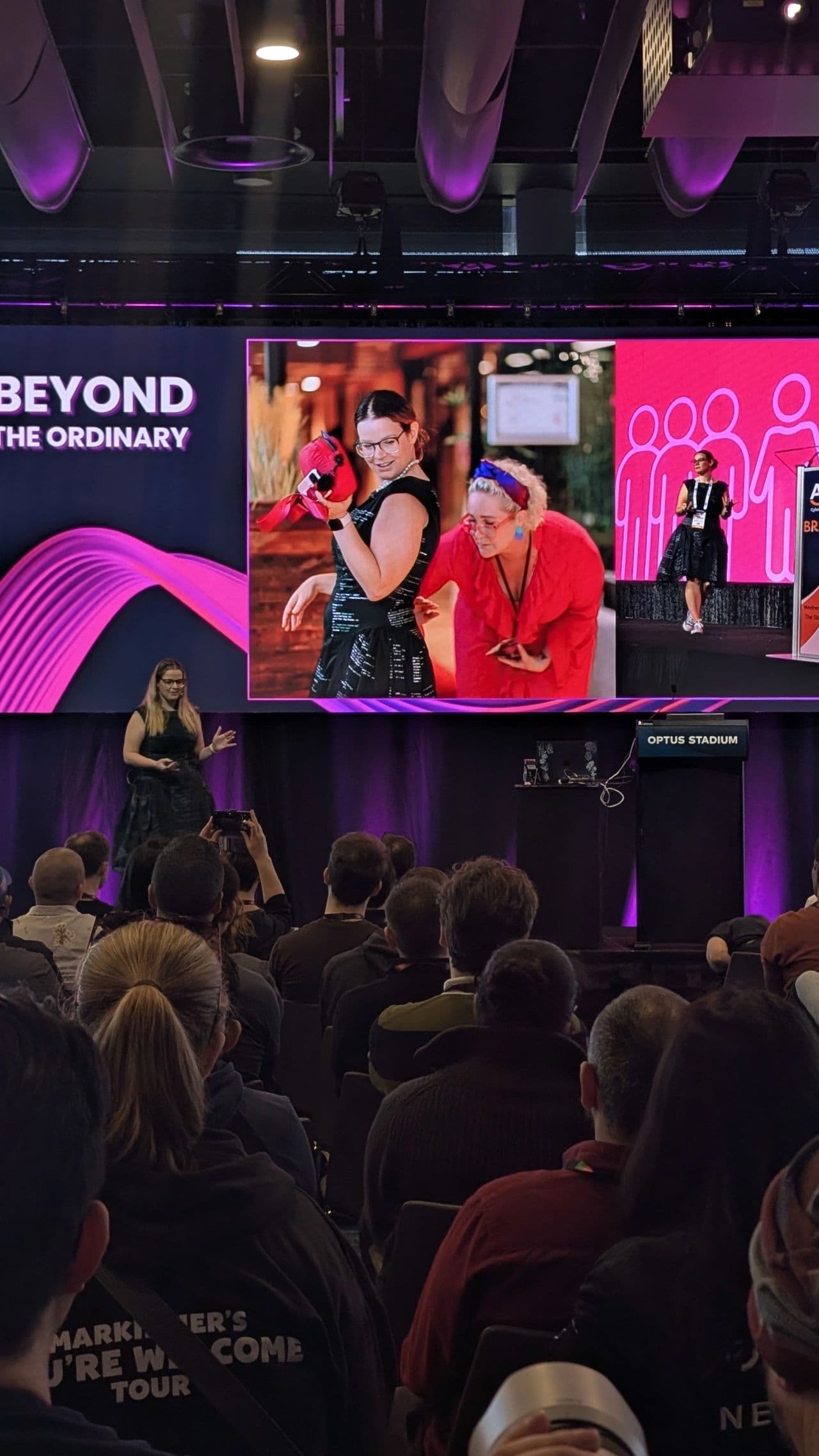
Give the outfit dimension.
Flat outfits disappear on stage. A plain black top and trousers feel safe, but under harsh lighting or in a wide event photo they collapse into a block. Dimension gives the eye something to follow, and it can come from a single element:
This is where custom clothing earns its keep. A made-to-measure piece can be designed for the full 360-degree view — how the neckline frames your face, what the waistline does when you sit, whether the fabric creases in the car, whether the silhouette still reads from the back of the room.
Choose colour strategically.
You don’t have to wear bright colours to give a talk, but your colour should be chosen, not accidental. Stage photography flattens texture, exaggerates shadows and washes out subtle detail, so a shade that’s beautiful in person can vanish under conference lighting. Good stage colours do one of three things: frame your face clearly, contrast against the backdrop, or make the photo instantly memorable.
Cobalt
photographs beautifully
Burgundy
rich under warm light
Green
strong against grey stages
Baby blue
soft but visible
Blush
frames the face gently
Chocolate
warm, grounded, unusual
Butter yellow
instantly memorable
White
crisp — but needs structure
Black
only with shape or texture
The real question is: what do you want the room to feel before you say your first sentence?
Dress for the actual event.
A keynote is not a panel, and a panel is not a demo day. Before choosing, ask:
On a panel
The seated view and side profile matter most — check hem length when sitting, waistband comfort, and microphone placement. A midi dress, trouser set or structured blouse with wide-leg trousers all work well.
Keynote or stage talk
Movement matters — the outfit should look alive when you walk and gesture. Give the eye something to follow from the back of the room.
Pitch or demo day
Structure helps: a defined waist, a crisp fabric, a clean neckline. You want to feel held, not restricted.
Comfort is not optional.
If you’re tugging a hem, monitoring a neckline, or overheating in synthetic fabric, your attention is split — part of you is speaking and part of you is doing outfit admin. That’s not confidence. Before committing, check that:
The goal isn’t to forget the outfit entirely. The goal is to trust it.
Five outfit formulas that work on stage.
A structured dress with one interesting detail
A clean dress becomes memorable with a single element: a strong sleeve, a sculptural neckline, a full skirt or an unexpected back.
Wide-leg trousers with a statement top
Movement, comfort and authority in one. Wide legs photograph beautifully when the fit is right, and the top carries the personality.
A soft suit
A suit doesn’t have to read corporate — fluid, colourful, belted, linen or satin all shift the register while keeping the structure.
A vest set
A tailored vest with a skirt or trousers feels intelligent and slightly unusual: armour without the standard blazer.
A dress with pockets
Never underestimate the psychological power of having somewhere to put your hands between gestures.
Let the outfit hold the story.
The best speaking outfits have a point of view that connects to the speaker. A founder talking about technology and craft might wear something that visibly combines structure and softness. A woman in tech talking about inclusion might wear a dress with pockets, because practicality and beauty were never opposites. The outfit doesn’t need to explain your talk — it just needs to hold the mood.
The perfect talk outfit is not the one that makes people say “nice dress” and forget what you said. It’s the one that helps the room understand your presence before you begin.
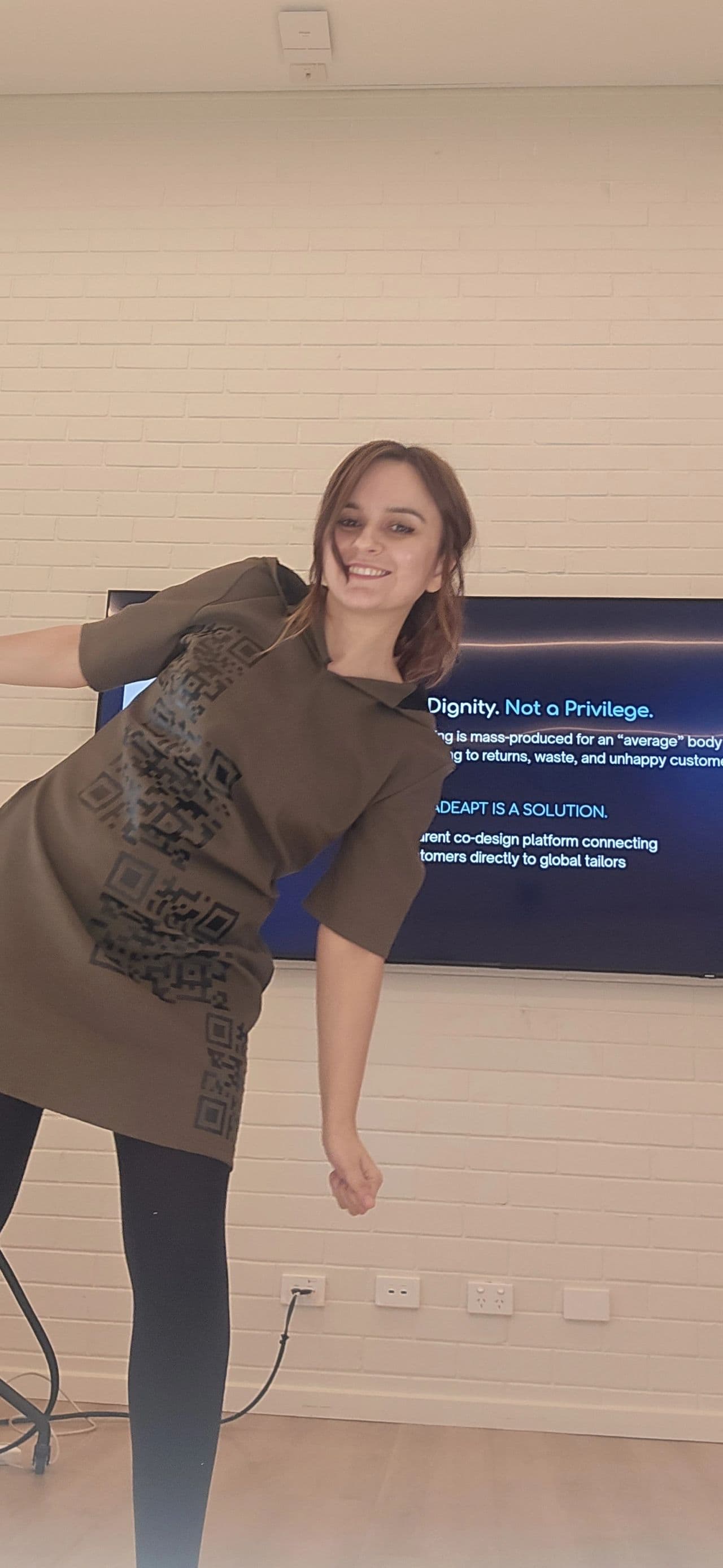
If the outfit you’re picturing doesn’t exist in your size, colour or shape, that’s not a reason to settle — it’s a reason to design it.
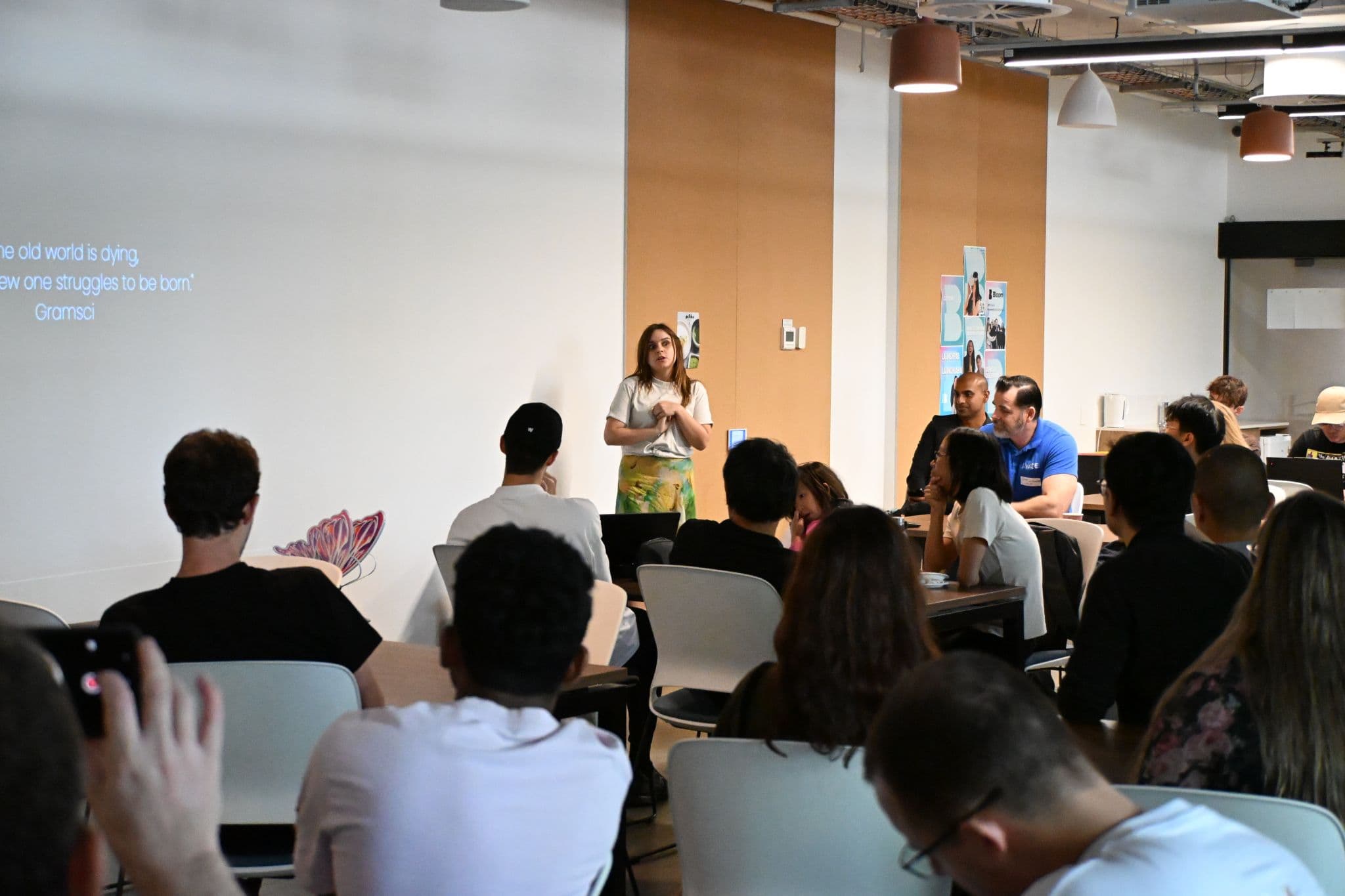
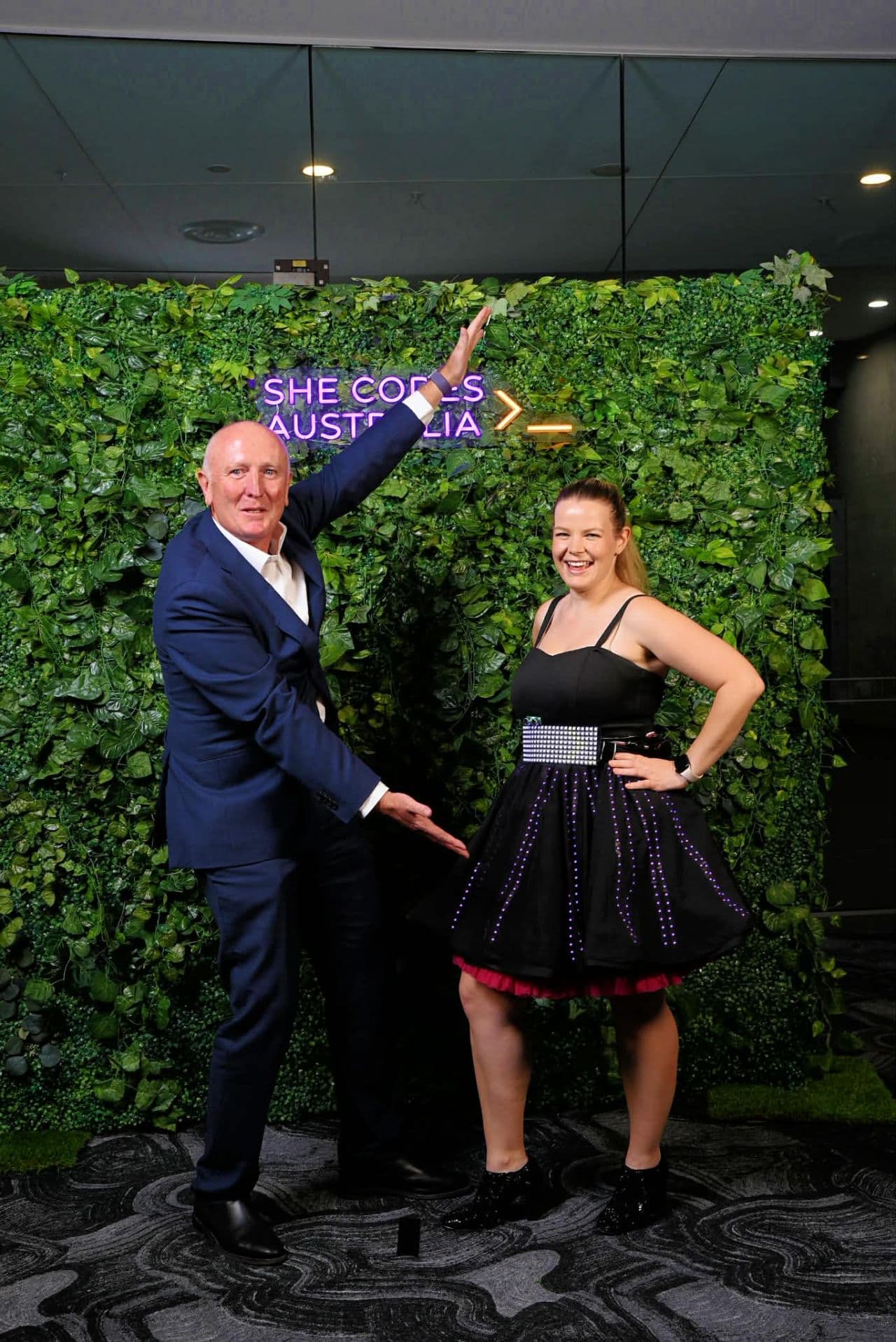
Custom pieces, mid-talk.
Frequently asked questions
git commit -m "stage ready"
An outfit that stands quietly beside your story, making it stronger.
Designed around your talk, your body, and your stage — made to your measurements by a real tailor.